Restitution: A Reflection on Justice and Restoration
"If a man shall steal an ox, or a sheep, and kill it, or sell it; he shall restore five oxen for an ox, and four sheep for a sheep." - Exodus 22:1
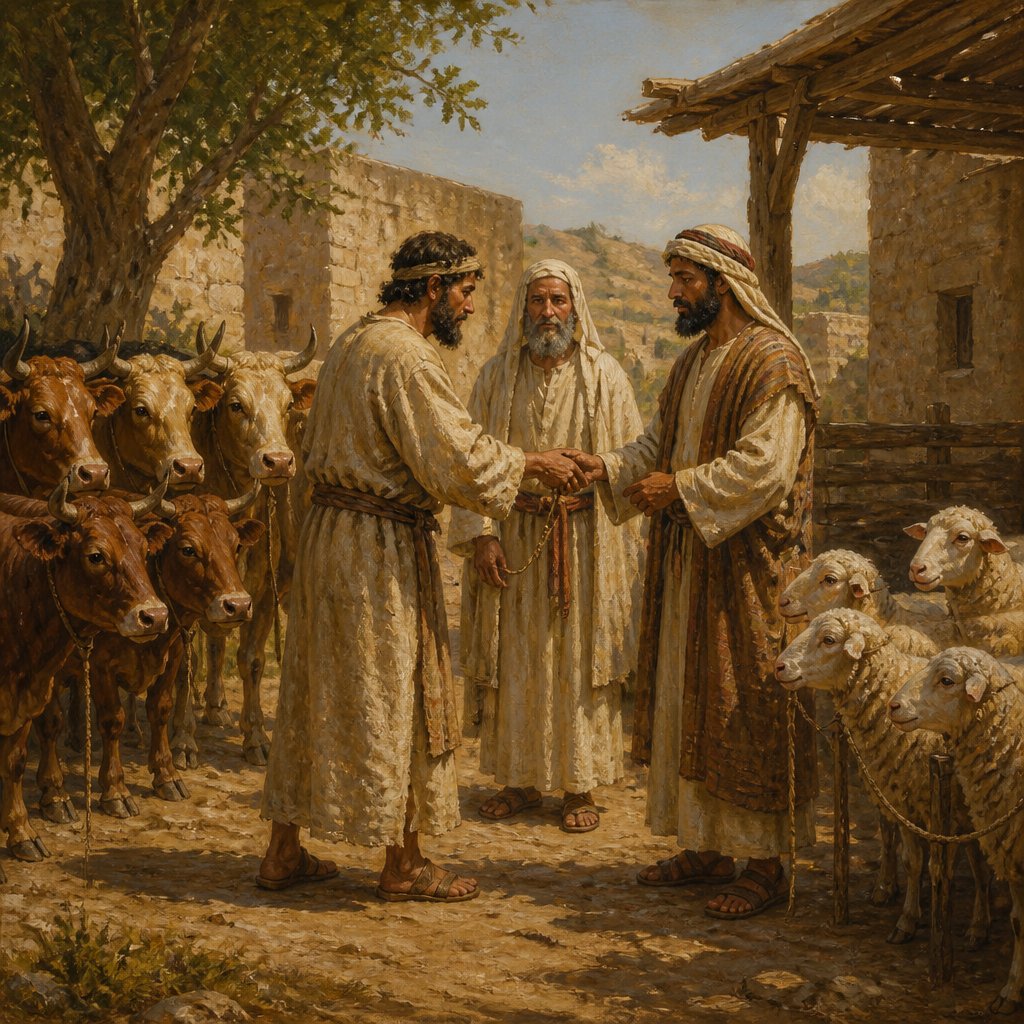
Exodus 22:1 states in the King James Version: "If a man shall steal an ox, or a sheep, and kill it, or sell it; he shall restore five oxen for an ox, and four sheep for a sheep." This verse, embedded within the larger legal and ethical framework of the Mosaic Law, resonates with profound implications about justice, accountability, and the nature of true restitution.
To understand this commandment fully, one must appreciate the significance of livestock in ancient Israelite society. Oxen and sheep represented not only fundamental economic value but also the lifeblood of family sustenance and livelihood. The act of stealing such animals was, therefore, not merely a crime against property; it was an assault on a family’s means of survival and an affront to community integrity.
The stipulation that a thief must restore five oxen for one and four sheep for one speaks volumes about God’s view of justice. It highlights two key concepts: the severity of the crime and God's desire for restoration over mere punishment. Theft is addressed not just by inflicting punitive measures, but by seeking to restore and rectify the imbalance caused by the wrongdoing. In fact, the requirement of multiple restitution speaks to an overarching principle of abundance—where grace is given even when justice is deserved.
As modern believers, one might readily observe how the principle of restitution still holds relevance today. When we commit acts of injustice—whether in stealing physical possessions, engaging in dishonesty in relationships, or sapping the joy of others—what is required of us? Are we merely to serve out our penalty or to seek further, to restore? The heart of God as communicated through this law calls us toward more constructive behavior. It beckons us not to stop at avoidance of wrongdoing but to proactively initiate restorative actions that contribute to healing and restoration.
Moreover, this verse serves as a challenge to the motivations behind our actions. If we are called to make restitution, are we not invited also to consider the conditions of our hearts? The idea of ‘five for one’ and 'four for one' transcends mere calculations of equivalent value; it urges us to examine whether our own hearts oil the gears of grace and generosity toward those we have wronged. It begs the question: am I willing to invest significantly more into reconciliation than I have taken from it?
This biblical principle teaches that, in the economy of God, wrongdoing is met with the opportunity for rightdoing. In fact, the act of restoration becomes an act of grace, transforming what could remain a bitter chapter into one filled with hope and renewal. This is evidenced in the life of Christ, whose entire mission can be summarized by reconciliation—a restoration of humanity's relationship with God—not merely a covering of sins but a restoration of their inherent worth and place within the family of God.
Thus, Exodus 22:1 leads us to an understanding that accountability and grace can coexist. When we fail, the act of restitution is not simply a requirement; it becomes a pathway to maturity and growth—a testimony of what it means to live in God's grace. As Christians, we are called to live not just as recipients but as dispensers of this restorative justice, echoing the principles of God's kingdom in our interactions.
In our own lives, let us be vigilant; when we confess our faults, let us calculate not only the harm we've done but the restitution we can initiate. Let’s pursue reconciliation with fervor, ready to bestow grace and aim for greater harmony. For in the act of restoration, we not only reflect the character of our Creator but also reconstruct bridges that may have been burned by our inequities.
May God grant us the grace to restore, to reconcile, and to rise above our failures, embodying His justice and love in a world that desperately needs it.
Want to reflect more on Exodus 22:1?
Continue your spiritual journey with Bible Chat — an AI-powered tool for exploring God's Word through conversation. Ask questions, discover connections, and deepen your understanding.
Get Our Apps


Exodus 22:1 Artwork

Exodus 22:1 - "If a man shall steal an ox, or a sheep, and kill it, or sell it; he shall restore five oxen for an ox, and four sheep for a sheep."
"If a man shall steal an ox, or a sheep, and kill it, or sell it; he shall restore five oxen for an ox, and four sheep for a sheep." - Exodus 22:1

Exodus 22:28

Exodus 22:28

Exodus 22:28

Exodus 22:28

Exodus 22:28

Exodus 22:28

Exodus 22:5

Exodus 22:5

Exodus 22:28

Exodus 22:5

Exodus 22:28

Exodus 22:28

Exodus 22:28

Exodus 22:28

Exodus 25:10-22
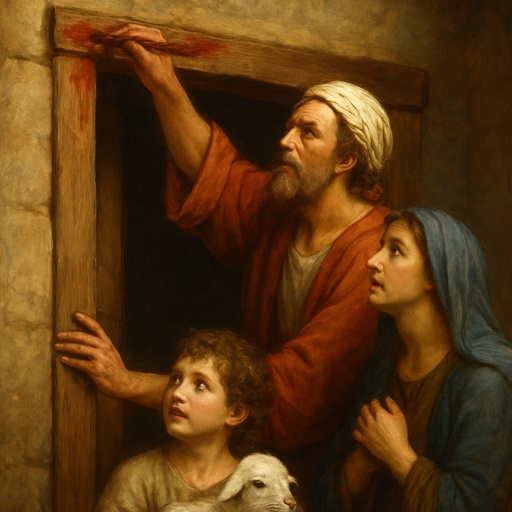
exodus 12:22 painting door lintel with blood

Exodus 22:22 - "¶ Ye shall not afflict any widow, or fatherless child."

Exodus 15:22

Exodus 22:28
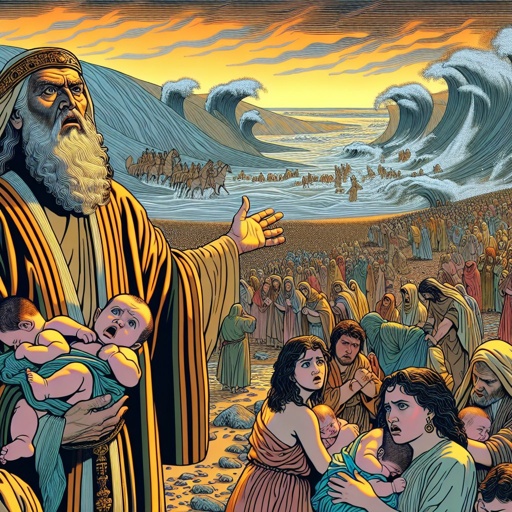
Exodus 1:22 - "And Pharaoh charged all his people, saying, Every son that is born ye shall cast into the river, and every daughter ye shall save alive."

Exodus 22:28

Exodus 22:28

Exodus 6:22 - "And the sons of Uzziel; Mishael, and Elzaphan, and Zithri."

Exodus 22:18 - "¶ Thou shalt not suffer a witch to live."

Exodus 30:22 - "¶ Moreover the LORD spake unto Moses, saying,"

Exodus 22:19 - "¶ Whosoever lieth with a beast shall surely be put to death."

"¶ Ye shall not afflict any widow, or fatherless child." - Exodus 22:22

Exodus 39:22 - "¶ And he made the robe of the ephod of woven work, all of blue."