The Offering and the Priest: A Deeper Understanding of Sacrifice
"And the priest that offereth any man's burnt offering, even the priest shall have to himself the skin of the burnt offering which he hath offered." - Leviticus 7:8
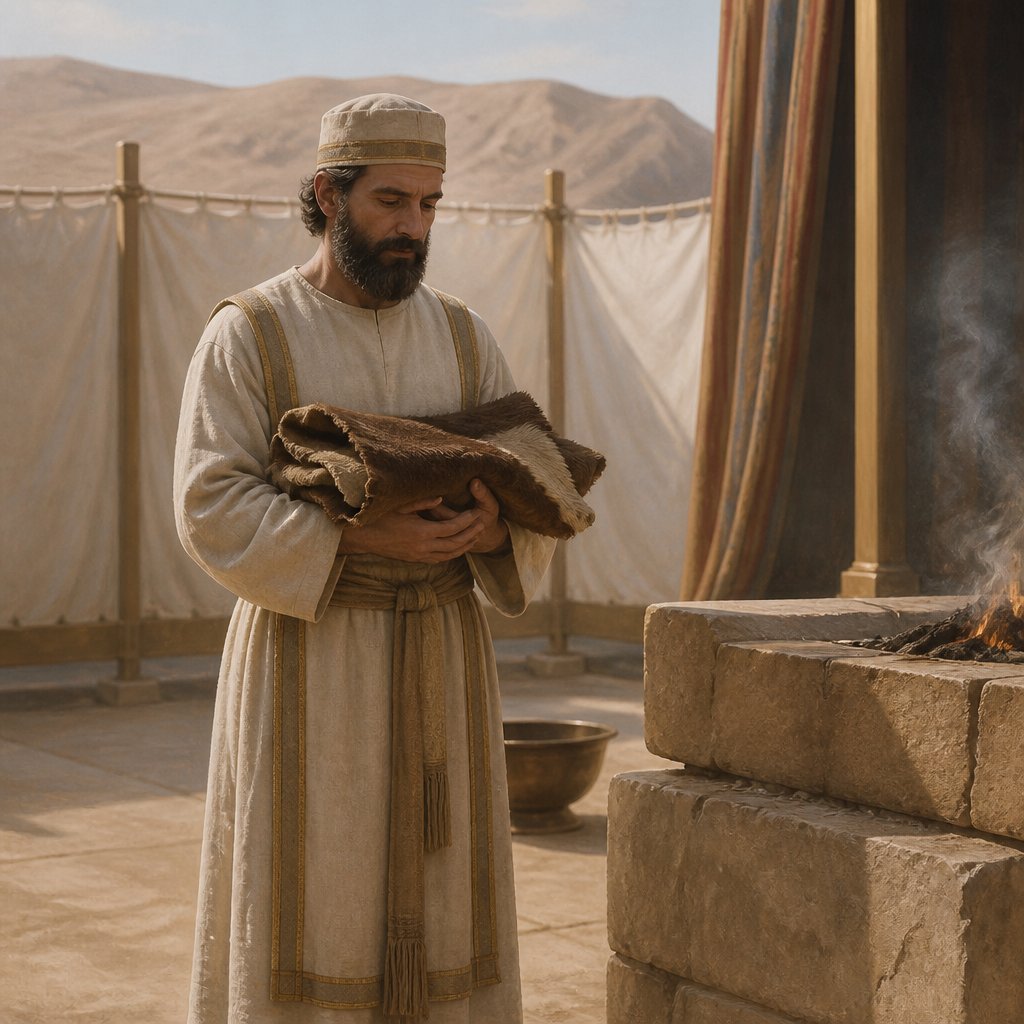
In Leviticus 7:8, the King James Version states: "And the priest that offereth any man's burnt offering, even the priest shall have to himself the skin of the burnt offering which he hath offered." At first glance, this verse may seem to merely stipulate a procedural detail about offerings within the Old Covenant; however, as we delve deeper, we uncover rich spiritual truths about sacrifice, stewardship, and divine provision.
When studying the book of Leviticus, it’s important to recognize the context in which it was written—a time when the Israelites were being instructed on how to maintain their holiness as God’s chosen people. The offerings laid out in these chapters are relational and sacrificial, serving to maintain the covenant bond between God and His people. The burnt offering, in particular, is one of complete surrender. It signifies total devotion and an acknowledgment of one’s dependence on God. We see in this verse that the priest, who acts as the mediator between the people and God, is entrusted with parts of these offerings, specifically the skin of the burnt offering.
Understanding the role of the priest is essential. In the Old Testament, priests were anointed and chosen by God to serve in the Temple, representing the nation before God. They were charged with ensuring that worship was conducted properly and that the sacrifices were accepted. The requirement that the priest keep the skin of the burnt offering reflects both his role as a mediator and the importance of contentment in the gifts that God provides. Though the entire offering is burned to signify total devotion to God, the priest is allowed to take the skin, symbolizing their part in the sacrificial act.
The skin, often seen as the discarded byproduct of the offering, becomes a provision for the priest. This is a powerful reminder that God provides for His servants through the offerings entrusted to them. The priest did not claim the entire offering or possess it for his own gain; rather, he received what God allotted him as a part of his ministry. This serves as a crucial lesson in stewardship and accountability. We must remember that everything we offer—whether material or spiritual—is ultimately God’s. He decides how His blessings are distributed, and He entrusts them to us for His purposes.
Moreover, the skin of the offering serves as a physical representation of what it means to be a priest of God in our contemporary context—both in the church as ministers and in our everyday lives as believers. We, too, are called to offer ourselves as living sacrifices to God (Romans 12:1). Like the priest in Leviticus, we often contribute to God’s kingdom with our resources, time, and faith, and God assures us that we will receive provision in return.
Another profound truth we can draw from this verse revolves around devotion to God through sacrifice. Sacrifices are rarely easy; they require a relinquishment of something valuable. However, God makes it clear that nothing offered to Him in sincerity goes unnoticed or unrewarded. The skin given to the priest signifies not only provision but also the notion that those who serve in ministry also bear the blessings of God’s covenant.
As we reflect on Leviticus 7:8, let us consider what we are sacrificing in our own lives. Are we offering our time, talents, or resources to serve God and further His kingdom? And in our service, are we trusting that God will provide for our needs? As we give, let us remember to look for the blessings that come not only from the gifts themselves but also from the heart in which we give. Like the priests of old, may we find joy in the stewardship of what God has entrusted to us, being ever mindful of the rich rewards in serving Him. May we approach our lives as acts of worship and service, knowing that God sees our offerings and responds to them with love and provision.
Want to reflect more on Leviticus 7:8?
Continue your spiritual journey with Bible Chat — an AI-powered tool for exploring God's Word through conversation. Ask questions, discover connections, and deepen your understanding.
Get Our Apps


Leviticus 7:8 Artwork

Leviticus 7:8 - "And the priest that offereth any man's burnt offering, even the priest shall have to himself the skin of the burnt offering which he hath offered."
"And the priest that offereth any man's burnt offering, even the priest shall have to himself the skin of the burnt offering which he hath offered." - Leviticus 7:8

Leviticus 8:7 - "And he put upon him the coat, and girded him with the girdle, and clothed him with the robe, and put the ephod upon him, and he girded him with the curious girdle of the ephod, and bound it unto him therewith."

Leviticus 16:8

Leviticus 8:30

Leviticus 17:7
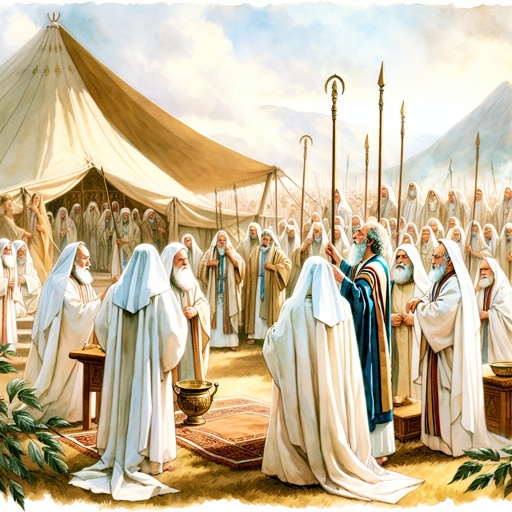
Leviticus 8:1-12

Leviticus 8:8 - "And he put the breastplate upon him: also he put in the breastplate the Urim and the Thummim."

leviticus 16:7-10

Leviticus 6:8 - "¶ And the LORD spake unto Moses, saying,"
Leviticus 10:8 - "¶ And the LORD spake unto Aaron, saying,"

Leviticus 8:1 - "And the LORD spake unto Moses, saying,"

Leviticus 7:22 - "¶ And the LORD spake unto Moses, saying,"

Leviticus 7:28 - "¶ And the LORD spake unto Moses, saying,"

Leviticus 7:1 - "Likewise this is the law of the trespass offering: it is most holy."

Leviticus 7:7 - "As the sin offering is, so is the trespass offering: there is one law for them: the priest that maketh atonement therewith shall have it."

Leviticus 8:32 - "And that which remaineth of the flesh and of the bread shall ye burn with fire."

Leviticus 19:7 - "And if it be eaten at all on the third day, it is abominable; it shall not be accepted."

Leviticus 8:6 - "And Moses brought Aaron and his sons, and washed them with water."

Leviticus 8:19 - "And he killed it; and Moses sprinkled the blood upon the altar round about."

Leviticus 8:3 - "And gather thou all the congregation together unto the door of the tabernacle of the congregation."

Leviticus 8:5 - "And Moses said unto the congregation, This is the thing which the LORD commanded to be done."

Leviticus 7:17 - "But the remainder of the flesh of the sacrifice on the third day shall be burnt with fire."

Leviticus 8:20 - "And he cut the ram into pieces; and Moses burnt the head, and the pieces, and the fat."

Leviticus 18:8 - "The nakedness of thy father's wife shalt thou not uncover: it is thy father's nakedness."

Leviticus 8:10 - "And Moses took the anointing oil, and anointed the tabernacle and all that was therein, and sanctified them."

Leviticus 11:8 - "Of their flesh shall ye not eat, and their carcase shall ye not touch; they are unclean to you."
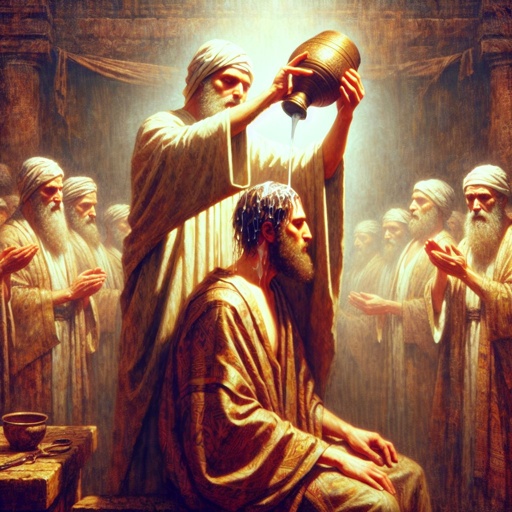
Leviticus 8:12 - "And he poured of the anointing oil upon Aaron's head, and anointed him, to sanctify him."

Leviticus 9:8 - "¶ Aaron therefore went unto the altar, and slew the calf of the sin offering, which was for himself."

Leviticus 3:7 - "If he offer a lamb for his offering, then shall he offer it before the LORD."