What does Exodus 1:11 mean?
"Therefore they did set over them taskmasters to afflict them with their burdens. And they built for Pharaoh treasure cities, Pithom and Raamses." - Exodus 1:11
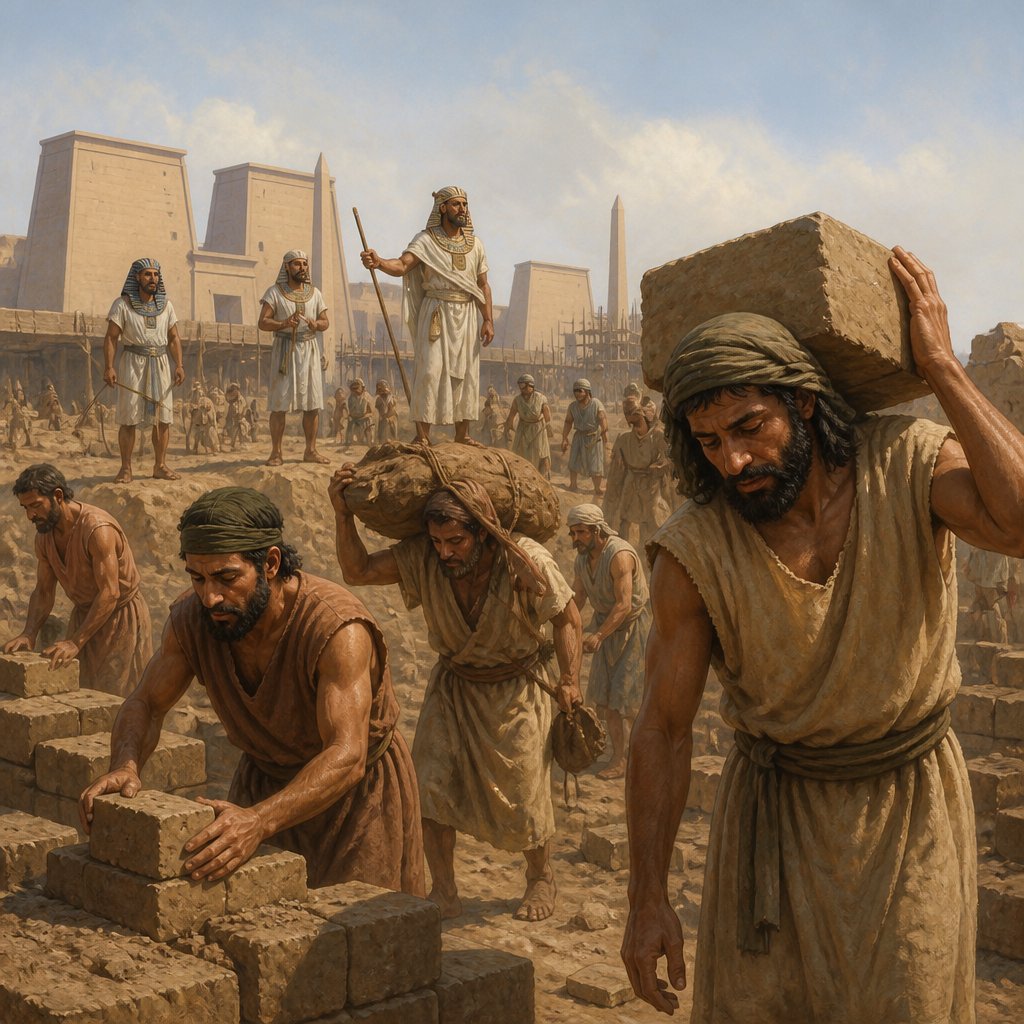
Exodus 1:11 in the King James Version of the Bible reads, “Therefore they did set over them taskmasters to afflict them with their burdens. And they built for Pharaoh treasure cities, Pithom and Raamses.”
This verse is from the book of Exodus, the second book of the Bible, which tells the story of the Israelites' enslavement in Egypt and their eventual liberation by Moses. The verse specifically describes the harsh treatment the Israelites faced under the rule of Pharaoh, who ordered them to build treasure cities Pithom and Raamses as part of their forced labor.
The overarching theme of Exodus 1:11 is oppression and resistance. The Israelites were oppressed by the Pharaoh and the Egyptians, who enslaved them and subjected them to harsh labor. The taskmasters appointed over them were merciless in their treatment, inflicting heavy burdens and afflictions upon the Israelites. This verse highlights the unjust and oppressive nature of the Israelites' bondage in Egypt and sets the stage for the eventual liberation that is central to the storyline of the book of Exodus.
The historical context of this verse is important for understanding its significance. The Israelites had initially come to Egypt during a time of famine, seeking refuge and sustenance. However, over time, their numbers grew, and they became perceived as a threat by the ruling Pharaoh. Fearing a potential uprising, the Pharaoh ordered the enslavement of the Israelites in order to suppress their power and ensure their obedience.
The construction of treasure cities Pithom and Raamses was a significant aspect of the Israelites' forced labor. These cities were intended to serve as storehouses for Pharaoh's wealth and possessions, and the Israelites were forced to toil in their construction under inhumane conditions. This verse illustrates the lengths to which the Pharaoh went to subjugate the Israelites and exploit their labor for his own gain.
Symbolism is also present in Exodus 1:11. The taskmasters represent the oppressive forces that seek to control and dominate the vulnerable. The burdens placed upon the Israelites symbolize the weight of their suffering and the injustices they were made to endure. The construction of treasure cities symbolizes the exploitation of the Israelites' labor for the benefit of those in power. These symbols serve to underscore the themes of oppression and resistance that are central to the narrative of Exodus.
Overall, Exodus 1:11 conveys a message of resilience in the face of oppression. The Israelites' suffering under the taskmasters and their construction of treasure cities Pithom and Raamses sets the stage for their eventual liberation and the fulfillment of God's promise to deliver them from bondage. This verse serves as a reminder of the enduring strength of the human spirit in the face of adversity, and the ultimate triumph of justice over oppression.
Have questions about Exodus 1:11?
Dive deeper into this scripture with Bible Chat — an AI-powered tool for exploring God's Word through conversation. Ask questions, get context, and grow in your understanding of the Bible.
Get Our Apps


Exodus 1:11 Artwork

Exodus 1:11 - "Therefore they did set over them taskmasters to afflict them with their burdens. And they built for Pharaoh treasure cities, Pithom and Raamses."
"Therefore they did set over them taskmasters to afflict them with their burdens. And they built for Pharaoh treasure cities, Pithom and Raamses." - Exodus 1:11
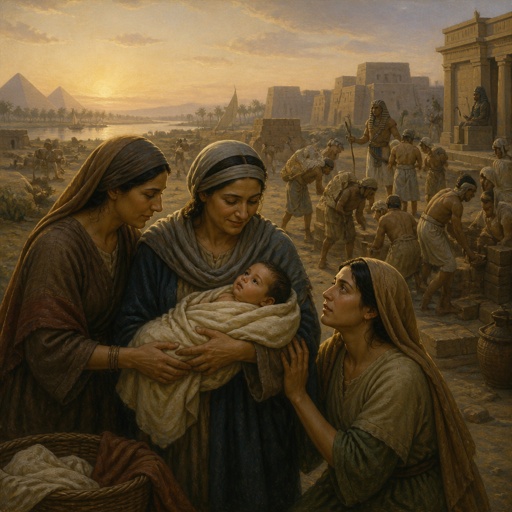
"So they put slave masters over them to oppress them with forced labor, and they built Pithom and Rameses as store cities for Pharaoh. But the more they were oppressed, the more they multiplied and spread; so the Egyptians came to dread the Israelites and worked them ruthlessly. They made their lives bitter with harsh labor in brick and mortar and with all kinds of work in the fields; in all their harsh labor the Egyptians worked them ruthlessly. The king of Egypt said to the Hebrew midwives, whose names were Shiphrah and Puah, “When you are helping the Hebrew women during childbirth on the delivery stool, if you see that the baby is a boy, kill him; but if it is a girl, let her live.” The midwives, however, feared God and did not do what the king of Egypt had told them to do; they let the boys live. Then the king of Egypt summoned the midwives and asked them, “Why have you done this? Why have you let the boys live?” The midwives answered Pharaoh, “Hebrew women are not like Egyptian women; they are vigorous and give birth before the midwives arrive.” So God was kind to the midwives and the people increased and became even more numerous. And because the midwives feared God, he gave them families of their own. Then Pharaoh gave this order to all his people: “Every Hebrew boy that is born you must throw into the Nile, but let every girl live.”" - Exodus 1:11-22

Exodus 1:11-22 - "So they put slave masters over them to oppress them with forced labor, and they built Pithom and Rameses as store cities for Pharaoh. But the more they were oppressed, the more they multiplied and spread; so the Egyptians came to dread the Israelites and worked them ruthlessly. They made their lives bitter with harsh labor in brick and mortar and with all kinds of work in the fields; in all their harsh labor the Egyptians worked them ruthlessly. The king of Egypt said to the Hebrew midwives, whose names were Shiphrah and Puah, “When you are helping the Hebrew women during childbirth on the delivery stool, if you see that the baby is a boy, kill him; but if it is a girl, let her live.” The midwives, however, feared God and did not do what the king of Egypt had told them to do; they let the boys live. Then the king of Egypt summoned the midwives and asked them, “Why have you done this? Why have you let the boys live?” The midwives answered Pharaoh, “Hebrew women are not like Egyptian women; they are vigorous and give birth before the midwives arrive.” So God was kind to the midwives and the people increased and became even more numerous. And because the midwives feared God, he gave them families of their own. Then Pharaoh gave this order to all his people: “Every Hebrew boy that is born you must throw into the Nile, but let every girl live.”"

Exodus 17:11

Acts 1:1-11

The Plague on the Firstborn - Exodus 11, 12:1-30

The Plague on the Firstborn - Exodus 11, 12:1-30

Acts 1:1-11

Exodus 1:1 - "Now these are the names of the children of Israel, which came into Egypt; every man and his household came with Jacob."

Revelation 1:11

Isaiah 11:1

Revelation 1:11

Nehemiah 11:1-19

exodus 18:11
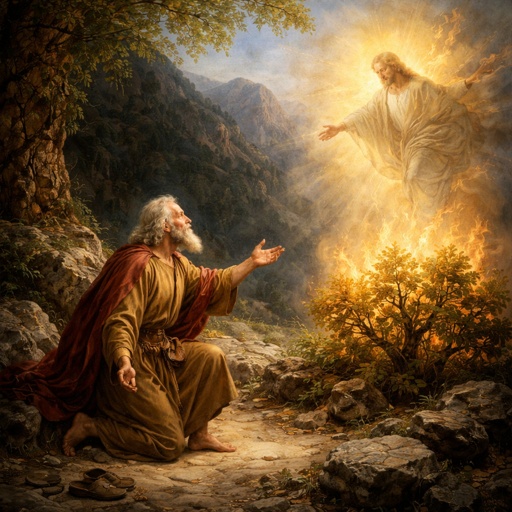
exodus 3:11

The Plague on the Firstborn - Exodus 11
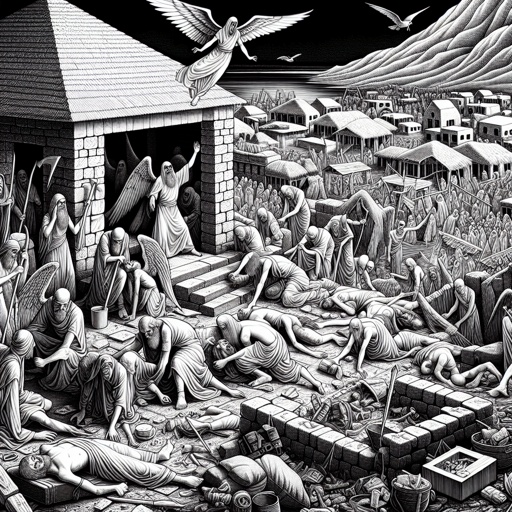
The Plague on the Firstborn - Exodus 11

The Plague on the Firstborn - Exodus 11
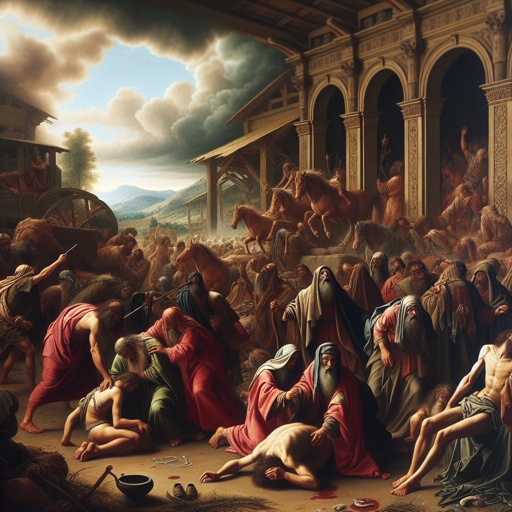
The Plague on the Firstborn - Exodus 11

Exodus 24:9-11

The Plague on the Firstborn - Exodus 11

The Plague on the Firstborn - Exodus 11

Exodus 16:11 - "¶ And the LORD spake unto Moses, saying,"

Exodus 30:11 - "¶ And the LORD spake unto Moses, saying,"

Exodus 39:11 - "And the second row, an emerald, a sapphire, and a diamond."

The Plague on the Firstborn Son - Exodus 11

Exodus 40:11 - "And thou shalt anoint the laver and his foot, and sanctify it."

"Now these are the names of the children of Israel, which came into Egypt; every man and his household came with Jacob." - Exodus 1:1

Exodus 29:11 - "And thou shalt kill the bullock before the LORD, by the door of the tabernacle of the congregation."