What does Leviticus 8:23 mean?
"And he slew it; and Moses took of the blood of it, and put it upon the tip of Aaron's right ear, and upon the thumb of his right hand, and upon the great toe of his right foot." - Leviticus 8:23
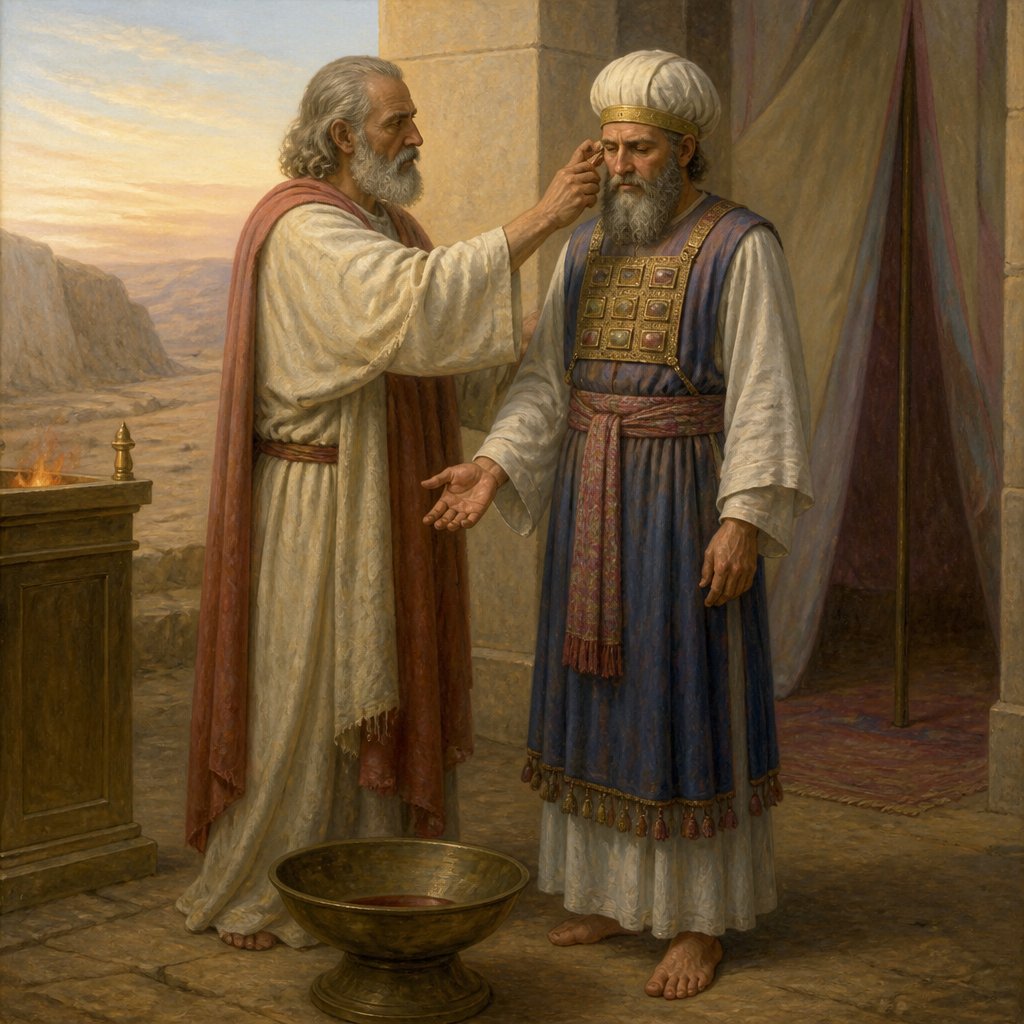
Leviticus 8:23 in the King James Version of the Bible reads, "And he slew it; and Moses took of the blood of it, and put it upon the tip of Aaron's right ear, and upon the thumb of his right hand, and upon the great toe of his right foot."
This verse is part of the detailed account of the consecration of Aaron and his sons as priests in the Israelite community. The entire chapter of Leviticus 8 describes the meticulous process by which Aaron and his sons were prepared and anointed for their sacred duties as priests. This verse specifically focuses on the act of Moses taking the blood of the sacrificial animal and applying it to various parts of Aaron's body.
In order to understand the significance of this verse, it is important to consider its broader cultural and religious context. The book of Leviticus is part of the Torah, the first five books of the Hebrew Bible, which form the central religious text of Judaism. The book is concerned with laws, rituals, and regulations that were central to the religious and ceremonial life of the ancient Israelites.
The act described in Leviticus 8:23 has several layers of meaning and significance. First, the blood of the sacrifice was believed to be the most sacred and powerful element of the offering. By applying it to specific parts of Aaron's body, it symbolized his complete consecration and dedication to the service of God. The ear, thumb, and toe were chosen as points of contact because they represent the entirety of a person's being: their ability to hear and understand, their ability to work and serve, and their ability to walk and move forward. By anointing these specific body parts with the blood of the sacrifice, Aaron was being set apart for a life of holiness and devotion to God.
Furthermore, the act of anointing with blood symbolizes the atonement for sin and the purification of the individual. In the ancient Israelite religious system, blood was believed to have the power to cleanse and purify, making it possible for the priests to approach God without the taint of sin. This act served as a reminder of the seriousness and sacredness of the priestly office, and the need for the priests to maintain purity and holiness in their service.
The verse also highlights the role of Moses as the intercessor and mediator between God and the people. By performing the anointing, Moses was acting as the instrument of God's will, conveying God's blessings and authority to Aaron and his sons. This underscores the hierarchical and divine nature of the priesthood, with Moses serving as the link between the human and the divine realms.
In a broader theological context, this verse points to the overarching themes of sacrifice, atonement, and the priesthood in the Old Testament. The sacrificial system was central to the religious life of ancient Israel, and it served as a means of seeking forgiveness for sins and restoring the relationship between God and his people. The anointing of Aaron and his sons was a crucial part of establishing the priesthood as the mediators between God and the community, responsible for leading the people in their worship and interceding on their behalf.
Ultimately, Leviticus 8:23 reflects the deeply ingrained religious and cultural values of the Israelite community. The meticulous rituals and ceremonies described in this verse were central to their religious identity and shaped the way they understood their relationship with God. It highlights the importance of holiness, purity, and dedication in serving God, and the sacrificial system that formed the core of their religious practice. It also points to the role of the priesthood as the divine representatives and intercessors for the people, emphasizing the need for spiritual leaders who are set apart for the sacred work of worship and atonement.
Have questions about Leviticus 8:23?
Dive deeper into this scripture with Bible Chat — an AI-powered tool for exploring God's Word through conversation. Ask questions, get context, and grow in your understanding of the Bible.
Get Our Apps


Leviticus 8:23 Artwork

Leviticus 8:23 - "And he slew it; and Moses took of the blood of it, and put it upon the tip of Aaron's right ear, and upon the thumb of his right hand, and upon the great toe of his right foot."
"And he slew it; and Moses took of the blood of it, and put it upon the tip of Aaron's right ear, and upon the thumb of his right hand, and upon the great toe of his right foot." - Leviticus 8:23

Leviticus 23:8 - "But ye shall offer an offering made by fire unto the LORD seven days: in the seventh day is an holy convocation: ye shall do no servile work therein."

Leviticus 23:23 - "¶ And the LORD spake unto Moses, saying,"

Leviticus 23:21

Leviticus 23:21

Leviticus 23:21

Leviticus 23:21

Leviticus 23:21

Leviticus 23:20

Leviticus 23:21

Leviticus 23:15-22

Leviticus 23:17-22

Leviticus 24:20-23

"¶ And the LORD spake unto Moses, saying," - Leviticus 23:23
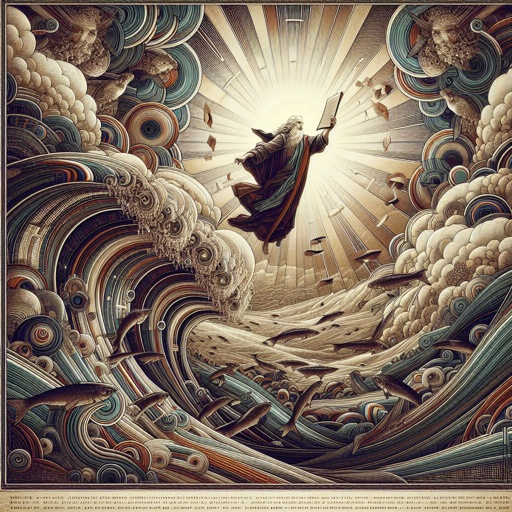
Leviticus 23:9 - "¶ And the LORD spake unto Moses, saying,"

Leviticus 23:1 - "And the LORD spake unto Moses, saying,"

Leviticus 23:26 - "¶ And the LORD spake unto Moses, saying,"

Leviticus 23:33 - "¶ And the LORD spake unto Moses, saying,"

Leviticus 16:8

Leviticus 23:5 - "In the fourteenth day of the first month at even is the LORD'S passover."

Leviticus 23:44 - "And Moses declared unto the children of Israel the feasts of the LORD."

Leviticus 8:30

Leviticus 26:23 - "And if ye will not be reformed by me by these things, but will walk contrary unto me;"

the jewish holidays mentioned in leviticus 23:1 until 23:40 combined in one picture,
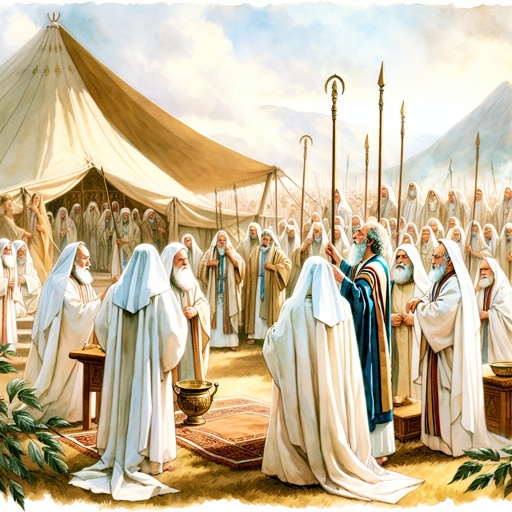
Leviticus 8:1-12

Leviticus 8:8 - "And he put the breastplate upon him: also he put in the breastplate the Urim and the Thummim."

Leviticus 6:23 - "For every meat offering for the priest shall be wholly burnt: it shall not be eaten."

Leviticus 23:4 - "¶ These are the feasts of the LORD, even holy convocations, which ye shall proclaim in their seasons."

Leviticus 25:23 - "¶ The land shall not be sold for ever: for the land is mine; for ye are strangers and sojourners with me."