What does Mark 16:16 mean?
"He that believeth and is baptized shall be saved; but he that believeth not shall be damned." - Mark 16:16

Mark 16:16 in the King James Version reads, “He that believeth and is baptized shall be saved; but he that believeth not shall be damned.” In the plainest sense, the verse places a person in front of Jesus Christ as the decisive issue of eternity. Salvation, in this saying, is not presented as a vague moral improvement or a general religious sentiment, but as a definite deliverance tied to faith, confessed and sealed outwardly in baptism, while condemnation is tied to unbelief.
The immediate context in Mark 16 is the risen Lord’s commission to his followers. Just before this verse, Jesus charges them to carry the gospel to every creature, and he speaks of accompanying signs. Within that setting, Mark 16:16 functions as a summary of how the preached gospel divides responses: some receive it, some refuse it, and those responses have final consequence. The verse is therefore missionary in tone, not speculative. It belongs to the moment when Christ, having triumphed over death, authorizes the worldwide announcement of what his death and resurrection mean for sinners. In that sense, the line is not an abstract formula but part of the risen King’s declaration of terms for those who hear the gospel.
The first theme is belief, because the verse begins with “He that believeth.” In the KJV phrasing, to “believe” is not merely to admit facts, but to receive and rest upon what is preached about Christ. The grammar places believing first, and this matters: baptism is joined to belief, but unbelief alone is named as the reason for being “damned.” The second half does not say, “he that is not baptized shall be damned,” but “he that believeth not shall be damned.” The structure highlights faith as the root issue. This is consistent with the setting of gospel proclamation: the decisive question is whether a person receives the testimony God gives concerning his Son. The verse thus treats unbelief not as a neutral lack of information but as a culpable refusal of God’s saving message, and it portrays condemnation as the just end of that refusal.
At the same time, the verse speaks of baptism with striking simplicity: “and is baptized.” In Mark’s narrative world, baptism is the public, visible response of a disciple to the call of Christ, a marking out of the believer as one who has identified with the message preached. Because the verse is spoken in the context of sending preachers, baptism naturally follows belief as the ordinary outward act by which the believer is joined to the community of those who follow Jesus. The pairing of “believeth and is baptized” presents the normal pattern of Christian reception: inward faith and outward confession. In that way baptism functions symbolically as an enacted testimony, an open owning of Christ, a crossing from the old life into the new allegiance. It is not treated as a private spiritual feeling but as a public sign connected to conversion.
The word “saved” carries the weight of the whole gospel story Mark has told. Salvation in this verse is deliverance from sin, from the judgment it deserves, and from the ruin that belongs to a world under the power of evil, into the life and kingdom secured by Christ’s death and resurrection. Because this is spoken by the risen Jesus, “saved” is also colored by victory: the One who conquered the grave declares that those who believe are delivered, not merely improved. Salvation includes pardon, reconciliation, and rescue; it is the reversal of what is threatened in the second clause.
The second clause introduces the stark antithesis: “but he that believeth not shall be damned.” The “but” makes the verse a crossroads. The KJV’s “damned” is the solemn language of final judgment. It is not mere misfortune or temporary setback but a verdict. The verse therefore underscores the seriousness of the gospel: the message about Christ is not simply one truth among many, but the dividing line between life and condemnation. The symmetry is instructive: salvation is spoken of with belief and baptism together, yet condemnation is grounded in unbelief alone. This does not lessen baptism’s importance in Christian obedience; rather, it clarifies that the ultimate condemnation stated here is attached to rejecting Christ, not to the absence of the outward sign in isolation. The verse’s emphasis is that refusing to believe leaves a person where they already stand before God, under judgment.
In terms of symbolism, baptism, as an outward washing, naturally signifies cleansing, and as an immersion into and rising from water (as the early Christian practice commonly expressed it), it readily signifies death and resurrection, which is especially fitting in a chapter centered on Christ’s resurrection. In this light, baptism becomes a visible echo of the gospel itself: the believer is marked as one who has passed from the old to the new, from death to life, from isolation to belonging. The verse places that symbol beside faith to show that the gospel claims the whole person: the heart’s trust and the life’s confession.
The verse also carries a communal and universal note. It does not address an elite class but “he,” meaning anyone, and it follows a commission aimed at “every creature.” Mark 16:16 therefore presents the gospel as universally relevant and universally urgent: every hearer must respond, and every response matters. The simplicity of the language is part of its force. It does not enumerate many conditions or ceremonies; it sets forth a direct call to believe the gospel and to own that belief in baptism, and it warns plainly of the consequence of unbelief.
Taken as a whole, Mark 16:16 is significant because it compresses the Christian message into a single sentence of promise and warning spoken by the risen Christ. It binds together the inward act of believing, the outward act of baptism, and the eternal realities of salvation and condemnation, and it does so in the context of the church’s mission to preach. The verse is meant to press the reader beyond curiosity into decision: the gospel is to be believed, confessed, and obeyed, and unbelief is not a harmless alternative but a path that ends in judgment.
Have questions about Mark 16:16?
Dive deeper into this scripture with Bible Chat — an AI-powered tool for exploring God's Word through conversation. Ask questions, get context, and grow in your understanding of the Bible.
Get Our Apps


Mark 16:16 Artwork

"He that believeth and is baptized shall be saved; but he that believeth not shall be damned." - Mark 16:16

"He that believeth and is baptized shall be saved; but he that believeth not shall be damned." - Mark 16:16

Mark 16:20
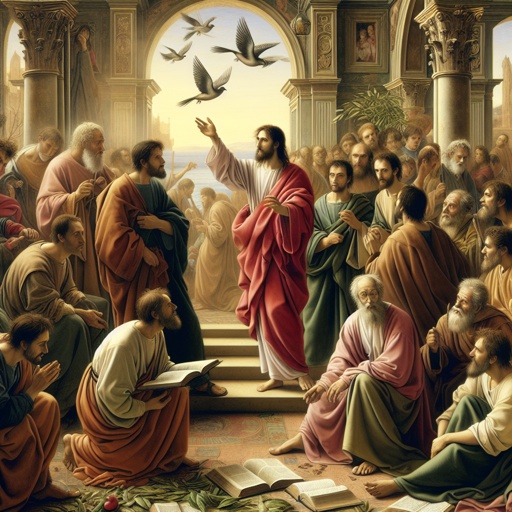
Mark 16:20

Mark 16:20
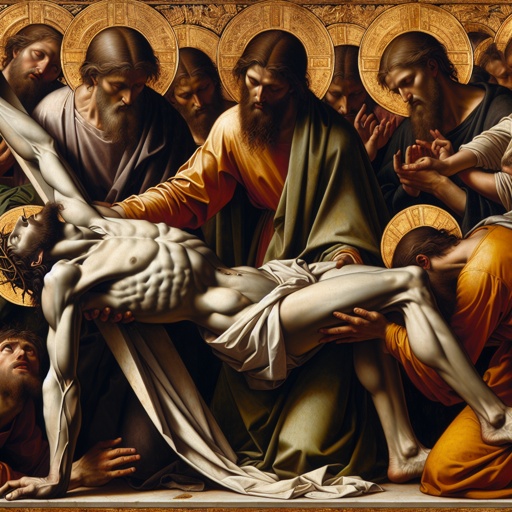
Mark 16:20

Mark 16:20

Mark 16:1-2

Mark 16:6-8

Mark 16:4-5

Mark 16:4-5

Mark 16:6-8

Mark 16:4-5

Mark 10:13–16

Mark 16:6-8

Mark 3:16 - "And Simon he surnamed Peter;"

african american mark 16:11

Mark 9:16 - "And he asked the scribes, What question ye with them?"

Mark 16:13 - "And they went and told it unto the residue: neither believed they them."

african american mary magdalene, mark 16: 9

Mark 16:15-16 - "And he said unto them, Go ye into all the world, and preach the gospel to every creature. He that believeth and is baptized shall be saved; but he that believeth not shall be damned."

Mark 7:16 - "If any man have ears to hear, let him hear."

Mark 8:16 - "And they reasoned among themselves, saying, It is because we have no bread."

Mark 16:4 - "And when they looked, they saw that the stone was rolled away: for it was very great."

Mark 16:10 - "And she went and told them that had been with him, as they mourned and wept."

Mark 16 african american jesus rebukes disciples

Mark 16 african american angry jesus and disciples

"And Simon he surnamed Peter;" - Mark 3:16

Mark 16:11 - "And they, when they had heard that he was alive, and had been seen of her, believed not."

Psalm 1:6