The Legacy of Honor: Reflecting on 1 Chronicles 10:12
“They arose, all the valiant men, and took away the body of Saul, and the bodies of his sons, and brought them to Jabesh, and buried their bones under the oak in Jabesh, and fasted seven days.” — 1 Chronicles 10:12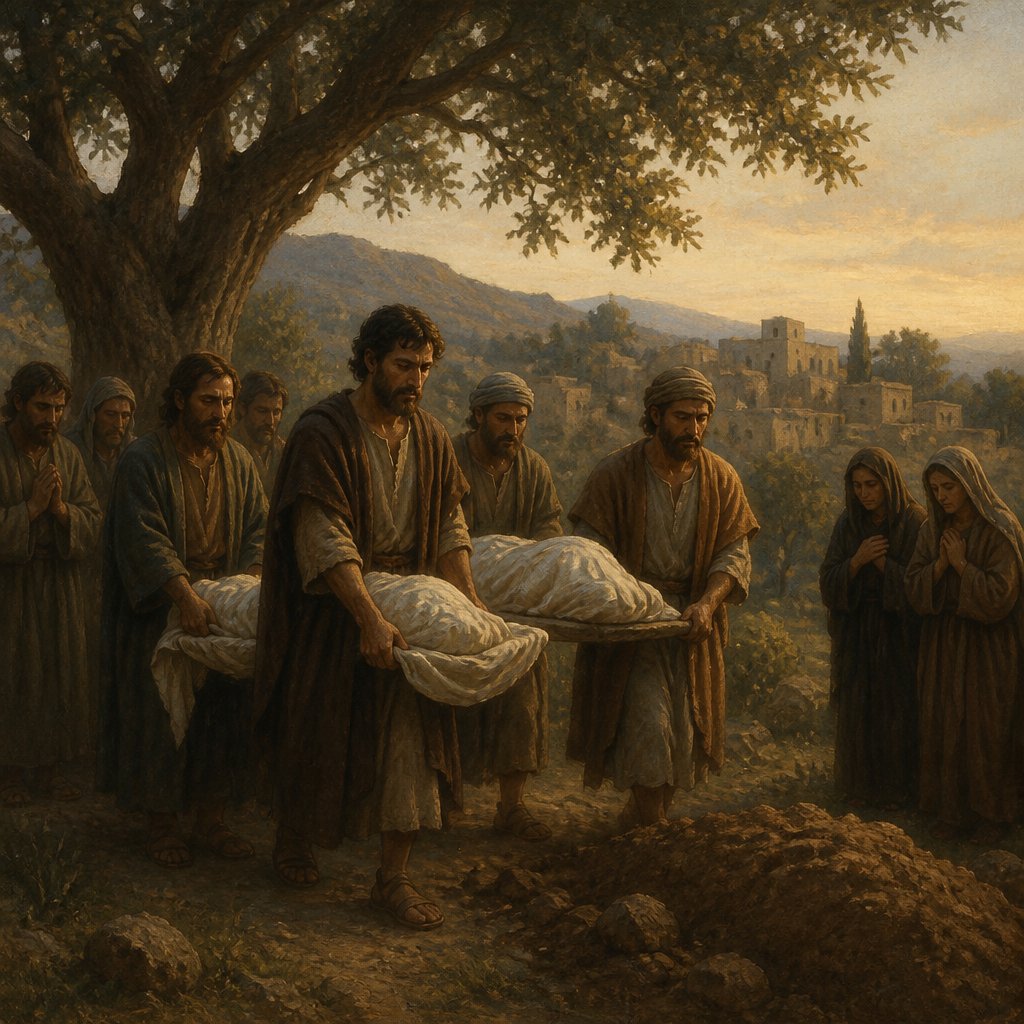
In 1 Chronicles 10:12, we read, "They arose, all the valiant men, and took away the body of Saul, and the bodies of his sons, and brought them to Jabesh, and buried their bones under the oak in Jabesh, and fasted seven days." This powerful verse invites us to ponder the deep sense of honor, respect, and community that permeates this moment of mourning for King Saul and his sons.
To fully appreciate the significance of this passage, we must first understand the context surrounding the deaths of Saul and his sons. King Saul, the very first monarch of Israel, had a complex legacy—one filled with moments of triumph, yet also marked by disobedience and tragic downfall. His life, which began with promise, ended in calamity on the battlefield, the consequence of not following God's commands.
Despite the ways in which Saul had faltered, the response of the valiant men of Jabesh-Gilead reveals a profound sense of loyalty and respect for their fallen king. The men arose, demonstrating their valor not just in battle but in their commitment to honor the memory of their leader. In life, Saul may have faced criticism, even from those closest to him, yet in death, there was a collective realization—a recognition of his kingship and the humanity inherent in every living soul.
They did not simply bury him; they carried the remains of Saul and his sons with dignity, transporting them from the battlefield to Jabesh. This act of retrieval signifies much more than mere burial; it represents a reclamation of identity and dignity for their king and his family. In taking the bodies back home, they reaffirmed their allegiance to Saul, marking a farewell that transcended his errors and failures. They acted from a place of honor and respect, choosing to remember his life and contributions rather than just his tragic end.
Moreover, the seven-day fast that followed the burial holds profound symbolism. Fasting is a biblical practice steeped in humility, reflection, and mourning. It symbolizes a deep sorrow for loss and a longing for reconciliation with God. By fasting, the men of Jabesh-Gilead not only grieved the loss of their king but also sought forgiveness—for Saul’s shortcomings and perhaps for the ways in which they had influenced his reign. In their mourning, they were also likely surrendering their own heartaches: the turmoil of nationhood, the loss of leadership, and the uncertainty of the future.
In our modern lives, this verse from 1 Chronicles serves as a solemn lesson in honor and community. It prompts us to consider how we remember those who have gone before us—be it leaders, family, or friends. Are we choosing to honor their memory by focusing solely on their failures, or are we reflecting on the entirety of their legacy? In relationships plagued by conflict, it encourages us to appreciate the value that each person—flawed as they may be—adds to the greater narrative of our lives.
Furthermore, this passage serves as a reminder of the power of communal mourning and support. The actions of the valiant men highlight the importance of community in processing grief. In times of loss, we are called to rally together, to support one another in remembrance, and to collectively bear each other's burdens.
As we reflect on this verse today, let us recommit ourselves to honor those who have gone before us, recognizing the complexity of their lives. May we cultivate community and foster an environment where mourning does not divide us but rather draws us together, pointing us towards healing and hope. Let us remember the lessons of both Saul’s life and death, reflecting the immense power of grace as we navigate our own journeys in faith.
Get our apps


Artwork for 1 Chronicles 10:12

1 Chronicles 10:12 - "They arose, all the valiant men, and took away the body of Saul, and the bodies of his sons, and brought them to Jabesh, and buried their bones under the oak in Jabesh, and fasted seven days."
"They arose, all the valiant men, and took away the body of Saul, and the bodies of his sons, and brought them to Jabesh, and buried their bones under the oak in Jabesh, and fasted seven days." - 1 Chronicles 10:12

1 Chronicles 12:10 - "Mishmannah the fourth, Jeremiah the fifth,"

"Mishmannah the fourth, Jeremiah the fifth," - 1 Chronicles 12:10

1 Chronicles 12:12 - "Johanan the eighth, Elzabad the ninth,"

2 Chronicles 10:12 - "So Jeroboam and all the people came to Rehoboam on the third day, as the king bade, saying, Come again to me on the third day."

1 Chronicles 1:12 - "And Pathrusim, and Casluhim, (of whom came the Philistines,) and Caphthorim."

1 chronicles 12:8

1 Chronicles 4 : 10

1 Chronicles 12:11 - "Attai the sixth, Eliel the seventh,"

1 Chronicles 10:10 - "And they put his armour in the house of their gods, and fastened his head in the temple of Dagon."

1 Chronicles 12:13 - "Jeremiah the tenth, Machbanai the eleventh."

1 Chronicles 24:12 - "The eleventh to Eliashib, the twelfth to Jakim,"

1 Chronicles 9:10 - "¶ And of the priests; Jedaiah, and Jehoiarib, and Jachin,"

1 Chronicles 1:10 - "And Cush begat Nimrod: he began to be mighty upon the earth."

"Johanan the eighth, Elzabad the ninth," - 1 Chronicles 12:12

1 Chronicles 24:10 - "The seventh to Hakkoz, the eighth to Abijah,"

1 Chronicles 12:7 - "And Joelah, and Zebadiah, the sons of Jeroham of Gedor."

1 Chronicles 10:6 - "So Saul died, and his three sons, and all his house died together."

1 Chronicles 6:12 - "And Ahitub begat Zadok, and Zadok begat Shallum,"

1 Chronicles 12:26 - "Of the children of Levi four thousand and six hundred."

1 Chronicles 12:9 - "Ezer the first, Obadiah the second, Eliab the third,"

1 Chronicles 12:6 - "Elkanah, and Jesiah, and Azareel, and Joezer, and Jashobeam, the Korhites,"

1 Chronicles 12:5 - "Eluzai, and Jerimoth, and Bealiah, and Shemariah, and Shephatiah the Haruphite,"

1 Chronicles 2:12 - "And Boaz begat Obed, and Obed begat Jesse,"

1 Kings 12:10

1 Kings 12:10

2 Chronicles 12:10 - "Instead of which king Rehoboam made shields of brass, and committed them to the hands of the chief of the guard, that kept the entrance of the king's house."

Psalm 10:12-18

1 Kings 12:10