The Weight of Consequences: A Reflection on 1 Chronicles 10:8
“And it came to pass on the morrow, when the Philistines came to strip the slain, that they found Saul and his sons fallen in mount Gilboa.” — 1 Chronicles 10:8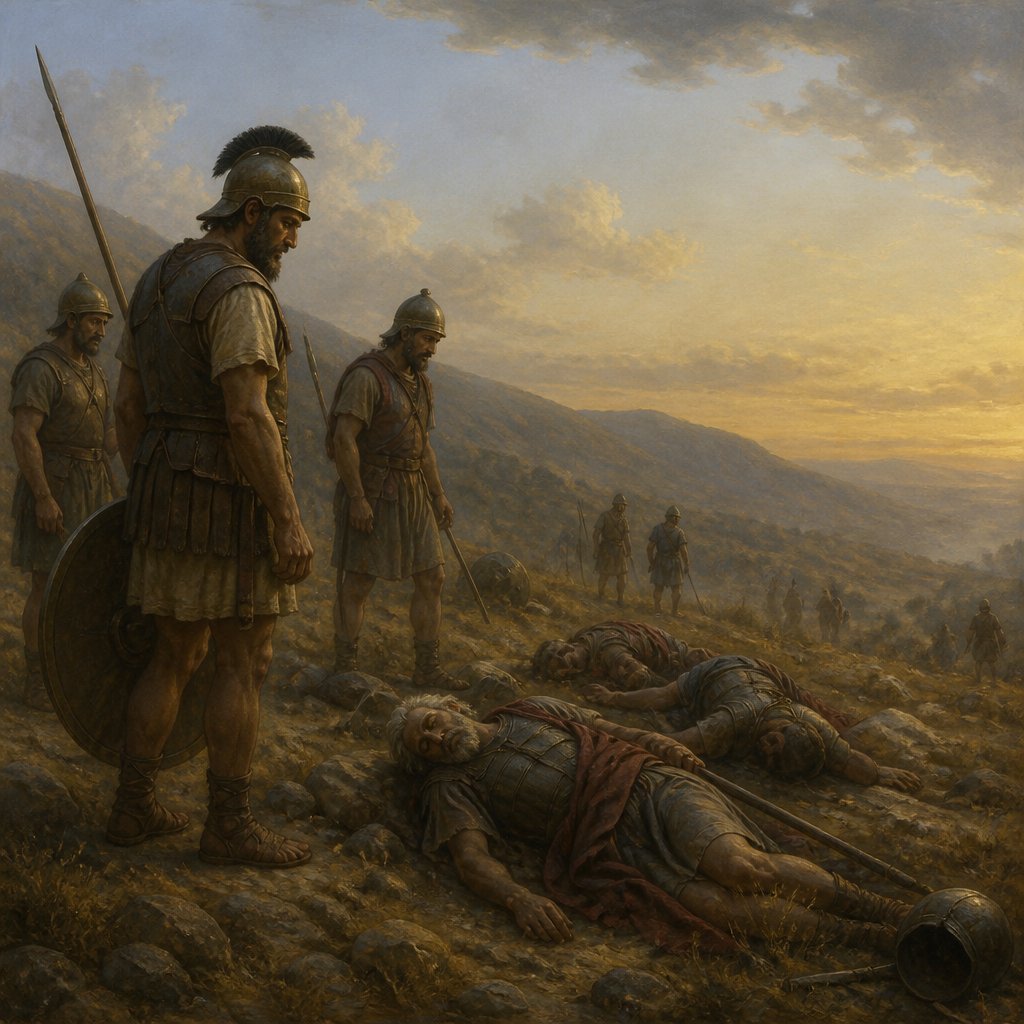
The narrative in 1 Chronicles 10:8 serves as a somber reminder of the consequences of our choices, both in life and death. The verse states: "And it came to pass on the morrow, when the Philistines came to strip the slain, that they found Saul and his sons fallen in mount Gilboa." This is a crucial moment in the biblical account, one that encapsulates the tragic end of King Saul's reign and the drastic downfall of a once-renowned leader.
On the surface, this verse recounts a moment of grim military engagement, where the Philistines came to claim the spoils of victory after a deadly battle. However, peeling back the layers reveals a profound spiritual truth. Saul, the first king of Israel, was anointed by God but ultimately fell short of his potential due to disobedience, pride, and an unwillingness to repent. His life highlights the danger of straying from God's will.
Saul's demise serves as a poignant cautionary tale about the weight of consequences borne from our choices. In moments of trial, it’s natural to question, "How did it come to this?"—a question that resonates throughout Scripture when considering the downfall of great leaders. Saul was not forsaken by God immediately; it was through his actions that he severed his relationship with the Almighty.
To fully grasp the context of this verse, we must understand the backdrop of Saul's life. In 1 Samuel chapters 8 through 10, we see the people's demand for a king, which initially displeases God. Yet, God grants this desire, appointing Saul as king. With this honor, however, comes substantial responsibility. Saul's reign was marred by instances of disobedience—whether it was his unlawful sacrifices, his sparing of Agag (the king of Amalek), or his refusal to heed God’s instructions. Each disobedience sowed seeds of division and doubt among the Israelites and allowed insecurity to fester in Saul's heart.
Now, contemplating the scene described in 1 Chronicles 10:8, one cannot ignore the haunting silence that must have followed as the Philistines discovered Saul and his sons fallen on Mount Gilboa. This act of stripping the slain was not merely a military endeavor; it signified the utter loss of dignity and the catastrophic failure of a leader. Here lies the heart of the matter: how often do we, in our quest for control, lose sight of God’s plan for our lives? How frequently do we allow our own desires to eclipse our duty to our Creator?
In moments of self-reflection, we should ask ourselves: Are there areas in our lives where we are experiencing spiritual defeats or feeling isolated from God? Are we carrying the weight of unresolved sins, wondering how it could come to this? The beauty of God’s grace is that no matter how far we stray, His invitation to return is ever-present. Saul’s narrative, despite its tragic ending, invites us to consider the depth of God’s mercy. Although Saul did not repent, we, as modern believers, ought to recognize when God is calling us back, reminding us that even the most wayward heart can find redemption through humility and repentance.
As we meditate on the consequences that followed Saul's life choices, let us be inspired to live with intention and awareness. There is a divine purpose for each of us, and living outside of that purpose inevitably leads to downfall. Learn from the lessons found in Saul’s story; choose obedience over pride, humility over arrogance, and the Spirit’s leading over worldly desires. Let us strive to embody the qualities that God desires in His leaders and His people. May this reflection on 1 Chronicles 10:8 stir within us a fervent desire to seek God’s will, to lead with love, and to embrace the gift of repentance wherever necessary.
Get our apps


Artwork for 1 Chronicles 10:8

1 Chronicles 10:8 - "¶ And it came to pass on the morrow, when the Philistines came to strip the slain, that they found Saul and his sons fallen in mount Gilboa."
"¶ And it came to pass on the morrow, when the Philistines came to strip the slain, that they found Saul and his sons fallen in mount Gilboa." - 1 Chronicles 10:8

1 Chronicles 8:10 - "And Jeuz, and Shachia, and Mirma. These were his sons, heads of the fathers."
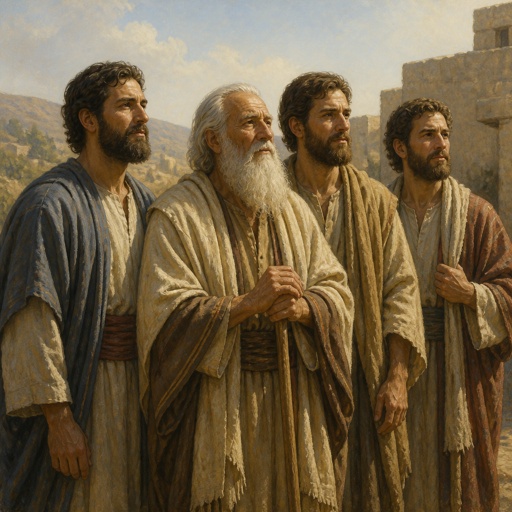
"And Jeuz, and Shachia, and Mirma. These were his sons, heads of the fathers." - 1 Chronicles 8:10

2 Chronicles 10:8 - "But he forsook the counsel which the old men gave him, and took counsel with the young men that were brought up with him, that stood before him."

1 Chronicles 1:8 - "¶ The sons of Ham; Cush, and Mizraim, Put, and Canaan."

1 Chronicles 4 : 10

1 chronicles 12:8

1 Chronicles 8:31 - "And Gedor, and Ahio, and Zacher."

1 Chronicles 8:20 - "And Elienai, and Zilthai, and Eliel,"

1 Chronicles 8:19 - "And Jakim, and Zichri, and Zabdi,"

1 Chronicles 8:24 - "And Hananiah, and Elam, and Antothijah,"

1 Chronicles 8:5 - "And Gera, and Shephuphan, and Huram."

1 Chronicles 8:26 - "And Shamsherai, and Shehariah, and Athaliah,"

1 Chronicles 8:22 - "And Ishpan, and Heber, and Eliel,"

1 Chronicles 8:14 - "And Ahio, Shashak, and Jeremoth,"

1 Chronicles 2:8 - "And the sons of Ethan; Azariah."

1 Chronicles 8:23 - "And Abdon, and Zichri, and Hanan,"

1 Chronicles 8:4 - "And Abishua, and Naaman, and Ahoah,"

1 Chronicles 8:15 - "And Zebadiah, and Arad, and Ader,"

1 Chronicles 10:10 - "And they put his armour in the house of their gods, and fastened his head in the temple of Dagon."

1 Chronicles 8:2 - "Nohah the fourth, and Rapha the fifth."

1 Chronicles 3:8 - "And Elishama, and Eliada, and Eliphelet, nine."

1 Chronicles 9:10 - "¶ And of the priests; Jedaiah, and Jehoiarib, and Jachin,"

2 Chronicles 8:10 - "And these were the chief of king Solomon's officers, even two hundred and fifty, that bare rule over the people."

1 Chronicles 1:10 - "And Cush begat Nimrod: he began to be mighty upon the earth."

1 Chronicles 12:10 - "Mishmannah the fourth, Jeremiah the fifth,"

1 Chronicles 24:10 - "The seventh to Hakkoz, the eighth to Abijah,"

1 Chronicles 8:17 - "And Zebadiah, and Meshullam, and Hezeki, and Heber,"

1 Chronicles 24:8 - "The third to Harim, the fourth to Seorim,"