Strength in Unity: The Power of Coming Together
“As he went to Ziklag, there fell to him of Manasseh, Adnah, and Jozabad, and Jediael, and Michael, and Jozabad, and Elihu, and Zilthai, captains of the thousands that were of Manasseh.” — 1 Chronicles 12:20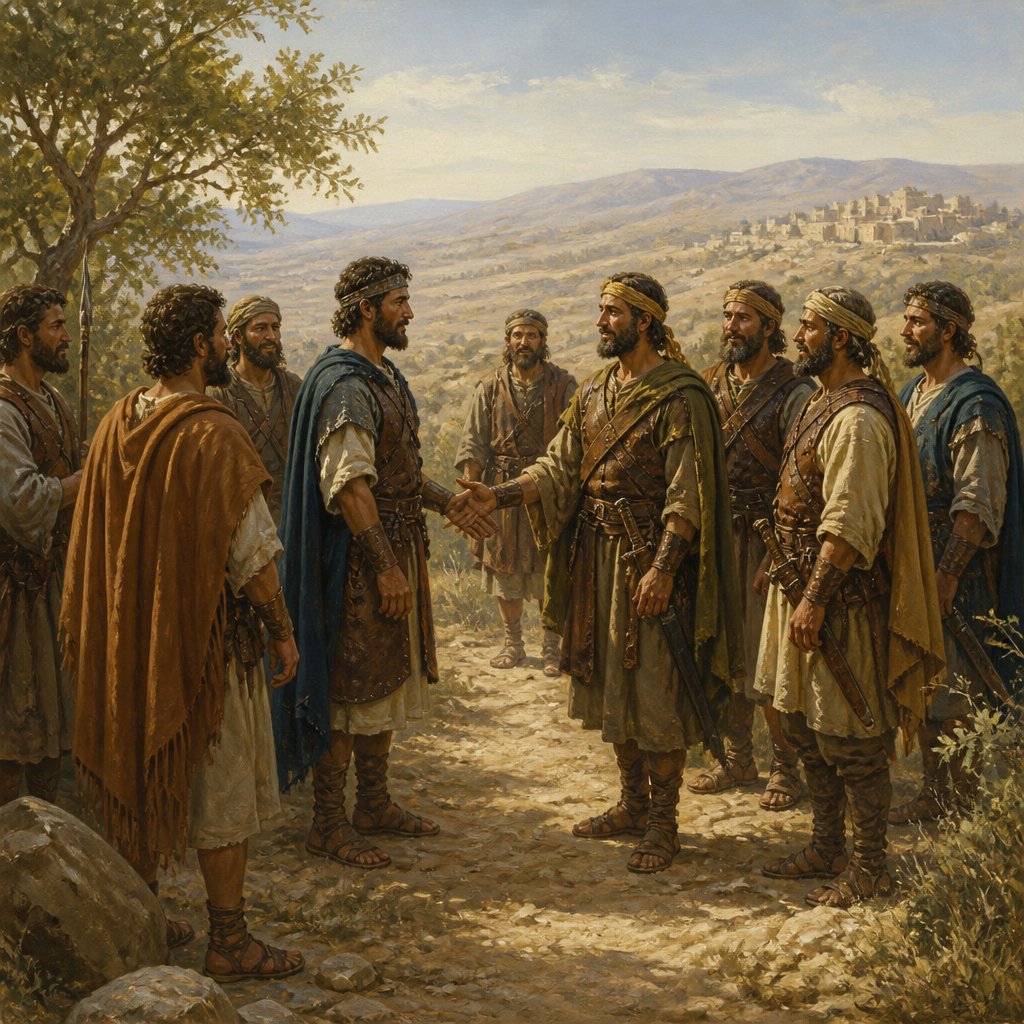
As we delve into 1 Chronicles 12:20, we encounter a moment of significance in the historical narrative of Israel’s transition of power. The verse reads, "As he went to Ziklag, there fell to him of Manasseh, Adnah, and Jozabad, and Jediael, and Michael, and Jozabad, and Elihu, and Zilthai, captains of the thousands that were of Manasseh" (KJV). This verse encapsulates the importance of unity and divine providence in the unfolding story of King David’s ascension.
The context of this passage finds David in a time of transition and turmoil. After fleeing from King Saul, David garnered a following as he sought refuge in Ziklag. It is here, amidst his trials, that he begins to gather men from various tribes, forming a coalition that would solidify his claim to the throne of Israel. The arrival of the captains from the tribe of Manasseh signifies more than just a military alliance; it symbolizes a pivotal moment where loyalty and support coalesce to foster a movement toward unification under God’s chosen leader.
The list of names—Adnah, Jozabad, Jediael, Michael, Elihu, and Zilthai—might appear to us as mere historical records. However, these names embody the strength of unity. Each individual represents different qualities and gifts, coming from a tribe that had experienced its own challenges. By choosing to ally with David, they demonstrated faithfulness and active participation in God’s plan. In a world that often emphasizes individuality and personal achievement, this passage reminds us of the importance of community in our spiritual journeys.
Consider the implications of their decision. By joining David, the men from Manasseh were not only risking their own safety but also choosing to align themselves with God’s purpose during a time of chaos. Their commitment resonates with us today as we contemplate our allegiances. Are we aligning ourselves with God’s vision for our lives and communities? Are we supporting leaders who are rooted in faith and integrity? Their bold step reminds us that our choices matter, and we are often called to stand with others in faith, even when the circumstances seem daunting.
The arrival of these captains also speaks to the divine orchestration of events. God knew David’s need for allies and orchestrated the hearts of these warriors to respond. This illustrates an essential truth—God is always at work, even when we cannot fully see or comprehend it. The captains who came to David in Ziklag were responding to a divine call, indicating that God prepares the hearts and minds of those He wants to use in His plan. In our own lives, we may not always understand how things fit together, but we can trust that God knows and works towards our good.
Moreover, the act of coming together in community isn't merely about the collective strength but also about shared purpose. Each captain brought his warfare experience, strategic thinking, and personal commitment to the cause, underlining that when we stand together, our unique contributions foreground a stronger front against adversity. In our churches and communities, we are called to recognize and celebrate the diverse gifts and perspectives that each person brings. This richness is what strengthens us and allows us to tackle challenges that no single individual could handle alone.
As we reflect upon 1 Chronicles 12:20, let us take encouragement from the story of David and the captains of Manasseh. In our lives, may we seek unity, stand firm in our faith, and actively contribute to the communal life of the body of Christ—the Church. Let us not forget that like David and the men who supported him, we are part of something greater than ourselves. Together, under God’s guidance, we can navigate the trials of life and move toward His glorious purpose.
Get our apps


Artwork for 1 Chronicles 12:20

1 Chronicles 12:20 - "As he went to Ziklag, there fell to him of Manasseh, Adnah, and Jozabad, and Jediael, and Michael, and Jozabad, and Elihu, and Zilthai, captains of the thousands that were of Manasseh."
"As he went to Ziklag, there fell to him of Manasseh, Adnah, and Jozabad, and Jediael, and Michael, and Jozabad, and Elihu, and Zilthai, captains of the thousands that were of Manasseh." - 1 Chronicles 12:20

1 chronicles 12:8

1 Chronicles 12:12 - "Johanan the eighth, Elzabad the ninth,"

1 Chronicles 1:20 - "And Joktan begat Almodad, and Sheleph, and Hazarmaveth, and Jerah,"

1 Chronicles 8:20 - "And Elienai, and Zilthai, and Eliel,"

1 Chronicles 1:12 - "And Pathrusim, and Casluhim, (of whom came the Philistines,) and Caphthorim."

1 Chronicles 23:20 - "Of the sons of Uzziel; Michah the first, and Jesiah the second."

1 Chronicles 2:20 - "And Hur begat Uri, and Uri begat Bezaleel."

1 Chronicles 12:10 - "Mishmannah the fourth, Jeremiah the fifth,"

1 Chronicles 12:13 - "Jeremiah the tenth, Machbanai the eleventh."

1 Chronicles 12:11 - "Attai the sixth, Eliel the seventh,"

1 Chronicles 3:20 - "And Hashubah, and Ohel, and Berechiah, and Hasadiah, Jushab-hesed, five."

1 Chronicles 24:12 - "The eleventh to Eliashib, the twelfth to Jakim,"

"Johanan the eighth, Elzabad the ninth," - 1 Chronicles 12:12

1 Chronicles 12:7 - "And Joelah, and Zebadiah, the sons of Jeroham of Gedor."

1 Corinthians 12:20 - "But now are they many members, yet but one body."

1 Chronicles 6:12 - "And Ahitub begat Zadok, and Zadok begat Shallum,"

1 Chronicles 12:26 - "Of the children of Levi four thousand and six hundred."

1 Chronicles 12:9 - "Ezer the first, Obadiah the second, Eliab the third,"

1 Chronicles 12:6 - "Elkanah, and Jesiah, and Azareel, and Joezer, and Jashobeam, the Korhites,"

1 Chronicles 25:20 - "The thirteenth to Shubael, he, his sons, and his brethren, were twelve:"

"And Elienai, and Zilthai, and Eliel," - 1 Chronicles 8:20

1 Chronicles 12:5 - "Eluzai, and Jerimoth, and Bealiah, and Shemariah, and Shephatiah the Haruphite,"

1 Chronicles 2:12 - "And Boaz begat Obed, and Obed begat Jesse,"

1 Chronicles 6:20 - "Of Gershom; Libni his son, Jahath his son, Zimmah his son,"

1 Chronicles 15:20 - "And Zechariah, and Aziel, and Shemiramoth, and Jehiel, and Unni, and Eliab, and Maaseiah, and Benaiah, with psalteries on Alamoth;"

1 Chronicles 16:20 - "And when they went from nation to nation, and from one kingdom to another people;"

1 Chronicles 9:20 - "And Phinehas the son of Eleazar was the ruler over them in time past, and the LORD was with him."

1 Chronicles 5:12 - "Joel the chief, and Shapham the next, and Jaanai, and Shaphat in Bashan."