The Legacy of Loyalty: Lessons from Benjamin's Sons
“And of the children of Benjamin, the kindred of Saul, three thousand: for hitherto the greatest part of them had kept the ward of the house of Saul.” — 1 Chronicles 12:29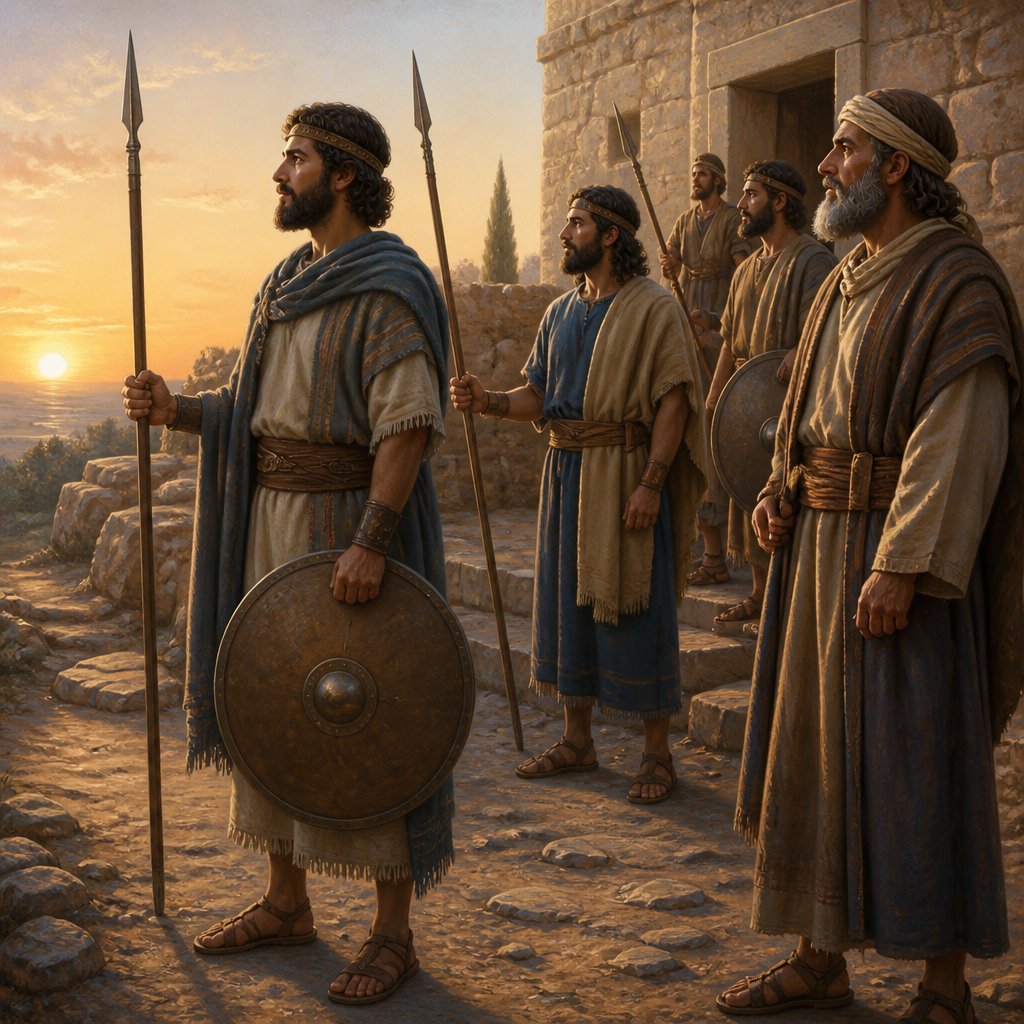
As we delve into the deep historical tapestry of 1 Chronicles 12:29, we find ourselves standing before a significant moment in Israel's transition from the kingdom of Saul to the monarchy established by David. The verse states, "And of the children of Benjamin, the kindred of Saul, three thousand: for hitherto the greatest part of them had kept the ward of the house of Saul."
At first glance, this verse can seem like merely a statistical report; a historical footnote detailing the number of men from the tribe of Benjamin who remained loyal to King Saul. However, upon closer examination of the context and implications of their loyalty, we can draw profound lessons regarding fidelity, identity, and the pursuit of God's will.
The tribe of Benjamin had a significant place in the history of Israel. It was from this tribe that King Saul originated, and for many years, they enjoyed the prestige of having their own king. The loyalty of these men to Saul's house, even as the tide of national support turned toward David, speaks volumes about their identity and connections. They had heavily invested in Saul's reign, not only politically but also emotionally and culturally. This investment naturally led to a certain reluctance to pivot away from his legacy, despite the clear, unfolding divine plan surrounding David's rise.
For many of us, the questions of loyalty and identity resonate deeply. We often grapple with our attachments to people, places, and traditions that have formed us. Just as the children of Benjamin had to confront their allegiance to Saul, we too are sometimes called to evaluate our loyalties and determine whether they still align with God's directives. Loyalty can be noble, but if it binds us to something that runs counter to God's will, it becomes a barrier to fulfilling our divine purpose.
The historic backdrop painted here is significant; it reminds us that God's plans are often realized through seemingly complex human dynamics. The fact that three thousand Benjaminite men remained loyal to Saul highlights the challenge that often accompanies following God. Many times, He calls us out of familiar territories or requires us to let go of foundational relationships to step into a new season.
Yet, it is essential to note that not all of the children of Benjamin remained with Saul. The passage shows us that a remnant was willing to break with tradition and embrace the leadership of David. These men exemplified faith over familiarity. Their choice leads us to reflect on the idea of 'the remnant' throughout Biblical history. There are always those who are willing to step outside the shadows of the past to follow a new era that God is ushering in.
Within our lives, there are moments when God calls us to redefine our loyalties. Our challenge is to discern whether our current allegiances are serving our calling or hindering our walk with Him. It could be a job, a relationship, or even a habit that no longer fosters growth or aligns with God's purpose. Are we willing to listen to God when He prompts us to make hard choices? Are we willing to trust Him enough to let go, even if it seems counterintuitive?
Ultimately, the story of the children of Benjamin is a reminder of the hope that comes with transition. God is continually at work, positioning us, preparing us for the next chapter of our lives. We can find comfort in knowing that as we evaluate and sometimes recalibrate our loyalties, the Great Author of our faith writes our stories not just for our benefit, but for the fulfillment of His Kingdom's purposes.
In our prayers today, let us ask God to reveal any areas in our hearts and lives where we may be clinging to past loyalties - where we may be resisting the changes He is calling us toward. May we be strengthened to embrace new paths, trusting that He knows best the way forward. Amen.
Get our apps


Artwork for 1 Chronicles 12:29

1 Chronicles 12:29 - "And of the children of Benjamin, the kindred of Saul, three thousand: for hitherto the greatest part of them had kept the ward of the house of Saul."
"And of the children of Benjamin, the kindred of Saul, three thousand: for hitherto the greatest part of them had kept the ward of the house of Saul." - 1 Chronicles 12:29

1 Chronicles 29:12 - "Both riches and honour come of thee, and thou reignest over all; and in thine hand is power and might; and in thine hand it is to make great, and to give strength unto all."

1 Chronicles 4:29 - "And at Bilhah, and at Ezem, and at Tolad,"

1 Chronicles 1:29 - "¶ These are their generations: The firstborn of Ishmael, Nebaioth; then Kedar, and Adbeel, and Mibsam,"

1 Chronicles 11:29 - "Sibbecai the Hushathite, Ilai the Ahohite,"

1 Chronicles 24:29 - "Concerning Kish: the son of Kish was Jerahmeel."

1 chronicles 12:8

1 Chronicles 12:12 - "Johanan the eighth, Elzabad the ninth,"

1 Chronicles 29:29 - "Now the acts of David the king, first and last, behold, they are written in the book of Samuel the seer, and in the book of Nathan the prophet, and in the book of Gad the seer,"

1 Chronicles 29:26 - "¶ Thus David the son of Jesse reigned over all Israel."

1 Chronicles 8:29 - "And at Gibeon dwelt the father of Gibeon; whose wife's name was Maachah:"

"And at Bilhah, and at Ezem, and at Tolad," - 1 Chronicles 4:29

1 Chronicles 2:29 - "And the name of the wife of Abishur was Abihail, and she bare him Ahban, and Molid."

1 Chronicles 25:29 - "The two and twentieth to Giddalti, he, his sons, and his brethren, were twelve:"

1 Chronicles 1:12 - "And Pathrusim, and Casluhim, (of whom came the Philistines,) and Caphthorim."

1 Chronicles 16:29 – "Ascribe to the Lord the glory due his name; bring an offering and come before him."

1 Chronicles 29:13 - "Now therefore, our God, we thank thee, and praise thy glorious name."

1 Chronicles 26:29 - "¶ Of the Izharites, Chenaniah and his sons were for the outward business over Israel, for officers and judges."

"Sibbecai the Hushathite, Ilai the Ahohite," - 1 Chronicles 11:29

1 Chronicles 6:29 - "The sons of Merari; Mahli, Libni his son, Shimei his son, Uzza his son,"

1 Kings 14:29 - "¶ Now the rest of the acts of Rehoboam, and all that he did, are they not written in the book of the chronicles of the kings of Judah?"

1 Kings 12:29 - "And he set the one in Beth-el, and the other put he in Dan."

1 Corinthians 12:29 - "Are all apostles? are all prophets? are all teachers? are all workers of miracles?"

1 Chronicles 12:10 - "Mishmannah the fourth, Jeremiah the fifth,"

1 Chronicles 12:13 - "Jeremiah the tenth, Machbanai the eleventh."

1 Chronicles 12:11 - "Attai the sixth, Eliel the seventh,"

1 Chronicles 24:12 - "The eleventh to Eliashib, the twelfth to Jakim,"

1 Chronicles 29:6 - "¶ Then the chief of the fathers and princes of the tribes of Israel, and the captains of thousands and of hundreds, with the rulers of the king's work, offered willingly,"

"¶ These are their generations: The firstborn of Ishmael, Nebaioth; then Kedar, and Adbeel, and Mibsam," - 1 Chronicles 1:29