The Joyful Pursuit of Worship: Lessons from David’s Celebration
“And David and all Israel played before God with all their might, and with singing, and with harps, and with psalteries, and with timbrels, and with cymbals, and with trumpets.” — 1 Chronicles 13:8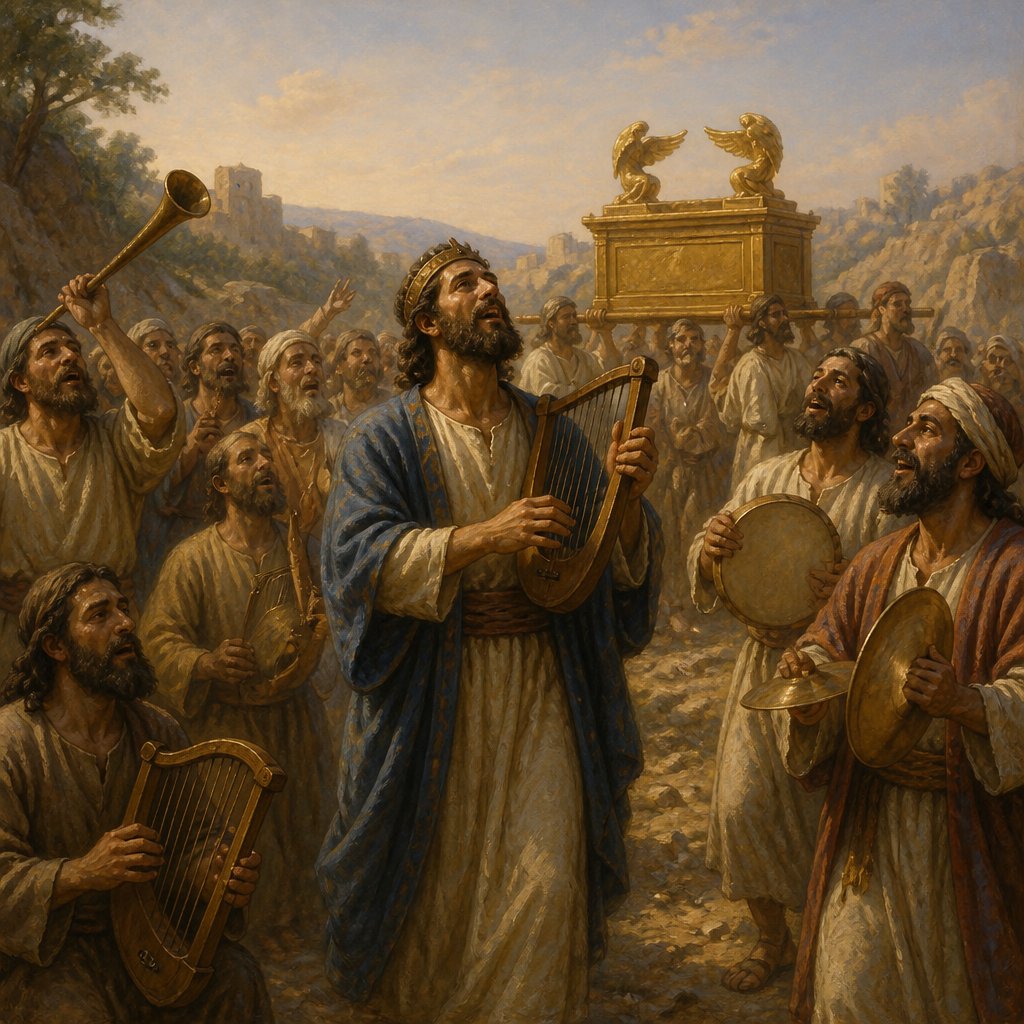
In 1 Chronicles 13:8, we read, "And David and all Israel played before God with all their might, and with singing, and with harps, and with psalteries, and with timbrels, and with cymbals, and with trumpets." This powerful verse encapsulates not only the heart of worship but also the spirit of community and the exuberance of celebrating God together.
As King David led Israel in bringing the Ark of the Covenant to Jerusalem, the scene was nothing short of monumental. The Ark symbolized God’s presence among His people, and this event marked a pivotal moment in their spiritual journey. David understood the significance of this occasion, and he committed himself, along with all the people of Israel, to worship God with their whole hearts. The details provided in this verse transport us back to a time of heartfelt devotion, genuine joy, and communal celebration.
First, let’s focus on the phrase "with all their might." This implies a vigorous and enthusiastic participation in worship. David exemplified that true worship is not passive or reserved; it is an active, energetic response to God's greatness. In many churches today, we might find our worship significantly more restrained than the vibrant celebration characterized by David and the people of Israel. Are we bringing our full selves into our worship practices? Are we engaging our hearts, souls, and bodies in a way that reflects our understanding of who God is?
The variety of instruments mentioned demonstrates the diversity of worship that can occur in response to God's glory. The harps, psalteries, timbrels, cymbals, and trumpets all contribute to a magnificent symphony of praise. Each instrument produces unique sounds, just as each of us brings our distinct voices and talents into the fold of worship. It is a beautiful reminder that worship does not conform to one style or expression; it embraces various forms. As you worship, consider what instruments—be they literal or metaphorical—you might possess that can contribute to the worship of God. This could be your voice, your creativity, or your service to others.
The emphasis on collective worship is also striking. David led not just a few individuals but all of Israel in singing and praising God. Worshiping God is a communal endeavor, and there is a special kind of unity that arises when God’s people come together in praise. Perhaps you can reflect on your own church community—how do you contribute to this collective spirit of worship? Do you participate actively, not just as a spectator but as an essential part of a larger body?
Moreover, the choice to bring the Ark of the Covenant into Jerusalem reveals David’s desire for God to be at the center of their lives. He understood that, as a nation, their identity hinged on a relationship with God. Let us ask ourselves: Is God at the center of our lives, homes, and communities? Do we seek to invite His presence into our everyday affairs? Much like David, we are called to act intentionally in bringing God into the forefront of our lives. This could mean prioritizing time for prayer, Bible study, and worship amidst our busy schedules.
In essence, David’s passionate worship is a model for us. It teaches us to worship with abandon, skill, and sincerity, recognizing that the object of our worship—the Lord—is worthy of our utmost devotion. Let us commit to engaging with our might in our worship, bringing our whole selves into the experience, and seeking to create spaces where communal worship thrives.
As we meditate on this verse, let it inspire us to pursue a deeper, more joyful, and communal worship experience—worship that is vibrant, active, and centered on the King of Glory.
Get our apps


Artwork for 1 Chronicles 13:8

1 Chronicles 13:8 - "And David and all Israel played before God with all their might, and with singing, and with harps, and with psalteries, and with timbrels, and with cymbals, and with trumpets."
"And David and all Israel played before God with all their might, and with singing, and with harps, and with psalteries, and with timbrels, and with cymbals, and with trumpets." - 1 Chronicles 13:8

1 Chronicles 8:13 - "Beriah also, and Shema, who were heads of the fathers of the inhabitants of Aijalon, who drove away the inhabitants of Gath:"

1 Chronicles 1:13 - "And Canaan begat Zidon his firstborn, and Heth,"

1 Chronicles 1:8 - "¶ The sons of Ham; Cush, and Mizraim, Put, and Canaan."

1 Chronicles 13:1 - "And David consulted with the captains of thousands and hundreds, and with every leader."

1 chronicles 12:8

1 Chronicles 8:31 - "And Gedor, and Ahio, and Zacher."

1 Chronicles 8:20 - "And Elienai, and Zilthai, and Eliel,"

1 Chronicles 8:19 - "And Jakim, and Zichri, and Zabdi,"

1 Chronicles 8:24 - "And Hananiah, and Elam, and Antothijah,"

1 Chronicles 24:13 - "The thirteenth to Huppah, the fourteenth to Jeshebeab,"

1 Chronicles 12:13 - "Jeremiah the tenth, Machbanai the eleventh."

1 Chronicles 8:5 - "And Gera, and Shephuphan, and Huram."

1 Chronicles 8:26 - "And Shamsherai, and Shehariah, and Athaliah,"

1 Chronicles 8:22 - "And Ishpan, and Heber, and Eliel,"

1 Chronicles 8:14 - "And Ahio, Shashak, and Jeremoth,"

1 Chronicles 2:8 - "And the sons of Ethan; Azariah."

1 Chronicles 8:23 - "And Abdon, and Zichri, and Hanan,"

1 Chronicles 8:4 - "And Abishua, and Naaman, and Ahoah,"

1 Chronicles 8:15 - "And Zebadiah, and Arad, and Ader,"

2 Kings 13:8 - "¶ Now the rest of the acts of Jehoahaz, and all that he did, and his might, are they not written in the book of the chronicles of the kings of Israel?"

Matthew 13:8

Romans 13:8

Romans 13:8

Luke 8:13

Luke 8:13

Luke 8:13

1 Chronicles 8:2 - "Nohah the fourth, and Rapha the fifth."

1 Chronicles 3:8 - "And Elishama, and Eliada, and Eliphelet, nine."