The Gift of Grace in Shame
“Then there went certain, and told David how the men were served. And he sent to meet them: for the men were greatly ashamed. And the king said, Tarry at Jericho until your beards be grown, and then return.” — 1 Chronicles 19:5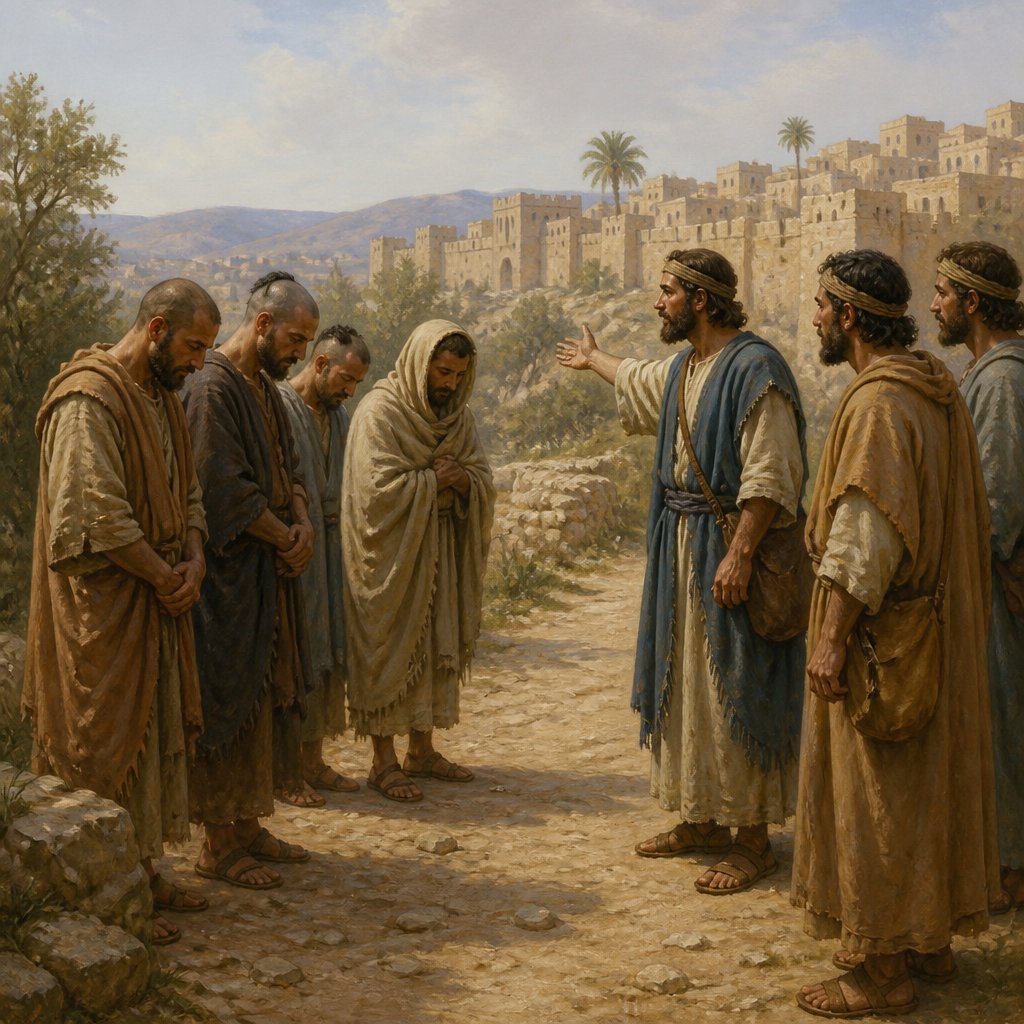
In the tapestry of human experience, few emotions weigh as heavily as shame. It buries deep into the hearts of men, much like the dust that settles quietly on forgotten memories. In 1 Chronicles 19:5, we encounter a poignant moment that speaks profoundly to our human condition: "Then there went certain, and told David how the men were served. And he sent to meet them: for the men were greatly ashamed. And the king said, Tarry at Jericho until your beards be grown, and then return."
This verse unfolds a narrative filled with both pain and compassion. To understand the weight of the moment, we must recall its context. David's messengers had been sent to express goodwill to Hanun, the king of the Ammonites, following the death of his father, Nahash. Instead of receiving the king’s envoys with hospitality, Hanun's advisers shamefully humiliated them by shaving half of their beards and cutting their garments, exposing them to ridicule in a culture where honor was paramount. As they returned to David, these men were not only wounded in body but also in spirit, carrying the heaviness of disgrace.
David’s response to this situation is striking. Rather than allowing his men to return immediately in their state of humiliation, he sends them to Jericho, effectively providing a pause—their beards needed time to regrow, and they required privacy to reclaim their dignity. This gesture is significant, as it reflects David's deep understanding of the emotional and spiritual implications of shame. He falters not in his duty as a king, not only to protect his kingdom but to nurture the hearts of those under his command.
The king's command offers us profound insights into the grace that God extends toward us during our moments of shame. In life, we all encounter dishonor, whether through our mistakes, the judgments of others, or circumstances entirely out of our control. Like David's men, we live in a world where shame often feels insurmountable, threatening to define our identities.
However, much like a tree pruned in the winter season, we have the promise of regrowth. David's instruction to the men to "tarry at Jericho" conveys an essential truth: when faced with shame, we must allow ourselves the space and time to heal. Jericho, a city with its rich biblical significance, serves as a sanctuary, a place of refuge and comfort—a reminder that even when external circumstances seek to dishonor us, God has a greater plan for our restoration.
As we reflect upon our own experiences of shame, we must, like David’s men, understand the importance of patience in our healing journeys. While the world incessantly urges us to move on or brush off our scars, God invites us to a deeper healing process. Here, we are reminded that the removal of shame is not instantaneous; it is through a period of waiting, growth, and intimacy with God that our souls find restoration. God does not dismiss our feelings but recognizes the need for grace-filled spaces where we can bear our burdens with the assurance that He is present.
Furthermore, the act of allowing these men the time to let their beards grow back symbolizes God’s heart for dignity in redemption. Just as our physical appearance can tell a story of vulnerability, so do our souls bear testimony to the wounds inflicted by the world. Yet, as much as the world sees our brokenness, God sees beyond it—He desires to cultivate beauty from ashes, as promised in Isaiah 61:3.
In conclusion, let us linger on the fact that shame, while real, does not have to be the final chapter. Just as David provided a space of grace for his men, His mercies toward us are new every morning (Lamentations 3:22-23). May we willingly walk to our Jericho when shame threatens to steal our joy, trusting that in time, like a favorably grown beard, we will emerge restored, dignified, and standing tall again in the presence of our King.
Get our apps


Artwork for 1 Chronicles 19:5

1 Chronicles 19:5 - "Then there went certain, and told David how the men were served. And he sent to meet them: for the men were greatly ashamed. And the king said, Tarry at Jericho until your beards be grown, and then return."
"Then there went certain, and told David how the men were served. And he sent to meet them: for the men were greatly ashamed. And the king said, Tarry at Jericho until your beards be grown, and then return." - 1 Chronicles 19:5

1 Chronicles 5:19 - "And they made war with the Hagarites, with Jetur, and Nephish, and Nodab."
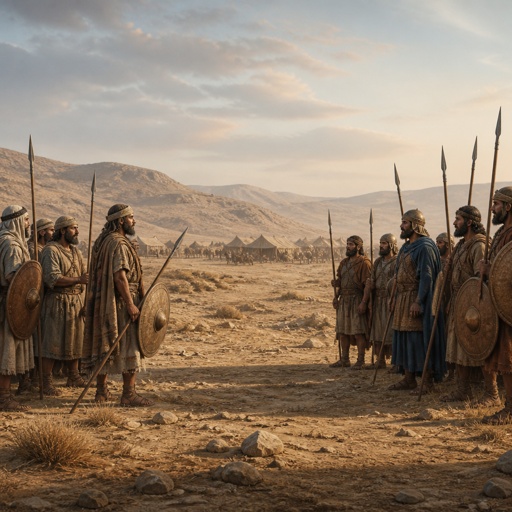
"And they made war with the Hagarites, with Jetur, and Nephish, and Nodab." - 1 Chronicles 5:19

2 Chronicles 19:5 - "¶ And he set judges in the land throughout all the fenced cities of Judah, city by city,"

1 Chronicles 8:19 - "And Jakim, and Zichri, and Zabdi,"

1 Thessalonians 5:19 - "Quench not the Spirit."

"¶ And he set judges in the land throughout all the fenced cities of Judah, city by city," - 2 Chronicles 19:5

luke 21:5-19

1 Chronicles 5:5 - "Micah his son, Reaia his son, Baal his son,"

1 Chronicles 16:19 - "When ye were but few, even a few, and strangers in it."

1 Chronicles 7:19 - "And the sons of Shemidah were, Ahian, and Shechem, and Likhi, and Aniam."

1 Chronicles 8:5 - "And Gera, and Shephuphan, and Huram."

1 Chronicles 14:5 - "And Ibhar, and Elishua, and Elpalet,"

1 Chronicles 26:19 - "These are the divisions of the porters among the sons of Kore, and among the sons of Merari."

1 Chronicles 6:19 - "The sons of Merari; Mahli, and Mushi. And these are the families of the Levites according to their fathers."

1 Chronicles 2:5 - "The sons of Pharez; Hezron, and Hamul."

1 Chronicles 27:19 - "Of Zebulun, Ishmaiah the son of Obadiah: of Naphtali, Jerimoth the son of Azriel:"

2 Chronicles 19:1 - "And Jehoshaphat the king of Judah returned to his house in peace to Jerusalem."

1 Chronicles 1:5 - "¶ The sons of Japheth; Gomer, and Magog, and Madai, and Javan, and Tubal, and Meshech, and Tiras."

1 Chronicles 25:19 - "The twelfth to Hashabiah, he, his sons, and his brethren, were twelve:"

1 Chronicles 9:5 - "And of the Shilonites; Asaiah the firstborn, and his sons."

1 Chronicles 19:1 - "Now it came to pass after this, that Nahash the king of the children of Ammon died, and his son reigned in his stead."

"And Jakim, and Zichri, and Zabdi," - 1 Chronicles 8:19

1 Chronicles 15:19 - "So the singers, Heman, Asaph, and Ethan, were appointed to sound with cymbals of brass;"

1 Chronicles 19:8 - "And when David heard of it, he sent Joab, and all the host of the mighty men."

1 Chronicles 21:19 - "And David went up at the saying of Gad, which he spake in the name of the LORD."

1 Chronicles 23:19 - "Of the sons of Hebron; Jeriah the first, Amariah the second, Jahaziel the third, and Jekameam the fourth."

1 Chronicles 12:5 - "Eluzai, and Jerimoth, and Bealiah, and Shemariah, and Shephatiah the Haruphite,"

1 Chronicles 6:5 - "And Abishua begat Bukki, and Bukki begat Uzzi,"