The Legacy of Strength: Understanding Nimrod's Influence
“And Cush begat Nimrod: he began to be mighty upon the earth.” — 1 Chronicles 1:10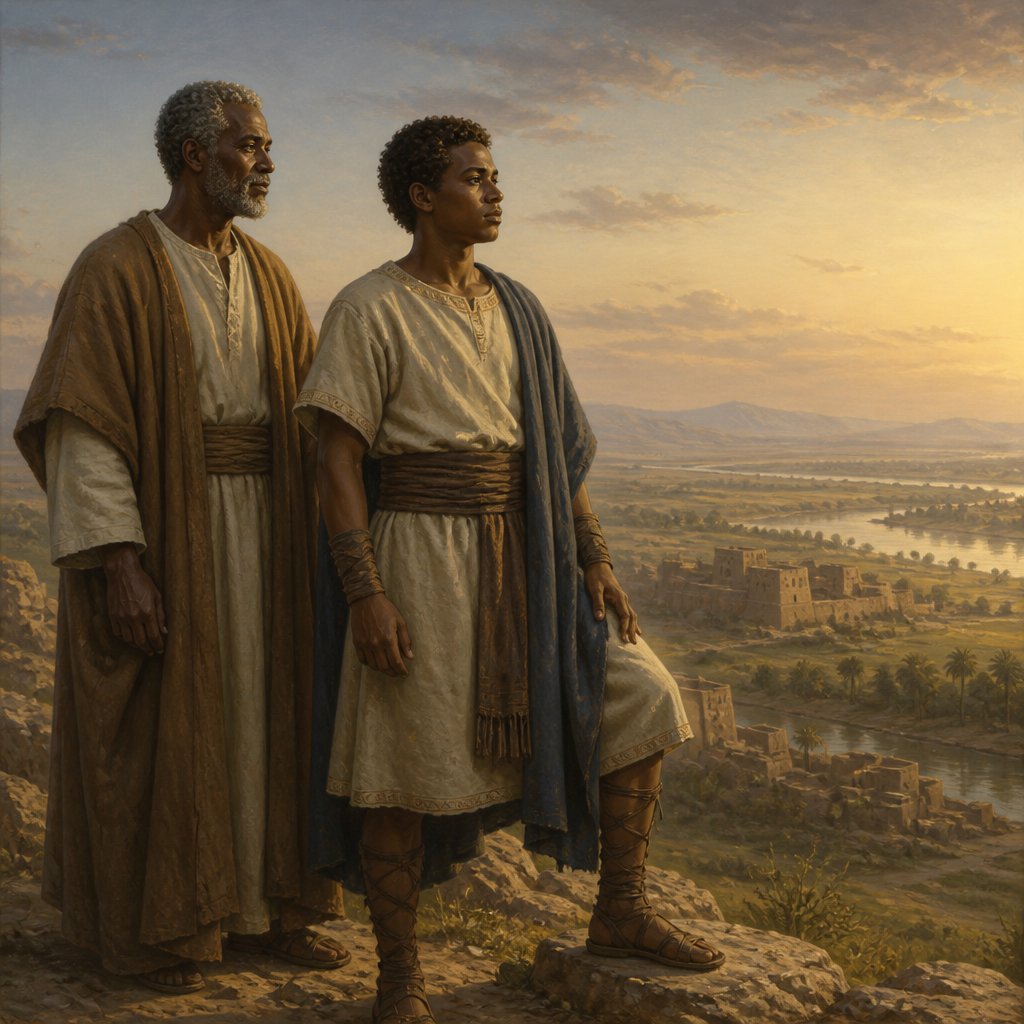
As we delve into the genealogical histories outlined in 1 Chronicles, we find a profound statement in 1 Chronicles 1:10 (KJV): "And Cush begat Nimrod: he began to be mighty upon the earth." This single verse, comprised of only a few words, opens a door to a world of exploration regarding power, strength, legacy, and leadership.
The opening words introduce us to Cush, a figure who is mentioned in previous biblical texts as one of the sons of Ham, who was the son of Noah. The lineage that begins here is one that sets the stage for Nimrod, whose very name has come to symbolize both greatness and a formidable reputation. To understand the weight of being "mighty upon the earth," we must consider the cultural and historical implications of strength within the biblical narrative.
In ancient times, might was often a marker of divine favor. To be mighty could imply military prowess, wisdom in leadership, or significant achievements that would set a man apart from his contemporaries. But Nimrod stands as a complex character in scripture. His strength and influence are juxtaposed against the eternal principles of God’s kingdom. What do we learn from him, and how might we apply his story to our own lives?
The phrase "began to be mighty" suggests a progression. Nimrod’s might did not arrive suddenly; it was developed through his experiences, abilities, and perhaps even his ambitions. This calls into question: what are the foundations of power in our lives? Is it built upon hard work, personal ambition, or is it grounded in faith and humility? While Nimrod achieved great things, the context indicates a potential for misuse of strength—a theme that is a recurring lesson in scripture.
As we reflect on the strength Nimrod symbolized, we must not overlook the concept of legacy. Cush's naming of Nimrod carries weight—it signifies not only familial pride but also the transmission of values and qualities from one generation to another. What are we passing down to our children? What principles and behaviors are we modeling in our lives? In a world that often seeks power for personal ends, we are reminded that true strength is found in service, compassion, and the will to act justly.
In Genesis 10, we read more about Nimrod’s exploits. It is noted that he was a mighty hunter before the Lord, implying that while he may have had favor, there is a critical aspect of humility and recognition of God’s sovereignty. Strength that distances itself from God risks turning into tyranny. In modern terms, this can manifest as pride, arrogance, and exploitation of power. Nimrod's name becomes synonymous with rebellion against divine order, and his life serves as a cautionary tale regarding the paths power can lead us down.
Perhaps the most poignant challenge we face from this examination is the question of who we serve with our strength. Are our ambitions aimed toward self-aggrandizement, or do we strive to uplift others and honor God? The essence of Christian leadership diverges sharply from the traditional notions of might. We are called not only to be strong but to be gentle, not merely to lead but to serve.
As we ponder on 1 Chronicles 1:10, let us meditate on the implications of our choices and their reverberations through time. Every action we take and every decision we make has the power to build a legacy—will it be one of strength coupled with righteousness or one driven by selfish motives? In embracing our own strength, may we mirror the likeness of Christ, who demonstrated might through love, sacrifice, and service to humanity.
Get our apps


Artwork for 1 Chronicles 1:10

1 Chronicles 1:10 - "And Cush begat Nimrod: he began to be mighty upon the earth."
"And Cush begat Nimrod: he began to be mighty upon the earth." - 1 Chronicles 1:10

1 Chronicles 4 : 10

1 Chronicles 9:10 - "¶ And of the priests; Jedaiah, and Jehoiarib, and Jachin,"

1 Chronicles 12:10 - "Mishmannah the fourth, Jeremiah the fifth,"

1 Chronicles 24:10 - "The seventh to Hakkoz, the eighth to Abijah,"

1 Chronicles 10:10 - "And they put his armour in the house of their gods, and fastened his head in the temple of Dagon."

1 Chronicles 15:10 - "Of the sons of Uzziel; Amminadab the chief, and his brethren an hundred and twelve."

1 Chronicles 8:10 - "And Jeuz, and Shachia, and Mirma. These were his sons, heads of the fathers."

1 Chronicles 10:1 - "Now the Philistines fought against Israel; and the men of Israel fled from before the Philistines, and fell down slain in mount Gilboa."

1 Chronicles 2:10 - "And Ram begat Amminadab; and Amminadab begat Nahshon, prince of the children of Judah;"

1 Chronicles 25:10 - "The third to Zaccur, he, his sons, and his brethren, were twelve:"

1 Chronicles 10:11 - "¶ And when all Jabesh-gilead heard all that the Philistines had done to Saul,"

2 Chronicles 10:1 - "And Rehoboam went to Shechem: for to Shechem were all Israel come to make him king."

1 Chronicles 6:10 - "And Johanan begat Azariah, (he it is that executed the priest's office in the temple that Solomon built in Jerusalem:)"

1 Chronicles 23:10 - "And the sons of Shimei were, Jahath, Zina, and Jeush, and Beriah. These four were the sons of Shimei."

1 Chronicles 10:6 - "So Saul died, and his three sons, and all his house died together."

1 Chronicles 10:5 - "And when his armourbearer saw that Saul was dead, he fell likewise on the sword, and died."

1 Chronicles 16:10 - "Glory ye in his holy name: let the heart of them rejoice that seek the LORD."

1 Chronicles 10:3 - "And the battle went sore against Saul, and the archers hit him, and he was wounded of the archers."
"¶ And of the priests; Jedaiah, and Jehoiarib, and Jachin," - 1 Chronicles 9:10

"Mishmannah the fourth, Jeremiah the fifth," - 1 Chronicles 12:10

"The seventh to Hakkoz, the eighth to Abijah," - 1 Chronicles 24:10

1 Chronicles 3:10 - "¶ And Solomon's son was Rehoboam, Abia his son, Asa his son, Jehoshaphat his son,"

1 Chronicles 10:14 - "And enquired not of the LORD: therefore he slew him, and turned the kingdom unto David the son of Jesse."

1 Chronicles 28:10 - "Take heed now; for the LORD hath chosen thee to build an house for the sanctuary: be strong, and do it."

1 Chronicles 7:10 - "The sons also of Jediael; Bilhan: and the sons of Bilhan; Jeush, and Benjamin, and Ehud, and Chenaanah, and Zethan, and Tharshish, and Ahishahar."

1 Chronicles 27:10 - "The seventh captain for the seventh month was Helez the Pelonite, of the children of Ephraim: and in his course were twenty and four thousand."
1 Chronicles 5:10 - "And in the days of Saul they made war with the Hagarites, who fell by their hand: and they dwelt in their tents throughout all the east land of Gilead."

1 Chronicles 1:15