The Threshing Floor of Surrender: Building Altars in Our Lives
“Then the angel of the LORD commanded Gad to say to David, that David should go up, and set up an altar unto the LORD in the threshingfloor of Ornan the Jebusite.” — 1 Chronicles 21:18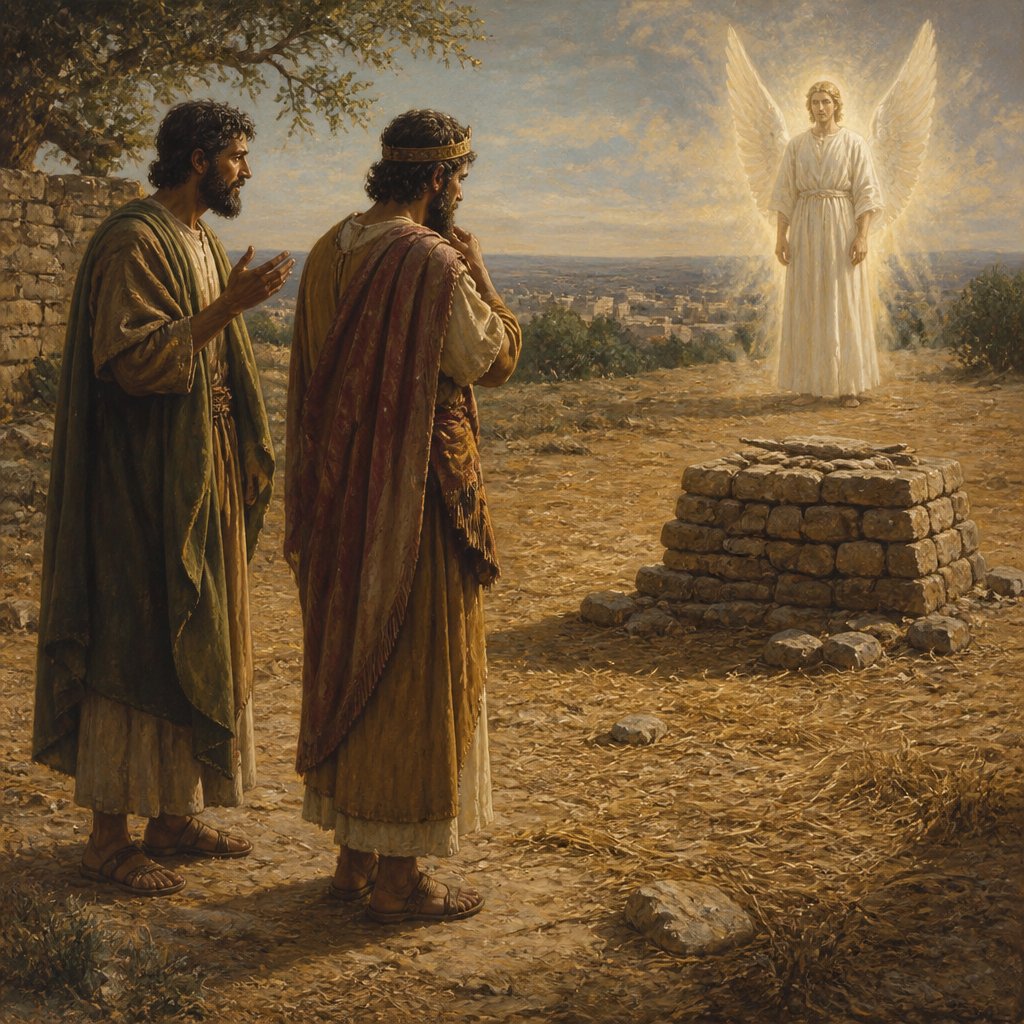
As we delve into the intricacies of 1 Chronicles 21:18, we find ourselves confronted with a profound moment in biblical history. The verse states: "Then the angel of the LORD commanded Gad to say to David, that David should go up, and set up an altar unto the LORD in the threshingfloor of Ornan the Jebusite." This moment is rich with significance, calling to our attention the themes of obedience, sacrifice, and the importance of creating sacred spaces in our lives.
To fully appreciate this moment, we must backtrack a bit into the previous events that led to David’s encounter with the angel of the Lord. In essence, David had sinned by conducting a census of Israel, a task driven by pride and a desire for control over his kingdom rather than reliance on God. This act stirred up divine wrath, resulting in a severe plague as judgment. Amidst the chaos, David was approached by Gad, the prophet, who delivered the angel’s message—a command from God.
At the very heart of God's message to David is the instruction to build an altar. An altar, historically, is a sacred space where sacrifices are made, and worship is conducted, often symbolizing a physical manifestation of one’s relationship with God. In the context of this narrative, the altar serves several purposes.
First, it symbolizes repentance. David's acknowledgment of his sin and his need for atonement propelled him to obey the command to build the altar. The act of erecting this altar at the threshing floor of Ornan is significant. A threshing floor is where the harvest is separated from the chaff; it is a place of transition, transformation, and preparation for what is to come. In our lives, we might find ourselves hovering over metaphorical threshing floors—moments where we must lay down our burdens and sins for divine processing. Building altars in these moments allows us to surrender our past failures and receive forgiveness and restoration from God.
Moreover, the choice of location—the threshing floor of Ornan the Jebusite—carries weight. This area was not just any land; it belonged to Ornan, and he was willing to offer it to David. However, David insisted on paying for it, recognizing that true worship requires sacrifice. In 1 Chronicles 21:24, David states, "Neither will I offer burnt offerings unto the LORD my God of that which doth cost me nothing." This realization underlines a critical principle in our walk with God: our worship should come with a cost, an investment of our time, resources, and heart. It is through these sacrifices that we acknowledge God's worthiness.
Building altars in our lives is essential in a world that often distracts us from the presence of God. An altar signifies a commitment—an unwavering dedication to worship despite the noise of the world. By setting aside moments for prayer, reflection, and thanksgiving, we cultivate sacred spaces for God to dwell in our hearts.
As we reflect on this passage, we are encouraged to identify the threshing floors in our lives. Where in our lives do we need to surrender? What burdens must we lay down before the altar? It may involve forgiving those who have wronged us, letting go of past hurts, or simply acknowledging our dependence on God. Each act of humility points us back to the altar, where grace meets our shortcomings.
In closing, as we navigate our lives, let us remember the significance of building altars—places of worship, surrender, and sacrifice. Like David, may we not shy away from the cost associated with true worship. Instead, let's intentionally move toward creating sacred spaces where we encounter our Lord and where transformation begins. And as we do, we will find that in these blessed moments, God’s presence will meet us, just as it did for David on the threshing floor of Ornan.
Get our apps


Artwork for 1 Chronicles 21:18

1 Chronicles 21:18 - "¶ Then the angel of the LORD commanded Gad to say to David, that David should go up, and set up an altar unto the LORD in the threshingfloor of Ornan the Jebusite."
"¶ Then the angel of the LORD commanded Gad to say to David, that David should go up, and set up an altar unto the LORD in the threshingfloor of Ornan the Jebusite." - 1 Chronicles 21:18

2 Chronicles 21:18 - "¶ And after all this the LORD smote him in his bowels with an incurable disease."

1 Chronicles 1:21 - "Hadoram also, and Uzal, and Diklah,"

1 Chronicles 1:18 - "And Arphaxad begat Shelah, and Shelah begat Eber."

1 Chronicles 23:18 - "Of the sons of Izhar; Shelomith the chief."

1 Chronicles 8:21 - "And Adaiah, and Beraiah, and Shimrath, the sons of Shimhi;"

1 Chronicles 21:1 - "And Satan stood up against Israel, and provoked David to number Israel."

1 Chronicles 24:21 - "Concerning Rehabiah: of the sons of Rehabiah, the first was Isshiah."

1 Chronicles 8:18 - "Ishmerai also, and Jezliah, and Jobab, the sons of Elpaal;"

1 Chronicles 9:21 - "And Zechariah the son of Meshelemiah was porter of the door of the tabernacle of the congregation."

1 Chronicles 24:18 - "The three and twentieth to Delaiah, the four and twentieth to Maaziah."

1 Chronicles 26:18 - "At Parbar westward, four at the causeway, and two at Parbar."

1 Chronicles 21:7 - "And God was displeased with this thing; therefore he smote Israel."

1 Chronicles 21:9 - "¶ And the LORD spake unto Gad, David's seer, saying,"

"Hadoram also, and Uzal, and Diklah," - 1 Chronicles 1:21

1 Chronicles 21:21 - "And as David came to Ornan, Ornan looked and saw David, and went out of the threshingfloor, and bowed himself to David with his face to the ground."
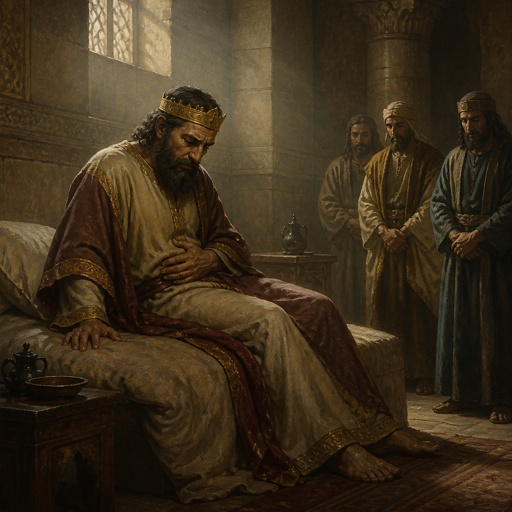
"¶ And after all this the LORD smote him in his bowels with an incurable disease." - 2 Chronicles 21:18

1 Chronicles 3:18 - "Malchiram also, and Pedaiah, and Shenazar, Jecamiah, Hoshama, and Nedabiah."

1 Chronicles 7:18 - "And his sister Hammoleketh bare Ishod, and Abiezer, and Mahalah."

1 Chronicles 6:18 - "And the sons of Kohath were, Amram, and Izhar, and Hebron, and Uzziel."

1 Chronicles 23:21 - "¶ The sons of Merari; Mahli, and Mushi. The sons of Mahli; Eleazar, and Kish."

1 Chronicles 25:21 - "The fourteenth to Mattithiah, he, his sons, and his brethren, were twelve:"

1 Chronicles 21:19 - "And David went up at the saying of Gad, which he spake in the name of the LORD."

1 Chronicles 27:18 - "Of Judah, Elihu, one of the brethren of David: of Issachar, Omri the son of Michael:"

1 Chronicles 25:18 - "The eleventh to Azareel, he, his sons, and his brethren, were twelve:"

2 Chronicles 18:1 - "Now Jehoshaphat had riches and honour in abundance, and joined affinity with Ahab."

1 Chronicles 18:2 - "And he smote Moab; and the Moabites became David's servants, and brought gifts."

1 Chronicles 18:15 - "And Joab the son of Zeruiah was over the host; and Jehoshaphat the son of Ahilud, recorder."

1 Chronicles 15:21 - "And Mattithiah, and Elipheleh, and Mikneiah, and Obed-edom, and Jeiel, and Azaziah, with harps on the Sheminith to excel."