A Heart of Repentance: Understanding David’s Confession
“And David said unto God, I have sinned greatly, because I have done this thing: but now, I beseech thee, do away the iniquity of thy servant; for I have done very foolishly.” — 1 Chronicles 21:8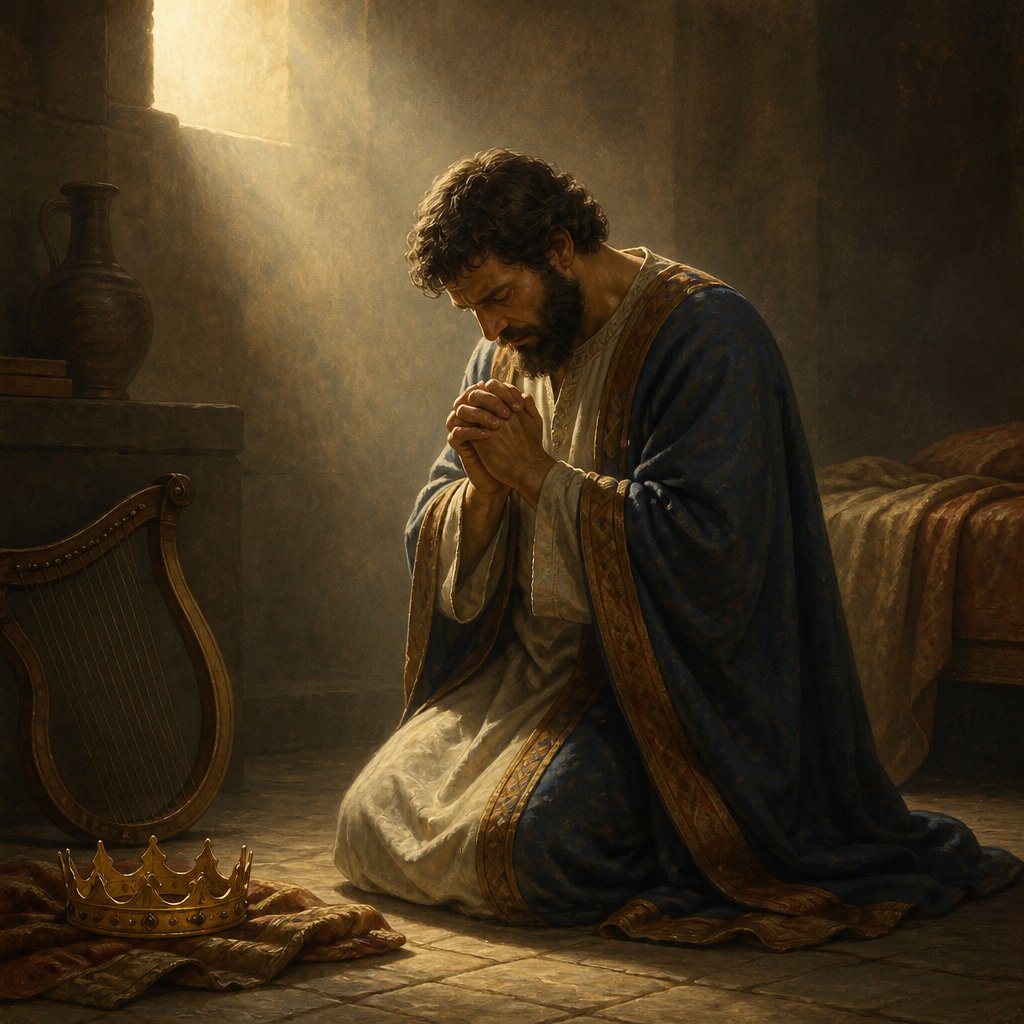
In the annals of Jewish history, the reign of King David stands out with its triumphs and tribulations. One particular episode captures the essence of human frailty, divine grace, and the profound nature of repentance. In 1 Chronicles 21:8, we find a raw and honest confession from David: "And David said unto God, I have sinned greatly, because I have done this thing: but now, I beseech thee, do away the iniquity of thy servant; for I have done very foolishly." This verse acts as a mirror, reflecting not only David's heart but also the heart of every believer faced with the reality of sin.
David's confession is strikingly candid. He acknowledges his transgression, stating unequivocally, "I have sinned greatly." This admission is not merely a statement but a profound recognition of the weight of sin. Sin is a deviation from God’s intended path, a rebellion against His holy decrees. David’s lamentation is a pivotal moment; it demonstrates that even a man after God's own heart (as described in 1 Samuel 13:14) is still susceptible to the allure of pride and self-reliance. Here, the sin in question pertains to David's census of the people, an act that stemmed from a heart that was perhaps more concerned with power than reliance on God.
As believers, we often find ourselves caught in the web of our own choices, succumbing to pride, ambition, or fear. David, in his moment of clarity, recognizes that such actions distance us from God. He does not minimize his wrongdoing or shift the blame; instead, he fully owns it: "I have done very foolishly." Foolishness in this context implies a failure to heed God's wisdom. It prompts us to ask ourselves, how often do we find ourselves engaging in foolish acts? Whether it be in our relationships, our choices, or our judgments of others, these moments often lead us to repercussions that resonate with David's experience.
David’s earnest plea, "do away the iniquity of thy servant," is crucial to our understanding of repentance. To beseech means to implore with urgency and sincerity. David approaches God not with a sense of entitlement but with humility, fully aware of his shortcomings. This is reflective of the nature of true repentance. It is not a mere ritualistic apology but an earnest request for divine mercy. When we sin and approach God in such a way, we engage in the sacred act of vulnerability, opening ourselves to the transformative power of His grace.
In this interaction with God, we learn that sin has consequence, and yet the door to repentance is always open. God desires a contrite heart as stated in Psalm 51:17: "The sacrifices of God are a broken spirit: a broken and a contrite heart, O God, thou wilt not despise." David exemplifies such a heart, aching for restoration and divine favor.
Moreover, the assurance that follows repentance is central to our spiritual journey. When we confess and turn back to God, we find not condemnation but compassion. 1 John 1:9 echoes this sentiment: "If we confess our sins, he is faithful and just to forgive us our sins, and to cleanse us from all unrighteousness." Therefore, David's story becomes not just a narrative of failure but a blueprint for redemption.
Reflecting on David's confession prompts us to examine our lives. Are we harboring unconfessed sins? Are we too proud to seek forgiveness? Just as David turned to God in his darkest hour, so too are we invited to lay bare our hearts before our Creator. Let us approach the throne of grace with sincere supplications, confident that in our weakness, we will find strength, in our confession, we will discover forgiveness, and in our lives, we will experience the abundant mercy of God.
Get our apps


Artwork for 1 Chronicles 21:8

1 Chronicles 21:8 - "And David said unto God, I have sinned greatly, because I have done this thing: but now, I beseech thee, do away the iniquity of thy servant; for I have done very foolishly."
"And David said unto God, I have sinned greatly, because I have done this thing: but now, I beseech thee, do away the iniquity of thy servant; for I have done very foolishly." - 1 Chronicles 21:8

1 Chronicles 8:21 - "And Adaiah, and Beraiah, and Shimrath, the sons of Shimhi;"

"And Adaiah, and Beraiah, and Shimrath, the sons of Shimhi;" - 1 Chronicles 8:21

2 Chronicles 21:8 - "¶ In his days the Edomites revolted from under the dominion of Judah, and made themselves a king."

1 Chronicles 1:21 - "Hadoram also, and Uzal, and Diklah,"

1 Chronicles 21:1 - "And Satan stood up against Israel, and provoked David to number Israel."

1 Chronicles 24:21 - "Concerning Rehabiah: of the sons of Rehabiah, the first was Isshiah."

1 Chronicles 1:8 - "¶ The sons of Ham; Cush, and Mizraim, Put, and Canaan."

1 Kings 8:21

1 Kings 8:21

1 Kings 8:21

1 Kings 8:21

1 chronicles 12:8

1 Chronicles 8:31 - "And Gedor, and Ahio, and Zacher."

1 Chronicles 8:20 - "And Elienai, and Zilthai, and Eliel,"

1 Chronicles 8:19 - "And Jakim, and Zichri, and Zabdi,"

1 Chronicles 8:24 - "And Hananiah, and Elam, and Antothijah,"

1 Chronicles 9:21 - "And Zechariah the son of Meshelemiah was porter of the door of the tabernacle of the congregation."

1 Chronicles 21:7 - "And God was displeased with this thing; therefore he smote Israel."

1 Chronicles 21:9 - "¶ And the LORD spake unto Gad, David's seer, saying,"

"Hadoram also, and Uzal, and Diklah," - 1 Chronicles 1:21

1 Chronicles 8:5 - "And Gera, and Shephuphan, and Huram."

1 Chronicles 8:26 - "And Shamsherai, and Shehariah, and Athaliah,"

1 Chronicles 8:22 - "And Ishpan, and Heber, and Eliel,"

1 Chronicles 8:14 - "And Ahio, Shashak, and Jeremoth,"

1 Chronicles 2:8 - "And the sons of Ethan; Azariah."

1 Chronicles 8:23 - "And Abdon, and Zichri, and Hanan,"

1 Chronicles 8:4 - "And Abishua, and Naaman, and Ahoah,"

1 Chronicles 8:15 - "And Zebadiah, and Arad, and Ader,"