The Legacy of Leadership: Lessons from David's Final Days
“So when David was old and full of days, he made Solomon his son king over Israel.” — 1 Chronicles 23:1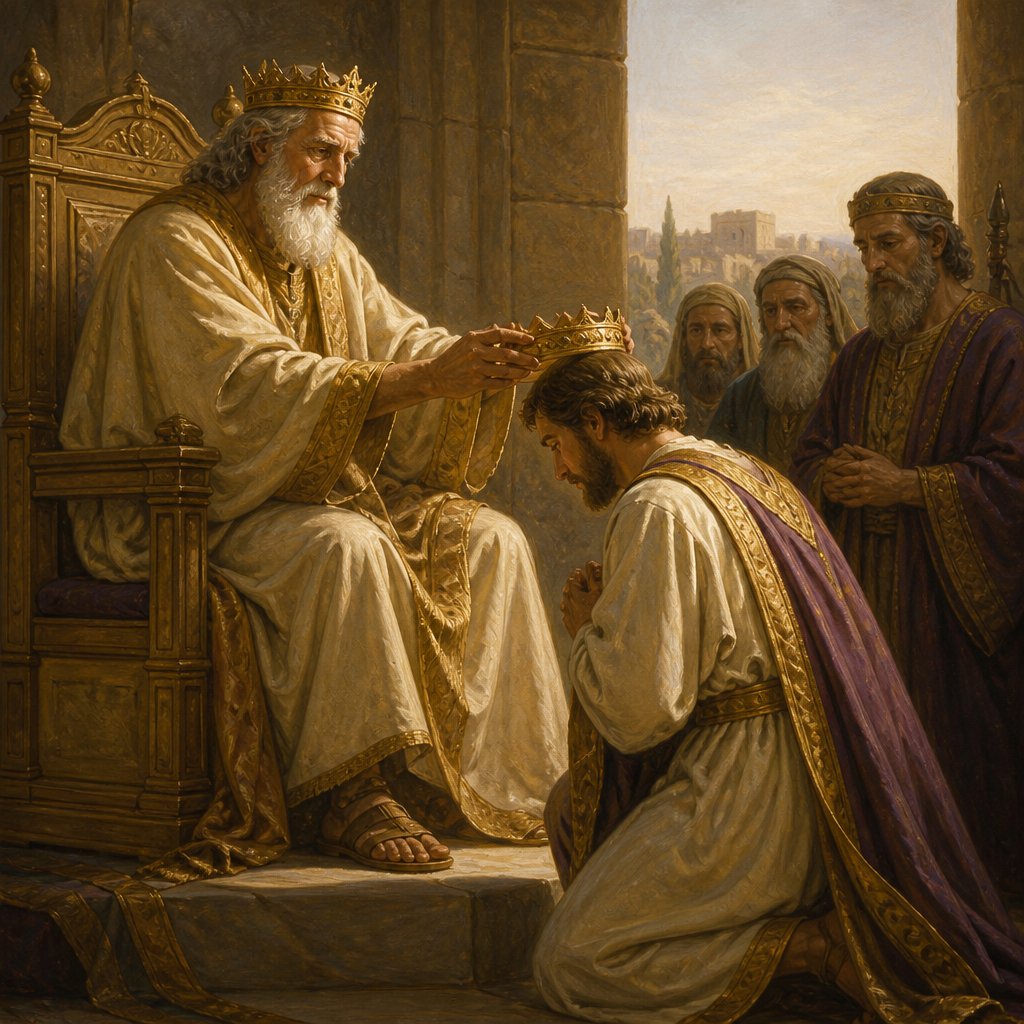
As we explore 1 Chronicles 23:1, which states, "So when David was old and full of days, he made Solomon his son king over Israel," we are invited to reflect upon the complexities of leadership, family legacy, and the passing of the baton from one generation to another. This verse encapsulates a poignant moment in the life of King David—it marks the conclusion of a remarkable reign and the beginning of a new chapter for Israel under Solomon. David’s life was filled with triumphs and trials, and in his senior years, he made significant decisions that would shape the future of his nation.
David, a man after God’s own heart, was endowed with wisdom and physical prowess. His reign was characterized by military victories, unification of the tribes of Israel, and deep devotion to God. As he approached the twilight of his life, it became essential for him to ensure that the future of Israel remained secure and that God’s plan continued to unfold. In recognizing Solomon as his successor, David did more than just appoint a king; he began a legacy that would ripple through generations.
The phrase "old and full of days" speaks to a life well-lived. David had experienced the breadth of human existence: he faced adversity, made mistakes, tasted the joy of worship, and sought God’s forgiveness. This perspective gleaned from life’s trials equipped him to lead with compassion and understanding. As we reflect on our own lives, we must ask ourselves what we are filling our days with. Are we accumulating wisdom, nurturing relationships, or seeking God earnestly? The lessons we learn and the experiences we gather shape us as leaders in our families, communities, and workplaces.
Leadership, especially in a familial context, is about more than authority; it involves nurturing and guiding the next generation. David’s choice of Solomon indicates intentionality in leadership transitions. As parents, mentors, or leaders, we are granted an invaluable opportunity to prepare those who will follow us. David did not leave this crucial decision to chance. Instead, he took the initiative. This compels us to consider: Are we equipping those we influence? Are we sharing our values, beliefs, and experiences with those coming after us, ensuring they are prepared to take up the mantle?
Solomon, though initially inexperienced, was rooted in the same faith that drove his father. This teaches us that our heritage and the beliefs we pass down hold immense weight. David's decision was underscored by his confidence that Solomon would carry on the work of God. Notice that it was not just about political succession; it was about the spiritual and moral foundation that he desired Solomon to uphold. The legacy of faith is nurtured when we prioritize God’s commandments, instilling them in the hearts of our children, reminding them of their divine purpose.
Moreover, David’s action reflects the importance of recognizing the right time for transitions. When leaders remain in positions past their effectiveness, they risk stagnation. A wise leader knows when to step aside, trusting that God’s plan is bigger than one individual’s reign. Acknowledging the seasons of life and ministry allows for growth, innovation, and the flourishing of new ideas. In Solomon, David saw the beginnings of a new era—one that would lead to the construction of the Temple, a pivotal moment in Israel’s history.
In closing, as we study David's decision in his old age, let us commit to reflecting on our legacies—what are we building, who are we influencing, and how aligned are we with God’s calling? May we embrace each season of our lives, aiming to pass on a faith that perseveres, a wisdom that guides, and a love that transcends generations. Ultimately, in our roles as leaders, may we faithfully point to Christ, ensuring that the next generation steps into their purpose guided by His light.
Get our apps


Artwork for 1 Chronicles 23:1

1 Chronicles 23:1 - "So when David was old and full of days, he made Solomon his son king over Israel."
"So when David was old and full of days, he made Solomon his son king over Israel." - 1 Chronicles 23:1

1 Chronicles 23:23 - "The sons of Mushi; Mahli, and Eder, and Jeremoth, three."

1 Chronicles 1:23 - "And Ophir, and Havilah, and Jobab. All these were the sons of Joktan."

1 Chronicles 8:23 - "And Abdon, and Zichri, and Hanan,"

1 Chronicles 23:7 - "¶ Of the Gershonites were, Laadan, and Shimei."

1 Chronicles 26:23 - "Of the Amramites, and the Izharites, the Hebronites, and the Uzzielites:"

1 Chronicles 23:18 - "Of the sons of Izhar; Shelomith the chief."

1 Chronicles 23:16 - "Of the sons of Gershom, Shebuel was the chief."

1 Chronicles 23:15 - "The sons of Moses were, Gershom, and Eliezer."

1 Chronicles 15:23 - "And Berechiah and Elkanah were doorkeepers for the ark."

1 Chronicles 23:20 - "Of the sons of Uzziel; Michah the first, and Jesiah the second."

1 Chronicles 3:23 - "And the sons of Neariah; Elioenai, and Hezekiah, and Azrikam, three."

1 Chronicles 23:8 - "The sons of Laadan; the chief was Jehiel, and Zetham, and Joel, three."

1 Chronicles 23:12 - "¶ The sons of Kohath; Amram, Izhar, Hebron, and Uzziel, four."

1 Chronicles 23:2 - "¶ And he gathered together all the princes of Israel, with the priests and the Levites."

1 Chronicles 23:30 - "And to stand every morning to thank and praise the LORD, and likewise at even;"

1 Chronicles 23:21 - "¶ The sons of Merari; Mahli, and Mushi. The sons of Mahli; Eleazar, and Kish."

1 Chronicles 6:23 - "Elkanah his son, and Ebiasaph his son, and Assir his son,"

"The sons of Mushi; Mahli, and Eder, and Jeremoth, three." - 1 Chronicles 23:23

"And Abdon, and Zichri, and Hanan," - 1 Chronicles 8:23

1 Chronicles 25:23 - "The sixteenth to Hananiah, he, his sons, and his brethren, were twelve:"

1 Chronicles 24:23 - "And the sons of Hebron; Jeriah the first, Amariah the second, Jahaziel the third, Jekameam the fourth."

1 Chronicles 23:9 - "The sons of Shimei; Shelomith, and Haziel, and Haran, three. These were the chief of the fathers of Laadan."

1 Chronicles 23:19 - "Of the sons of Hebron; Jeriah the first, Amariah the second, Jahaziel the third, and Jekameam the fourth."

1 Chronicles 23:22 - "And Eleazar died, and had no sons, but daughters: and their brethren the sons of Kish took them."

"And Ophir, and Havilah, and Jobab. All these were the sons of Joktan." - 1 Chronicles 1:23

1 Chronicles 23:10 - "And the sons of Shimei were, Jahath, Zina, and Jeush, and Beriah. These four were the sons of Shimei."

1 Chronicles 23:14 - "Now concerning Moses the man of God, his sons were named of the tribe of Levi."

1 Chronicles 23:27 - "For by the last words of David the Levites were numbered from twenty years old and above:"