The Legacy of Faithfulness: Lessons from Eliezer and Rehabiah
“And the sons of Eliezer were, Rehabiah the chief. And Eliezer had none other sons; but the sons of Rehabiah were very many.” — 1 Chronicles 23:17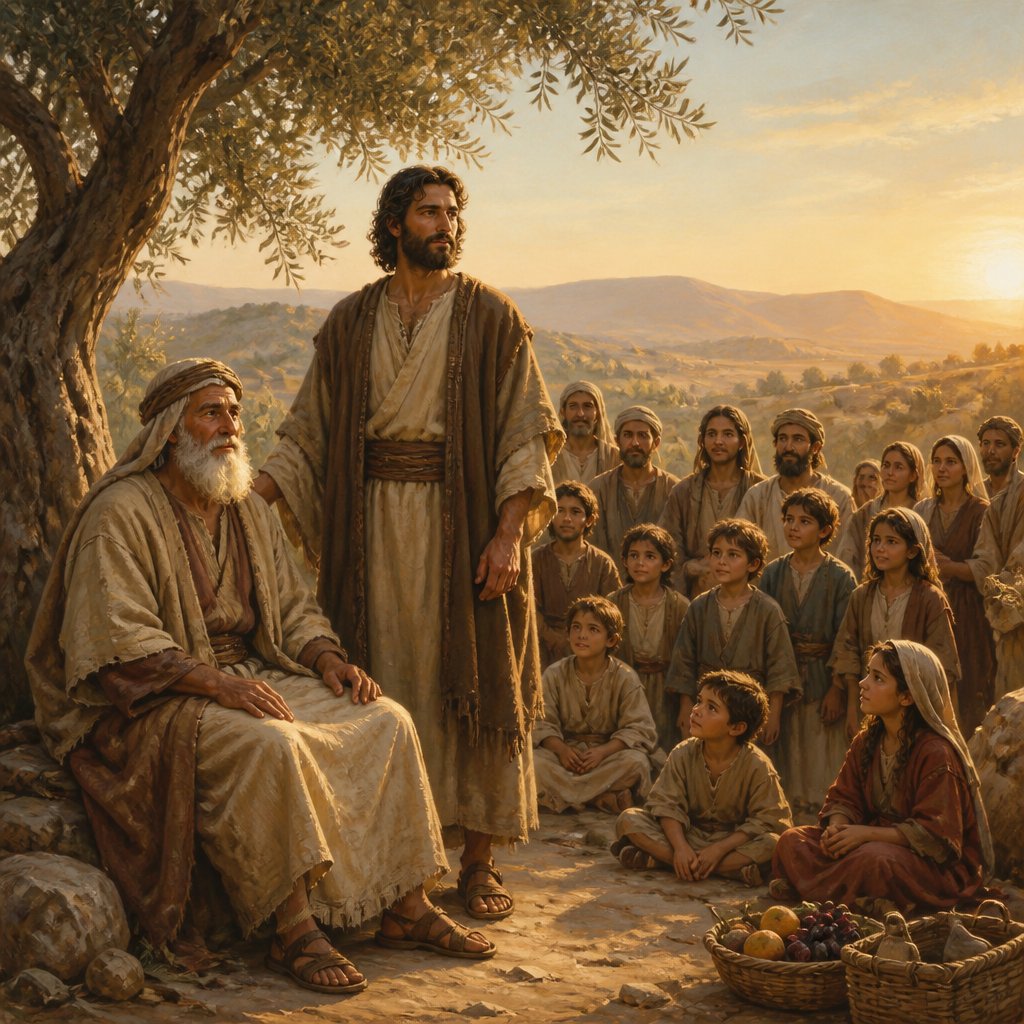
In the historical tapestry of the Old Testament, we often encounter names that may seem obscure, yet they carry profound lessons and reflections on faith, leadership, and legacy. One such verse, 1 Chronicles 23:17, presents us with a glimpse into the lineage of Eliezer and his son Rehabiah. The verse states: "And the sons of Eliezer were, Rehabiah the chief. And Eliezer had none other sons; but the sons of Rehabiah were very many." (KJV)
At first glance, this passage may appear to be merely a genealogical note; however, it encapsulates a vital principle regarding legacy and the significance of the faithful few. Eliezer, as a descendant of Aaron, held a prominent priestly lineage, yet his direct lineage ceased with him, producing only one son, Rehabiah. The simple statement, "and Eliezer had none other sons," invites us to pause and reflect on the greatness that can emerge from singular faithfulness.
Eliezer's life exemplifies the idea that faithfulness in service to God yields a legacy far greater than numerical success. Perhaps Eliezer's dedication to God did not manifest in the birth of multiple sons, but the son he did have, Rehabiah, became a great leader among his descendants. In this regard, Eliezer teaches us that our impact is not measured purely by numbers but by the quality of our faithfulness and the depth of our relationships.
Consider the role of Rehabiah. Being described as "the chief" suggests an importance that could extend beyond mere genealogy. Leadership is not solely about authority; it is about influence, guidance, and the ability to carry forth the principles instilled in us by those who came before us. Rehabiah had many sons, illustrating that the legacy of Eliezer blossomed in his one faithful heir. Thus, the true greatness of a person can sometimes be found not in their directly measurable accomplishments but in the seeds they plant in others.
In a world that often praises quantity—numbers of followers, wealth, and achievements—this verse reminds us to seek qualitative influence. Eliezer birthed a legacy in Rehabiah, who then had "very many" sons that likely continued his father’s faith and practices. This narrative reveals a ripple effect of faith; when one is devoted to following God, they inspire and train others to do so as well, creating branches that extend far beyond our individual existences.
In our own lives, we can embody the spirit of Eliezer. While we may dream of leaving a vast legacy, the truth is that we may have only a handful of opportunities to further the kingdom of God. We may not have a large congregation or reach millions with a message, but the few who come under our influence—our family, friends, or those we mentor—can carry our faith into many future generations. This is a reminder to faithfully invest in those God places in our lives, cultivating them not for our glory but for His.
Moreover, the descriptors in the verse prompt us to think about our approach to leadership. Rehabiah being described as "the chief" serves as a challenge for us to step into leadership roles with the intent to cultivate and multiply faith, not just to maintain control. The responsibility of leadership is not the title itself but rather the opportunity to glorify God through servitude, guidance, and mentorship.
Embrace your role, whether as a parent, teacher, or friend; reflect on how you can nurture the next generation of believers. It begins with sincere devotion and a commitment to impart wisdom and faithfulness. Your legacy may indeed consist of only one or few, but what they can birth beyond you could be far-reaching. As Eliezer’s story reminds us, faithfulness yields fruit, and every life touched can create an abundant harvest. Let us then dedicate our lives to being the kind of people whose legacies encourage a faith that reverberates through time.
Get our apps


Artwork for 1 Chronicles 23:17

1 Chronicles 23:17 - "And the sons of Eliezer were, Rehabiah the chief. And Eliezer had none other sons; but the sons of Rehabiah were very many."

"And the sons of Eliezer were, Rehabiah the chief. And Eliezer had none other sons; but the sons of Rehabiah were very many." - 1 Chronicles 23:17

2 Chronicles 23:17

2 Chronicles 23:17

1 Chronicles 17:23 - "Therefore now, LORD, let the thing that thou hast spoken concerning thy servant and concerning his house be established for ever, and do as thou hast said."

1 Chronicles 23:23 - "The sons of Mushi; Mahli, and Eder, and Jeremoth, three."

1 Chronicles 8:23 - "And Abdon, and Zichri, and Hanan,"

Leviticus 23:17-22

1 Chronicles 1:23 - "And Ophir, and Havilah, and Jobab. All these were the sons of Joktan."

1 Chronicles 23:7 - "¶ Of the Gershonites were, Laadan, and Shimei."

1 Chronicles 26:23 - "Of the Amramites, and the Izharites, the Hebronites, and the Uzzielites:"

1 Chronicles 23:18 - "Of the sons of Izhar; Shelomith the chief."

1 Chronicles 23:16 - "Of the sons of Gershom, Shebuel was the chief."

1 Chronicles 23:15 - "The sons of Moses were, Gershom, and Eliezer."

1 Chronicles 15:23 - "And Berechiah and Elkanah were doorkeepers for the ark."

1 Chronicles 8:17 - "And Zebadiah, and Meshullam, and Hezeki, and Heber,"

1 Chronicles 23:20 - "Of the sons of Uzziel; Michah the first, and Jesiah the second."

1 Chronicles 3:23 - "And the sons of Neariah; Elioenai, and Hezekiah, and Azrikam, three."

1 Chronicles 6:17 - "And these be the names of the sons of Gershom; Libni, and Shimei."

2 Chronicles 23:17 - "Then all the people went to the house of Baal, and brake it down, and brake his altars and his images in pieces, and slew Mattan the priest of Baal before the altars."

1 Chronicles 23:8 - "The sons of Laadan; the chief was Jehiel, and Zetham, and Joel, three."

1 Chronicles 23:12 - "¶ The sons of Kohath; Amram, Izhar, Hebron, and Uzziel, four."

1 Chronicles 27:17 - "Of the Levites, Hashabiah the son of Kemuel: of the Aaronites, Zadok:"

1 Chronicles 3:17 - "¶ And the sons of Jeconiah; Assir, Salathiel his son,"

"The sons of Mushi; Mahli, and Eder, and Jeremoth, three." - 1 Chronicles 23:23

1 Chronicles 23:2 - "¶ And he gathered together all the princes of Israel, with the priests and the Levites."

1 Chronicles 24:17 - "The one and twentieth to Jachin, the two and twentieth to Gamul,"

1 Chronicles 23:30 - "And to stand every morning to thank and praise the LORD, and likewise at even;"

1 Chronicles 23:21 - "¶ The sons of Merari; Mahli, and Mushi. The sons of Mahli; Eleazar, and Kish."

1 Chronicles 6:23 - "Elkanah his son, and Ebiasaph his son, and Assir his son,"