Order and Purpose in Our Service
“The seventeenth to Hezir, the eighteenth to Aphses,” — 1 Chronicles 24:15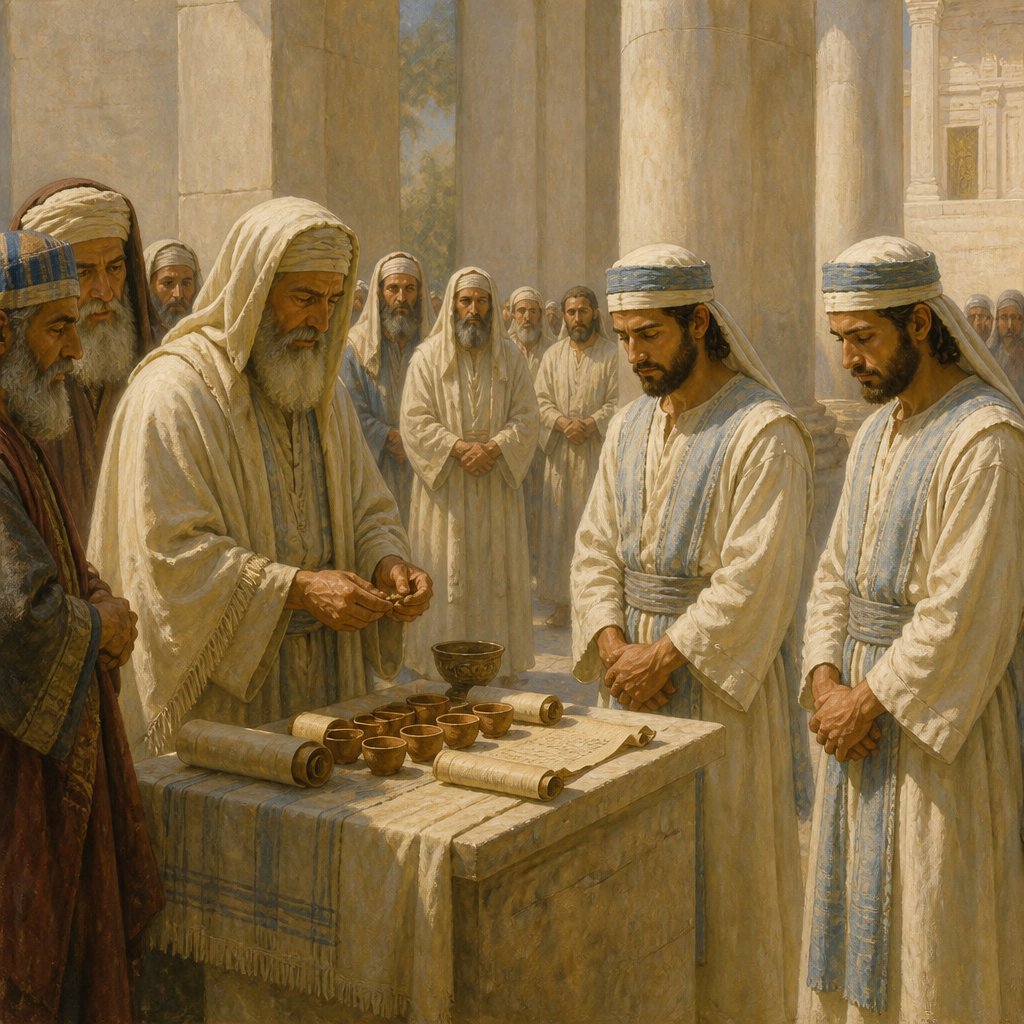
As we delve into the intricacies of 1 Chronicles 24:15, which states, "The seventeenth to Hezir, the eighteenth to Aphses," we find ourselves standing at the threshold of a vital biblical principle: the beauty of order and purpose in serving God. At first glance, this listing of divisions and responsibilities may seem mundane or even a tedious enumeration of names, yet it encapsulates profound truths about how God organizes His Kingdom and the calling of those who serve Him.
The context of this scripture is crucial. Chronicles, particularly 1 Chronicles, is often perceived as a historical account that seeks to establish the lineage and framework of worship within Israel—a people chosen by God. Here, we see King David, a man after God’s own heart, laying the groundwork for temple worship, and in the process, he is orchestrating a divine order that reflects God's character.
The mention of divisions in this passage reminds us that God is a God of order. Paul echoes this sentiment in 1 Corinthians 14:40 where he states, "Let all things be done decently and in order." Worship in the Old Testament was not chaotic but was delineated with specific roles and responsibilities, which underlines the importance of every individual's contribution to the larger whole. Hezir and Aphses represent not just names but shoulders upon which spiritual leadership rests. Just as in their day, God still calls each of us into service, giving us roles tailored to our unique gifts and calling.
In this modern age, we may often struggle with the notion of our significance within the body of Christ. Questions of worth and usefulness plague many believers. However, these verses reassure us that every role, no matter how seemingly small or large, is significant in God’s grand design. The act of serving God may look different from person to person; some may find their place at the forefront, while others quietly support the work behind the scenes. Yet, God sees and values every act of devotion, regardless of visibility.
Reflection on the names found in this passage also prompts us to consider our identity in Christ. Each of us is known by name, just as Hezir and Aphses were in the eyes of God. In John 10:3, Jesus emphasizes, "He calleth his own sheep by name, and leadeth them out." To be called by name by our Creator is a profound validation of our worth and purpose. God has not forgotten us; He knows us intimately and intricately. Like Hezir and Aphses, we are called into His service and uniquely positioned to impact His Kingdom.
Further, let’s contemplate the communal aspect of this organization of service which connects to the unity of the body of Christ. Each tribe and division worked collectively toward the same goal: worshiping and glorifying God. In 1 Corinthians 12:12-14, Paul emphasizes the necessity of unity among diverse members of the body of Christ. Our individual callings, when combined, create a beautiful symphony of worship that pleases our Heavenly Father.
Let us also remember that these priests were not serving in isolation; their service was in relation to each other and within the larger framework of Israel’s worship. Community is vital in our walks, for it spurs us unto love and good works (Hebrews 10:24). We should strive to create an environment where everyone feels their contribution, just like Hezir and Aphses, is recognized and valued.
In conclusion, as we meditate on 1 Chronicles 24:15, let us find comfort and encouragement that our names—our lives—hold purpose in God’s grand narrative. We are called into service, each with distinct roles, yet all interwoven in the fabric of worship. Let us embrace our unique callings and work harmoniously together, understanding that we serve a God of order, purpose, and immense love who sees each of us and our contributions. May we honor Him in all we do, knowing that no role is too small when it is done for His glory.
Get our apps


Artwork for 1 Chronicles 24:15

1 Chronicles 24:15 - "The seventeenth to Hezir, the eighteenth to Aphses,"
"The seventeenth to Hezir, the eighteenth to Aphses," - 1 Chronicles 24:15

1 Chronicles 15:24 - "And Shebaniah, and Jehoshaphat, and Nethaneel, and Amasai, and Zechariah, and Benaiah, and Eliezer, the priests, did blow with the trumpets before the ark of God: and Obed-edom and Jehiah were doorkeepers for the ark."

1 Chronicles 24:24 - "Of the sons of Uzziel; Michah: of the sons of Michah; Shamir."

1 Chronicles 1:24 - "¶ Shem, Arphaxad, Shelah,"

1 Chronicles 1:15

1 Chronicles 1:15

1 Chronicles 8:24 - "And Hananiah, and Elam, and Antothijah,"

1 Chronicles 1:15 - "And the Hivite, and the Arkite, and the Sinite,"

1 Chronicles 24:16 - "The nineteenth to Pethahiah, the twentieth to Jehezekel,"

1 Chronicles 24:11 - "The ninth to Jeshua, the tenth to Shecaniah,"

1 Chronicles 24:14 - "The fifteenth to Bilgah, the sixteenth to Immer,"

1 Chronicles 24:9 - "The fifth to Malchijah, the sixth to Mijamin,"

1 Chronicles 24:13 - "The thirteenth to Huppah, the fourteenth to Jeshebeab,"

1 Chronicles 24:10 - "The seventh to Hakkoz, the eighth to Abijah,"

1 Chronicles 24:8 - "The third to Harim, the fourth to Seorim,"

1 Chronicles 24:12 - "The eleventh to Eliashib, the twelfth to Jakim,"

1 Chronicles 24:22 - "Of the Izharites; Shelomoth: of the sons of Shelomoth; Jahath."

1 Chronicles 24:29 - "Concerning Kish: the son of Kish was Jerahmeel."

2 Chronicles 24:15 - "¶ But Jehoiada waxed old, and was full of days when he died; an hundred and thirty years old was he when he died."

"¶ Shem, Arphaxad, Shelah," - 1 Chronicles 1:24

1 Chronicles 24:25 - "The brother of Michah was Isshiah: of the sons of Isshiah; Zechariah."

1 Chronicles 24:18 - "The three and twentieth to Delaiah, the four and twentieth to Maaziah."

1 Chronicles 24:21 - "Concerning Rehabiah: of the sons of Rehabiah, the first was Isshiah."

1 Chronicles 24:28 - "Of Mahli came Eleazar, who had no sons."

1 Chronicles 24:17 - "The one and twentieth to Jachin, the two and twentieth to Gamul,"

1 Chronicles 24:1 - "Now these are the divisions of the sons of Aaron. The sons of Aaron; Nadab, and Abihu, Eleazar, and Ithamar."

1 Chronicles 26:24 - "And Shebuel the son of Gershom, the son of Moses, was ruler of the treasures."

1 Chronicles 24:27 - "¶ The sons of Merari by Jaaziah; Beno, and Shoham, and Zaccur, and Ibri."

1 Chronicles 8:15 - "And Zebadiah, and Arad, and Ader,"