The Valour of Leadership and Divine Stewardship
“And his brethren, men of valour, were two thousand and seven hundred chief fathers, whom king David made rulers over the Reubenites, the Gadites, and the half tribe of Manasseh, for every matter pertaining to God, and affairs of the king.” — 1 Chronicles 26:32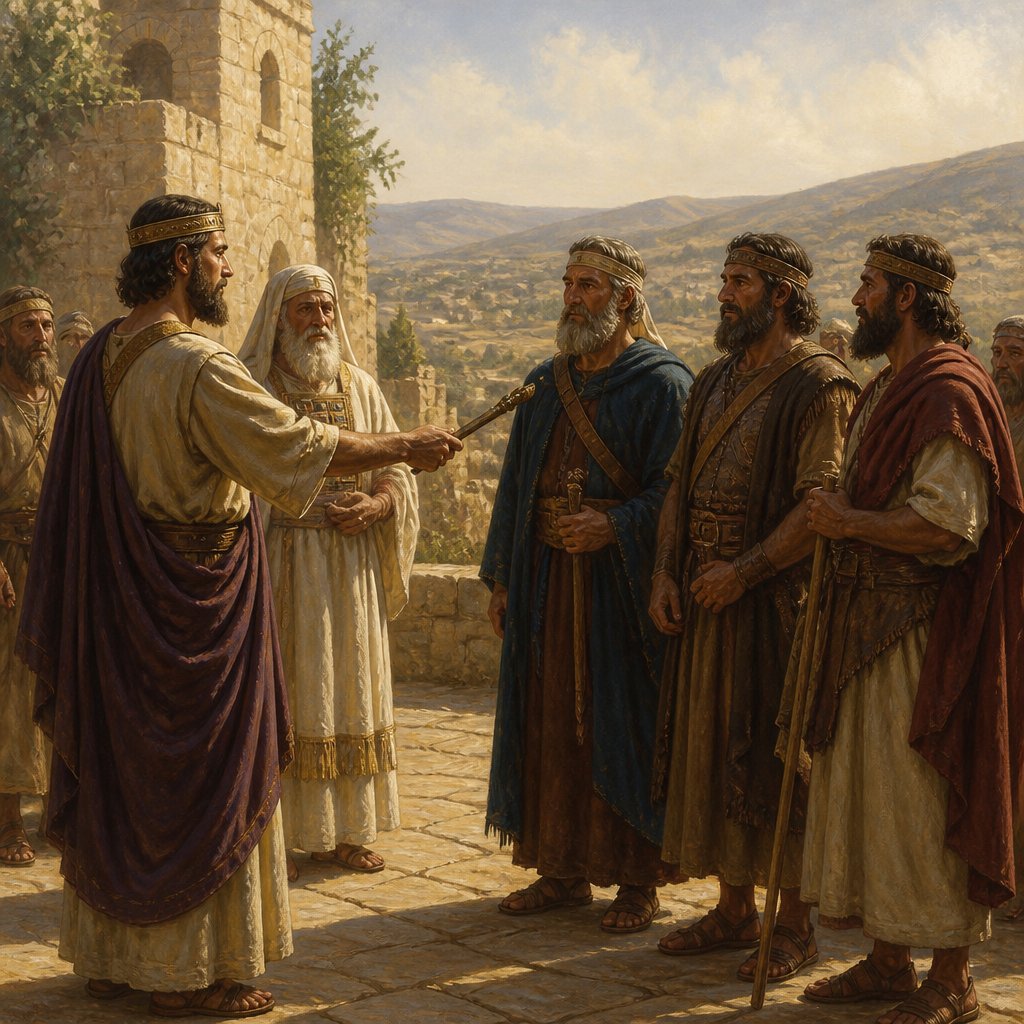
In 1 Chronicles 26:32, we find a significant verse that sheds light on the structure of leadership within the communities of Israel during King David's reign. The King James Version reveals, "And his brethren, men of valour, were two thousand and seven hundred chief fathers, whom king David made rulers over the Reubenites, the Gadites, and the half tribe of Manasseh, for every matter pertaining to God, and affairs of the king." This passage encapsulates the essence of godly leadership, the importance of courage, and the responsibility of overseeing both spiritual and temporal affairs.
Firstly, let us consider the phrase "men of valour." In ancient Israel, courage was not merely about physical prowess on the battlefield; it encompassed moral strength, leadership, and the ability to make difficult decisions. Valour signifies a character forged in faith, conviction, and a willingness to serve God above all. These two thousand and seven hundred chief fathers were not chosen lightly. They were men who had demonstrated both capability and deep commitment to the Lord—a quality essential in leaders today.
The role of a leader in the biblical context goes beyond authority; it involves stewardship. King David’s selection of these men demonstrates an understanding that true leadership aligns with divine purpose. David made these individuals rulers over specific tribes not just to execute his commands but to guide these groups in every matter pertaining to God. Their leadership was to be undergirded—rooted in the scriptures, aligned with God’s commands, and reflective of his character.
This brings us to our own lives. Are we leading with the same courage and commitment that these men exemplified? In our families, workplaces, and communities, we are all called to be leaders in various capacities. Whether it's as a parent instilling values in children, an employee influencing colleagues, or a friend offering support, we can reflect Christ's love through our leadership. Like David, we must identify our strengths and commit to leading by example—serving others and furthering God’s kingdom.
Moreover, the dual responsibility of these leaders—to oversee both "every matter pertaining to God" and "affairs of the king"—is a profound lesson in the delicate balance of spiritual and earthly authority. In a world often marked by secularism and the separation of faith from public affairs, this verse challenges us to integrate our faith into all aspects of life. Can we, like these rulers, manage our secular responsibilities while remaining devoted to God? The spiritual health of our communities often hinges on this integration.
Additionally, the demographic diversity indicated by leading the "Reubenites, the Gadites, and the half tribe of Manasseh" instructs us on the importance of unity despite our differences. God’s vision often encompasses a beautiful array of cultures, backgrounds, and perspectives. As leaders, how can we foster inclusivity and collaboration among diverse groups? A true leader must recognize that every individual possesses inherent value and may contribute uniquely to the mission.
In embracing these teachings, let us also reflect on the qualities that define valour in our lives today. Integrity, accountability, humility, and a unwavering commitment to God’s purposes must be hallmarks of our leadership. As we lead, we must promote environments that encourage spiritual growth and mutual support, thereby enabling others to embrace their roles within the Kingdom.
In conclusion, 1 Chronicles 26:32 serves as a timeless reminder of the responsibilities upon those appointed to lead. As we navigate our various roles, let the courage of those chief fathers inspire us to lead with valour, seeking the mind and heart of God in all matters. As we endeavor to integrate faith with our daily affairs, may we find strength in God's provision, wisdom in His guidance, and joy in serving others. Let us go forth as valiant leaders of our own communities, always aiming to glorify God in every step of our journey.
Get our apps


Artwork for 1 Chronicles 26:32
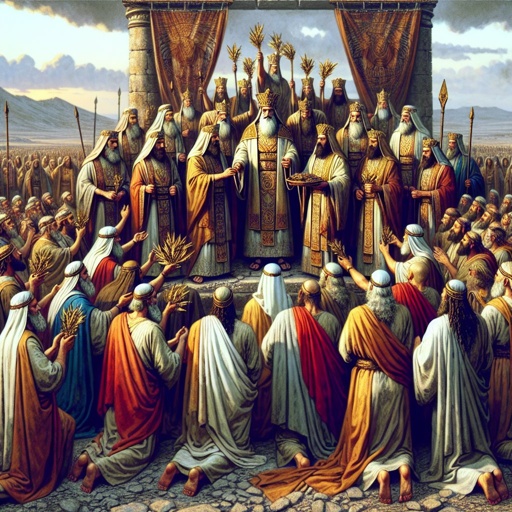
1 Chronicles 26:32 - "And his brethren, men of valour, were two thousand and seven hundred chief fathers, whom king David made rulers over the Reubenites, the Gadites, and the half tribe of Manasseh, for every matter pertaining to God, and affairs of the king."
"And his brethren, men of valour, were two thousand and seven hundred chief fathers, whom king David made rulers over the Reubenites, the Gadites, and the half tribe of Manasseh, for every matter pertaining to God, and affairs of the king." - 1 Chronicles 26:32

1 Chronicles 1:26 - "Serug, Nahor, Terah,"

1 Chronicles 11:32 - "Hurai of the brooks of Gaash, Abiel the Arbathite,"

1 Chronicles 7:32 - "And Heber begat Japhlet, and Shomer, and Hotham, and Shua their sister."

1 Chronicles 8:26 - "And Shamsherai, and Shehariah, and Athaliah,"

1 Chronicles 26:23 - "Of the Amramites, and the Izharites, the Hebronites, and the Uzzielites:"

1 Chronicles 4:32 - "And their villages were, Etam, and Ain, Rimmon, and Tochen, and Ashan, five cities:"

1 Chronicles 26:1 - "Concerning the divisions of the porters: Of the Korhites was Meshelemiah the son of Kore, of the sons of Asaph."

1 Chronicles 16:32 - "Let the sea roar, and the fulness thereof: let the fields rejoice, and all that is therein."

1 Chronicles 9:32 - "And other of their brethren, of the sons of the Kohathites, were over the shewbread, to prepare it every sabbath."

"Serug, Nahor, Terah," - 1 Chronicles 1:26

1 Chronicles 2:32 - "And the sons of Jada the brother of Shammai; Jether, and Jonathan: and Jether died without children."

1 Chronicles 8:32 - "And Mikloth begat Shimeah. And these also dwelt with their brethren in Jerusalem, over against them."

1 Chronicles 12:26 - "Of the children of Levi four thousand and six hundred."

1 Chronicles 26:18 - "At Parbar westward, four at the causeway, and two at Parbar."

1 Chronicles 26:3 - "Elam the fifth, Jehohanan the sixth, Elioenai the seventh."

1 Chronicles 26:24 - "And Shebuel the son of Gershom, the son of Moses, was ruler of the treasures."

1 Chronicles 26:9 - "And Meshelemiah had sons and brethren, strong men, eighteen."

1 Chronicles 16:26 - "For all the gods of the people are idols: but the LORD made the heavens."

1 Chronicles 26:15 - "To Obed-edom southward; and to his sons the house of Asuppim."

1 Chronicles 1:32 - "¶ Now the sons of Keturah, Abraham's concubine: she bare Zimran, and Jokshan, and Medan, and Midian, and Ishbak, and Shuah. And the sons of Jokshan; Sheba, and Dedan."

1 Chronicles 29:26 - "¶ Thus David the son of Jesse reigned over all Israel."

1 Chronicles 26:19 - "These are the divisions of the porters among the sons of Kore, and among the sons of Merari."

1 Chronicles 24:26 - "The sons of Merari were Mahli and Mushi: the sons of Jaaziah; Beno."

1 Chronicles 27:32 - "Also Jonathan David's uncle was a counsellor, a wise man, and a scribe: and Jehiel the son of Hachmoni was with the king's sons:"

"Hurai of the brooks of Gaash, Abiel the Arbathite," - 1 Chronicles 11:32

1 Chronicles 7:26 - "Laadan his son, Ammihud his son, Elishama his son,"

1 Chronicles 25:26 - "The nineteenth to Mallothi, he, his sons, and his brethren, were twelve:"

1 Chronicles 26:27 - "Out of the spoils won in battles did they dedicate to maintain the house of the LORD."