A Call to Worship: Embracing Our Role as God’s People
“And David said to all the congregation, Now bless the LORD your God. And all the congregation blessed the LORD God of their fathers, and bowed down their heads, and worshipped the LORD, and the king.” — 1 Chronicles 29:20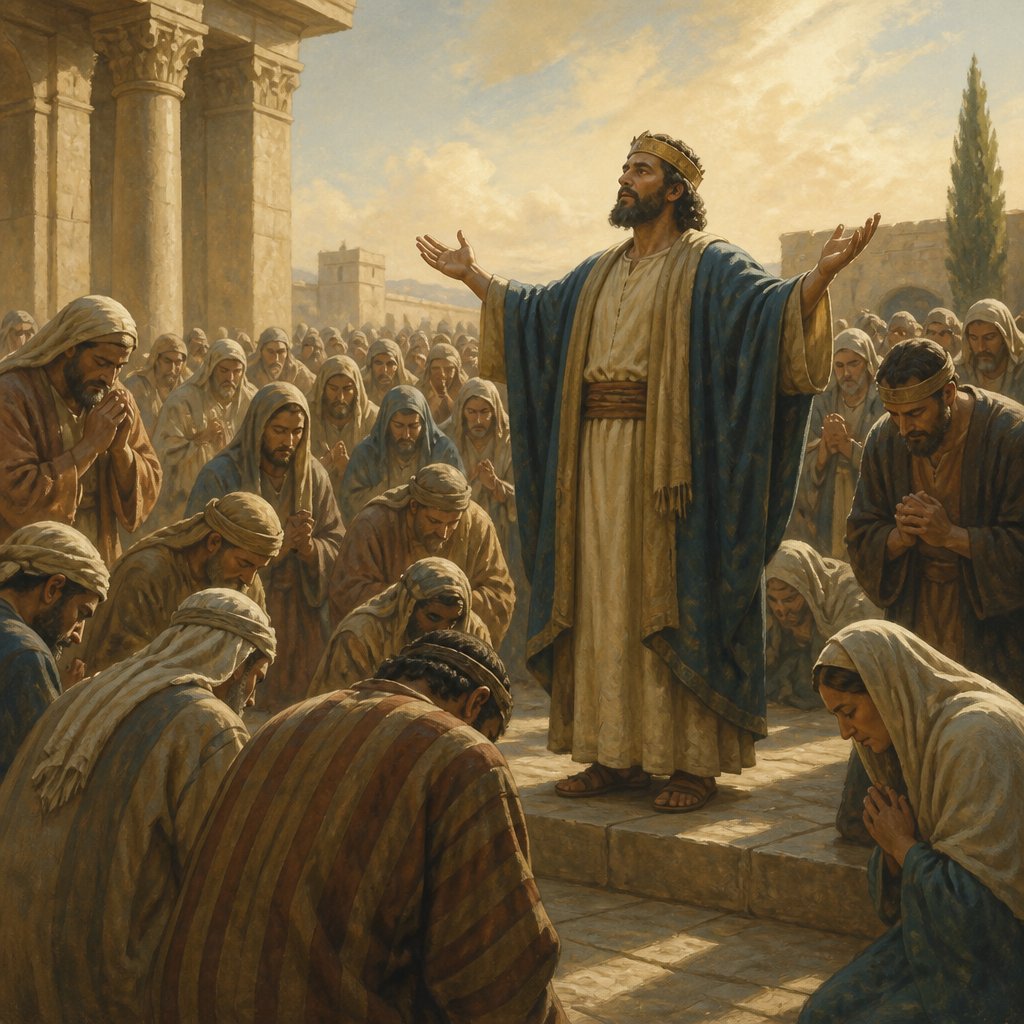
1 Chronicles 29:20 (KJV) states, "And David said to all the congregation, Now bless the LORD your God. And all the congregation blessed the LORD God of their fathers, and bowed down their heads, and worshipped the LORD, and the king." This verse encapsulates a powerful moment in the life of Israel, a moment steeped in reverence, unity, and profound acknowledgment of God’s sovereignty. In this devotional, we will delve deeply into the context, the call to worship, and the implications of such an act in our daily lives.
### The Context of Worship
In the chapters leading up to this moment, David had spent considerable time preparing the way for the building of the temple. He had amassed resources, articulated a vision, and entrusted his son Solomon with the responsibility of constructing a sanctuary for the Lord. However, before the plans could be set in motion, it was paramount for David to remind the people of their calling—to worship God.
Israel's history is marked by a cyclical pattern of forgetting and remembering God. From the Exodus to the establishment of the monarchy, the constant thread has been God’s faithfulness. And as David calls upon the congregation to bless the Lord, he is inviting them to recall their heritage, reflecting on how far they have come and the faithfulness of God throughout their history.
### The Call to Bless God
David’s charge, "Now bless the LORD your God," is an invitation for the congregation to engage in a reciprocal relationship with God. To bless God is to acknowledge His greatness, to speak well of Him, to express gratitude for His attributes and acts. It is not merely an act of worship but a collective response to God's majesty and miraculous deeds.
In our contemporary church culture, we often think of worship as an individual act—personally lifted hands, private prayers, or solitary praise. However, David’s address reminds us of the importance of corporate worship. When the congregation came together, bowing down their heads, they did so as a united body, expressing a unified heart towards the divine. This act of solidarity reflects something powerful; it is a reminder that worship is not just about the individual relationship but also the collective expression of our faith.
### The Response of the People
The response of the people was immediate and heartfelt. They not only blessed the Lord, but they also bowed down their heads and worshipped Him. This is significant! Bowing down in biblical times was a posture of humility and reverence. It signifies one’s recognition of God’s authority and greatness. The act of bowing illustrates the acknowledgment that they are creatures before their Creator, finite beings in the presence of the infinite God.
In our lives today, how often do we posture ourselves before God in this way? Are we willing to lay aside our pride, our busy schedules, our distractions, to simply bow before Him? Such a posture invites a deeper connection with God, it allows us to hear His voice more clearly and aligns our hearts with His purposes.
### Worship as a Lifestyle
Worship should not be confined to moments when we gather in a church or partake in religious rituals. David’s call serves as a reminder that worship is a lifestyle—a continual act of both personal and corporate recognition of God’s goodness, justice, mercy, and love. It is an acknowledgment of where our help comes from, our source of strength, and our greatest treasure.
As we reflect on 1 Chronicles 29:20, let us be inspired to bless the Lord with every breath we take. Let our lives be a continuous chorus of praise, echoing the joy of the congregation that worshipped their Lord. Let us encourage one another to take our place as God’s people, frequently coming together to lift our voices in unison, and in humility bow our heads in reverence before our King. May we never forget that we are called to be a kingdom of priests—set apart to glorify the One who is worthy of all honor, glory, and praise.
Get our apps


Artwork for 1 Chronicles 29:20

1 Chronicles 29:20 - "¶ And David said to all the congregation, Now bless the LORD your God. And all the congregation blessed the LORD God of their fathers, and bowed down their heads, and worshipped the LORD, and the king."
"¶ And David said to all the congregation, Now bless the LORD your God. And all the congregation blessed the LORD God of their fathers, and bowed down their heads, and worshipped the LORD, and the king." - 1 Chronicles 29:20

2 Chronicles 29:20 - "¶ Then Hezekiah the king rose early, and gathered the rulers of the city, and went up to the house of the LORD."

2 Chronicles 20:29 - "And the fear of God was on all the kingdoms of those countries, when they had heard that the LORD fought against the enemies of Israel."

1 Chronicles 4:29 - "And at Bilhah, and at Ezem, and at Tolad,"

1 Chronicles 1:29 - "¶ These are their generations: The firstborn of Ishmael, Nebaioth; then Kedar, and Adbeel, and Mibsam,"

1 Chronicles 11:29 - "Sibbecai the Hushathite, Ilai the Ahohite,"

1 Samuel 20:27-29

1 Chronicles 24:29 - "Concerning Kish: the son of Kish was Jerahmeel."

1 Chronicles 1:20 - "And Joktan begat Almodad, and Sheleph, and Hazarmaveth, and Jerah,"

1 Chronicles 29:29 - "Now the acts of David the king, first and last, behold, they are written in the book of Samuel the seer, and in the book of Nathan the prophet, and in the book of Gad the seer,"

1 Chronicles 29:26 - "¶ Thus David the son of Jesse reigned over all Israel."

1 Chronicles 8:29 - "And at Gibeon dwelt the father of Gibeon; whose wife's name was Maachah:"

1 Chronicles 8:20 - "And Elienai, and Zilthai, and Eliel,"

1 Chronicles 2:29 - "And the name of the wife of Abishur was Abihail, and she bare him Ahban, and Molid."

"And at Bilhah, and at Ezem, and at Tolad," - 1 Chronicles 4:29

1 Chronicles 25:29 - "The two and twentieth to Giddalti, he, his sons, and his brethren, were twelve:"

1 Chronicles 16:29 – "Ascribe to the Lord the glory due his name; bring an offering and come before him."

1 Chronicles 29:13 - "Now therefore, our God, we thank thee, and praise thy glorious name."

1 Chronicles 26:29 - "¶ Of the Izharites, Chenaniah and his sons were for the outward business over Israel, for officers and judges."

"Sibbecai the Hushathite, Ilai the Ahohite," - 1 Chronicles 11:29

1 Chronicles 23:20 - "Of the sons of Uzziel; Michah the first, and Jesiah the second."

1 Chronicles 2:20 - "And Hur begat Uri, and Uri begat Bezaleel."

1 Chronicles 6:29 - "The sons of Merari; Mahli, Libni his son, Shimei his son, Uzza his son,"

1 Kings 14:29 - "¶ Now the rest of the acts of Rehoboam, and all that he did, are they not written in the book of the chronicles of the kings of Judah?"

1 Chronicles 3:20 - "And Hashubah, and Ohel, and Berechiah, and Hasadiah, Jushab-hesed, five."

1 Chronicles 29:6 - "¶ Then the chief of the fathers and princes of the tribes of Israel, and the captains of thousands and of hundreds, with the rulers of the king's work, offered willingly,"

"¶ These are their generations: The firstborn of Ishmael, Nebaioth; then Kedar, and Adbeel, and Mibsam," - 1 Chronicles 1:29

1 Chronicles 29:8 - "And they with whom precious stones were found gave them to the treasure of the house of the LORD, by the hand of Jehiel the Gershonite."

1 Chronicles 27:29 - "And over the herds that fed in Sharon was Shitrai the Sharonite: and over the herds that were in the valleys was Shaphat the son of Adlai:"