The Legacy of Place: Discovering Our Roots in Christ
“Salma the father of Beth-lehem, Hareph the father of Beth-gader.” — 1 Chronicles 2:51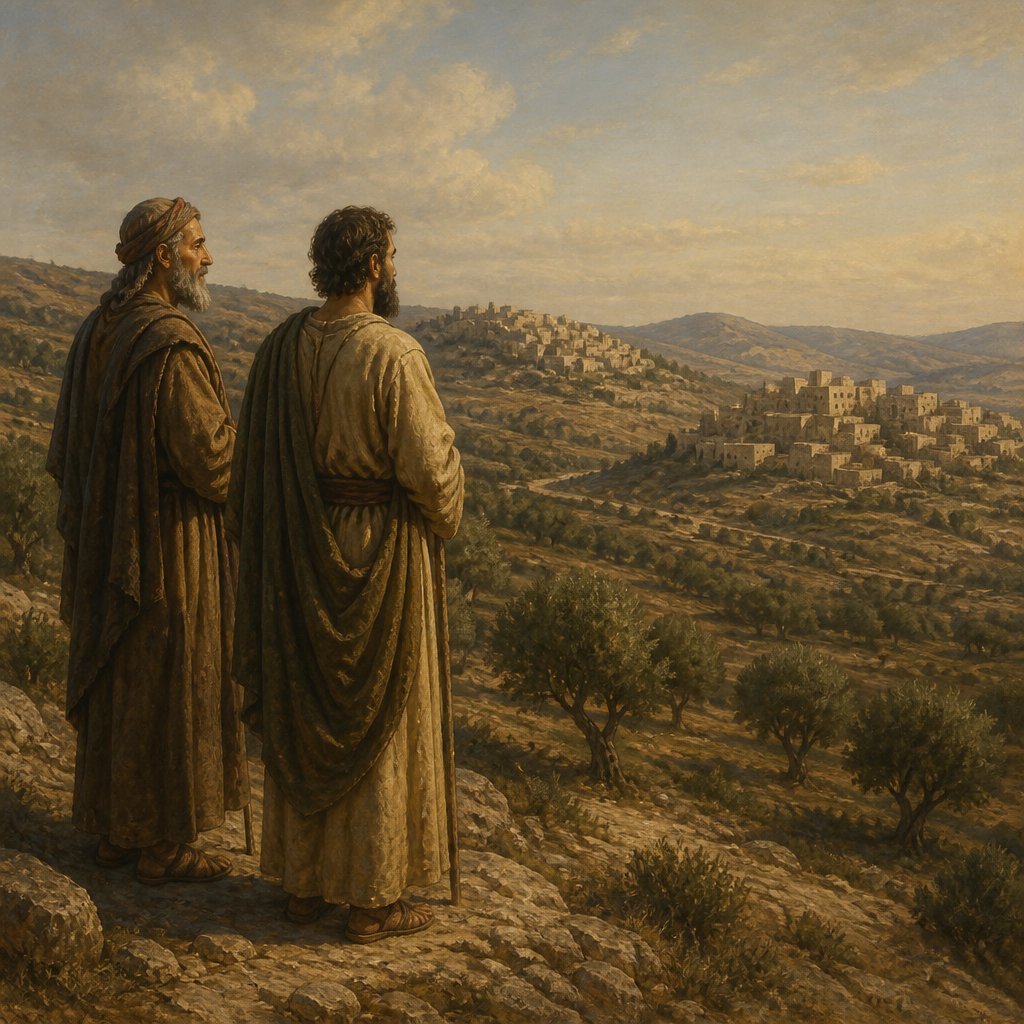
As we turn our attention to 1 Chronicles 2:51, we find a seemingly simple verse that recounts the lineage and heritage of two significant figures, Salma and Hareph—"Salma the father of Beth-lehem, Hareph the father of Beth-gader" (KJV). At first glance, such genealogical references can appear dry or merely historical. However, they hold profound significance that can enrich our understanding of who we are in Christ and the places we come from.
The mention of Salma as the "father of Beth-lehem" instantly resonates with the biblical narrative. Bethlehem is not only a geographic location but also a symbol of hope and redemption in the Bible. It is the birthplace of King David and, most importantly, the birthplace of our Lord and Savior, Jesus Christ. This connection reminds us that God often chooses humble beginnings to fulfill His extraordinary purposes. Salma, like many others in biblical lineage, might not be a name we frequently hear, yet he serves as a critical link in God's unfolding story.
Salma’s association with Bethlehem emphasizes the importance of place. Every place has a story, and every story shapes us. Just as Salma shaped Bethlehem’s identity, our backgrounds and the environments we come from can influence our spiritual journeys. We should reflect on our own “Bethlehem,” the significant places in our lives that have contributed to shaping our faith and character.
Consider for a moment how our understanding of home, rootedness, and belonging is grounded in scriptural narrative. Like Salma's legacy in Bethlehem, our identities are intricately woven with our families, communities, and histories. Each place—whether it is our birthplace, a hometown, or a beloved space where we encountered God—carries the potential of shaping who we are called to be. Are we recognizing these connections? Are we honoring the places and the people that have had a hand in founding our spiritual habits and beliefs?
Apart from Salma, we also see Hareph, the father of Beth-gader. This is equally important. The region of Beth-gader contributes to understanding the broader landscape of Israel during biblical history. Each town, each individual contributes to the whole picture of God's plan. This serves as a reminder that as believers, our individual contributions to the body of Christ matter immensely. Just as Salma and Hareph contributed to their towns and genealogies, we too must ponder what legacies we are building.
As we reflect on this verse, we are prompted to evaluate what we will leave behind as our contribution to the work of God. What spiritual legacy are we creating? Are we nurturing a faith that will inspire future generations, just as the roots of faith in Bethlehem lead ultimately to Christ?
Our roots are in Christ, and just as Salma and Hareph were essential in God’s narrative, so too are we. In Christ, our stories intertwine with others, forming a tapestry of faith that echoes through generations. The Christian walk is thus a journey taken hand in hand with fellow believers—an iterative story of growth, love, and legacy.
This verse encourages us to dig deep into our spiritual heritage. Perhaps it’s time we seek the face of God in our own history—praying over our understanding of where we come from, and in what way God is calling us to impact our communities today.
In conclusion, let us embrace our identity as both individuals and collective contributors in the Kingdom of God. Let us examine our "Bethlehem" and our "Beth-gader," thanking God for their influence on our lives, while committing ourselves anew to the work He has for us here and now. May our lives be a reflection of God’s love and grace, as we honor our past and look forward to our purpose in Him.
Get our apps


Artwork for 1 Chronicles 2:51

1 Chronicles 2:51 - "Salma the father of Beth-lehem, Hareph the father of Beth-gader."
"Salma the father of Beth-lehem, Hareph the father of Beth-gader." - 1 Chronicles 2:51

1 Chronicles 1:51 - "¶ Hadad died also. And the dukes of Edom were; duke Timnah, duke Aliah, duke Jetheth,"

1 Chronicles 6:51 - "Bukki his son, Uzzi his son, Zerahiah his son,"

"Bukki his son, Uzzi his son, Zerahiah his son," - 1 Chronicles 6:51
"¶ Hadad died also. And the dukes of Edom were; duke Timnah, duke Aliah, duke Jetheth," - 1 Chronicles 1:51

Pslam 51:1

1 Chronicles 2:48 - "Maachah, Caleb's concubine, bare Sheber, and Tirhanah."

Pslam 51:1

1 Chronicles 2:8 - "And the sons of Ethan; Azariah."

1 Chronicles 2:38 - "And Obed begat Jehu, and Jehu begat Azariah,"

1 Chronicles 2:41 - "And Shallum begat Jekamiah, and Jekamiah begat Elishama."

1 Chronicles 2:36 - "And Attai begat Nathan, and Nathan begat Zabad,"

1 Chronicles 2:11 - "And Nahshon begat Salma, and Salma begat Boaz,"

1 Chronicles 2:39 - "And Azariah begat Helez, and Helez begat Eleasah,"

1 Chronicles 2:15 - "Ozem the sixth, David the seventh:"

1 Chronicles 2:14 - "Nethaneel the fourth, Raddai the fifth,"

psalm 51:10

Leviticus 14:51

1 Chronicles 2:5 - "The sons of Pharez; Hezron, and Hamul."

1 Chronicles 1:2 - "Kenan, Mahalaleel, Jered,"

1 Chronicles 2:2 - "Dan, Joseph, and Benjamin, Naphtali, Gad, and Asher."

1 Chronicles 2:20 - "And Hur begat Uri, and Uri begat Bezaleel."

1 Chronicles 2:40 - "And Eleasah begat Sisamai, and Sisamai begat Shallum,"

1 Chronicles 2:37 - "And Zabad begat Ephlal, and Ephlal begat Obed,"

1 Chronicles 2:12 - "And Boaz begat Obed, and Obed begat Jesse,"

"And the sons of Ethan; Azariah." - 1 Chronicles 2:8

"Nethaneel the fourth, Raddai the fifth," - 1 Chronicles 2:14

Ezra 2:51 - "The children of Bakbuk, the children of Hakupha, the children of Harhur,"

1 Corinthians 15:51-52