Mighty Men of Valor: The Legacy of Leadership
“And these were the heads of the house of their fathers, even Epher, and Ishi, and Eliel, and Azriel, and Jeremiah, and Hodaviah, and Jahdiel, mighty men of valour, famous men, and heads of the house of their fathers.” — 1 Chronicles 5:24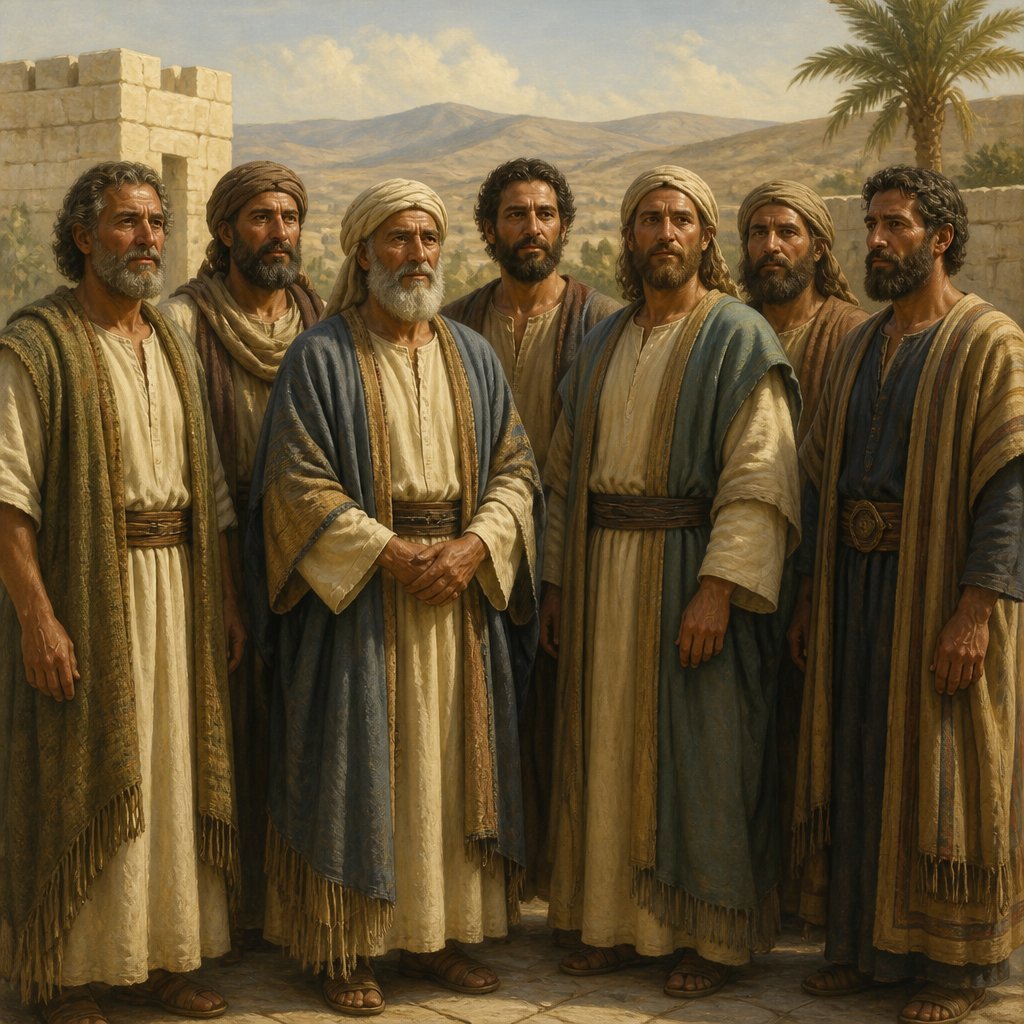
In the midst of genealogies and lists in the Old Testament, 1 Chronicles 5:24 presents a powerful reminder of the significance of leadership and legacy. The verse states, "And these were the heads of the house of their fathers, even Epher, and Ishi, and Eliel, and Azriel, and Jeremiah, and Hodaviah, and Jahdiel, mighty men of valour, famous men, and heads of the house of their fathers."
At first glance, this verse may appear as a mere enumeration of names—a historical record of the tribes of Israel. However, within these names and titles lies a profound truth about the nature of strength and influence that transcends generations. Each name represents a man who bore responsibility not only for his own family but for the guidance and direction of an entire lineage. They were described as "mighty men of valour," a term that evokes images of warriors—men who fought for their people and upheld the values of courage, integrity, and faith.
**The Call to Leadership**
The phrase "mighty men of valour" (KJV) indicates that these were not just ordinary men. They were leaders regarded for their strength, bravery, and wisdom. As Christians, we are called to be leaders in our families, workplaces, and communities. God often places us in positions where we can influence others—sometimes positively, sometimes otherwise. It’s a divine responsibility that requires us to cultivate qualities such as courage, strength, and moral integrity.
In Ephesians 6:10, we are reminded, "Finally, my brethren, be strong in the Lord, and in the power of his might." Our strength does not originate from ourselves but from our relationship with God. These mighty men of valor understood their calling and dependency on God’s strength in facing the challenges that lay before them. They recognized that true leadership stems from a heart aligned with divine purpose and a commitment to serving others.
**The Importance of Community**
The mention of these men as heads of their fathers' houses signifies the importance of community and family lineages in the Biblical context. Leadership is rarely a solitary endeavor; it is cultivated through relationships and faithfulness to our community and family. As members of the body of Christ, we are called to empower one another, building a legacy rooted in faith and service. We can reflect on our lives to see how we contribute to the spiritual health of our households and communities.
Consider the relationships represented by these names. Behind every "mighty man of valor" was a family, a tribe, a community that relied on their strength and guidance. They were not just individuals showcasing their might; they were the embodiment of unity and collective strength. We too must recognize that our actions and character impact not just ourselves but those around us. Are we uplifting our families, fostering healthy relationships, and nurturing faith in our community?
**A Lasting Legacy of Faith**
These mighty warriors were famous for a reason. Their deeds marked them for generations, serving not just as a record of their strength but as a reflection of the enduring qualities valued by God: faith, courage, and leadership. Such characteristics form a legacy we should strive to leave behind—not merely a reputation of success, but a testimony of faithfulness to God and His purposes.
Ecclesiastes 4:9-10 reminds us, "Two are better than one; because they have a good reward for their labour. For if they fall, the one will lift up his fellow: but woe to him that is alone when he falleth; for he hath not another to help him up." Let us be mighty men and women of valor, working together to lift one another up in the faith, encouraging one another to walk with courage and integrity.
In conclusion, let us take a moment to honor those heads of the households who came before us—those who stood strong in faith and helped weave the threads of our spiritual heritage. May we aspire to be known as mighty men and women of valor in our time, committed to serving, leading, and loving one another through the grace of God.
Get our apps


Artwork for 1 Chronicles 5:24

1 Chronicles 5:24 - "And these were the heads of the house of their fathers, even Epher, and Ishi, and Eliel, and Azriel, and Jeremiah, and Hodaviah, and Jahdiel, mighty men of valour, famous men, and heads of the house of their fathers."
"And these were the heads of the house of their fathers, even Epher, and Ishi, and Eliel, and Azriel, and Jeremiah, and Hodaviah, and Jahdiel, mighty men of valour, famous men, and heads of the house of their fathers." - 1 Chronicles 5:24
1 Chronicles 24:5 - "Thus were they divided by lot, one sort with another; for the governors of the sanctuary, and governors of the house of God, were of the sons of Eleazar, and of the sons of Ithamar."

1 Chronicles 24:24 - "Of the sons of Uzziel; Michah: of the sons of Michah; Shamir."

1 Chronicles 1:24 - "¶ Shem, Arphaxad, Shelah,"

1 Chronicles 8:24 - "And Hananiah, and Elam, and Antothijah,"

2 Kings 24:5 - "¶ Now the rest of the acts of Jehoiakim, and all that he did, are they not written in the book of the chronicles of the kings of Judah?"

1 Chronicles 24:15 - "The seventeenth to Hezir, the eighteenth to Aphses,"

1 Chronicles 24:16 - "The nineteenth to Pethahiah, the twentieth to Jehezekel,"

1 Chronicles 24:11 - "The ninth to Jeshua, the tenth to Shecaniah,"

1 Chronicles 24:14 - "The fifteenth to Bilgah, the sixteenth to Immer,"

1 Chronicles 24:9 - "The fifth to Malchijah, the sixth to Mijamin,"

1 Chronicles 24:13 - "The thirteenth to Huppah, the fourteenth to Jeshebeab,"

1 Chronicles 24:10 - "The seventh to Hakkoz, the eighth to Abijah,"

1 Chronicles 24:8 - "The third to Harim, the fourth to Seorim,"

1 Chronicles 24:12 - "The eleventh to Eliashib, the twelfth to Jakim,"

1 Chronicles 24:22 - "Of the Izharites; Shelomoth: of the sons of Shelomoth; Jahath."

1 Chronicles 24:29 - "Concerning Kish: the son of Kish was Jerahmeel."

"¶ Shem, Arphaxad, Shelah," - 1 Chronicles 1:24

1 Chronicles 24:25 - "The brother of Michah was Isshiah: of the sons of Isshiah; Zechariah."

1 Chronicles 24:18 - "The three and twentieth to Delaiah, the four and twentieth to Maaziah."

1 Chronicles 24:21 - "Concerning Rehabiah: of the sons of Rehabiah, the first was Isshiah."

1 Chronicles 24:28 - "Of Mahli came Eleazar, who had no sons."

1 Chronicles 24:17 - "The one and twentieth to Jachin, the two and twentieth to Gamul,"

1 Chronicles 24:1 - "Now these are the divisions of the sons of Aaron. The sons of Aaron; Nadab, and Abihu, Eleazar, and Ithamar."

1 Chronicles 26:24 - "And Shebuel the son of Gershom, the son of Moses, was ruler of the treasures."

1 Chronicles 24:27 - "¶ The sons of Merari by Jaaziah; Beno, and Shoham, and Zaccur, and Ibri."

1 Chronicles 5:5 - "Micah his son, Reaia his son, Baal his son,"

"Of the sons of Uzziel; Michah: of the sons of Michah; Shamir." - 1 Chronicles 24:24

1 Chronicles 24:7 - "Now the first lot came forth to Jehoiarib, the second to Jedaiah,"