Stirred by the Spirit: Understanding God’s Sovereignty in Exile
“And the God of Israel stirred up the spirit of Pul king of Assyria, and the spirit of Tilgath-pilneser king of Assyria, and he carried them away, even the Reubenites, and the Gadites, and the half tribe of Manasseh, and brought them unto Halah, and Habor, and Hara, and to the river Gozan, unto this day.” — 1 Chronicles 5:26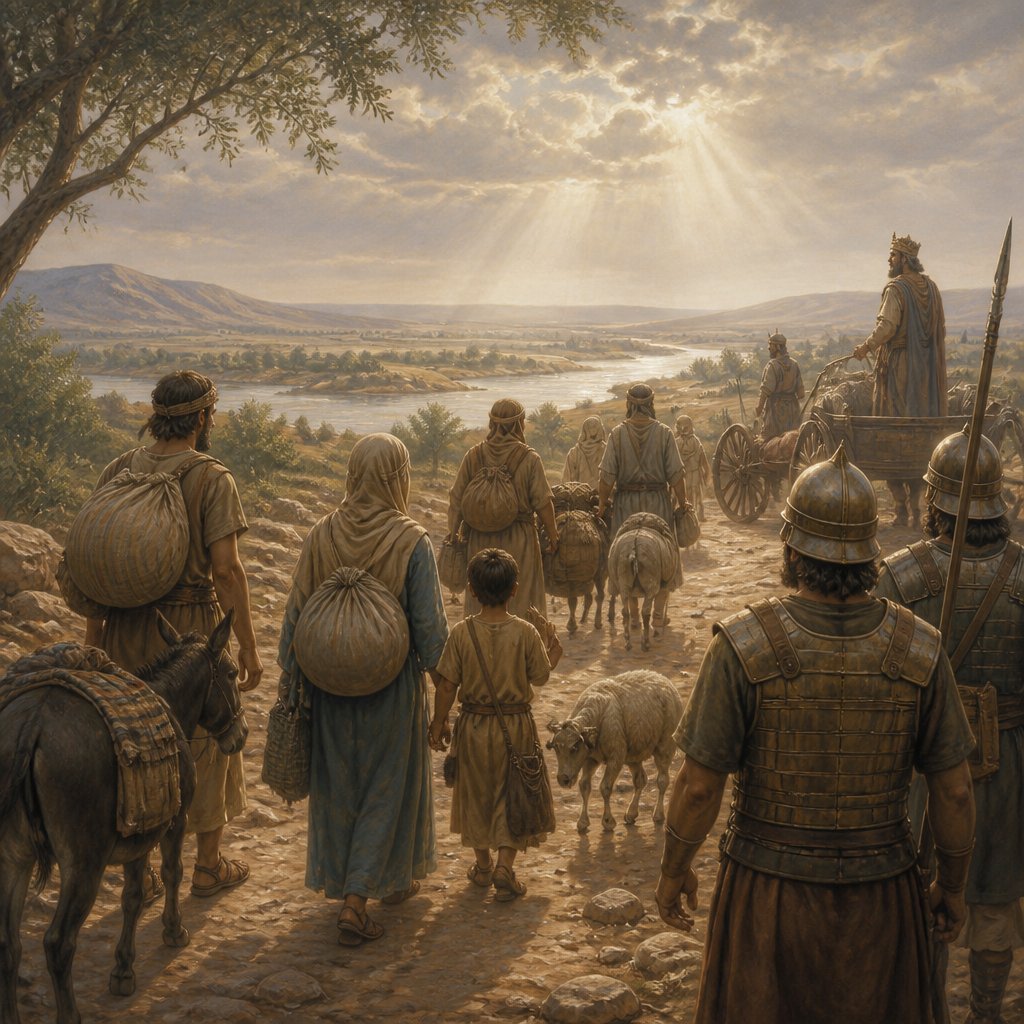
1 Chronicles 5:26 states: "And the God of Israel stirred up the spirit of Pul king of Assyria, and the spirit of Tilgath-pilneser king of Assyria, and he carried them away, even the Reubenites, and the Gadites, and the half tribe of Manasseh, and brought them unto Halah, and Habor, and Hara, and to the river Gozan, unto this day."
This intriguing verse encapsulates a profound truth about the nature of God’s sovereignty over the events of history and the lives of nations. At first glance, it appears to be a simple account of the Assyrian kings and their conquests, yet within it lies a rich tapestry of divine purpose, judgment, and hope.
The phrase "stirred up the spirit" suggests that while kings may wield power and authority, they are not beyond the reach of God’s will. God actively influences rulers, sometimes using them as instruments of His judgment upon His people. Throughout Scripture, we see instances where God raises up kings and leaders to fulfill His plans, irrespective of their personal inclinations. God stirred the hearts of Pul and Tilgath-pilneser at a time when His people were facing significant moral and spiritual decline. This teaches us a pivotal lesson: God remains involved in the human story, orchestrating events even during turbulent times.
The mention of the Reubenites, Gadites, and the half tribe of Manasseh signifies the consequences of disobedience. These tribes had settled on the east side of the Jordan River, where their desire for land over a covenant relationship with God led them away from His chosen territory and His divine favor. Their fate serves as a cautionary tale that warns us about the perils of complacency and the danger of separating ourselves from God’s presence and purpose.
Exile can often be our consequence for drifting away from God. However, it’s essential to note that God does not abandon us in our exile. He uses those stark moments of separation to draw us back to Himself, to remind us of our need for Him, and to reaffirm His promises. The Reubenites, Gadites, and half tribe of Manasseh may have faced distress, but every difficulty endured can become a path for true repentance and restoration.
The ultimate destination of their exile—Halah, Habor, Hara, and the river Gozan—was not just a physical displacement; it was a spiritual reminder of their need to return to their roots within the covenant community.
This concept of communal identity matters deeply. God’s people are never just isolated individuals but part of a body, a community called to worship and serve together. When we are scattered due to sin or life’s struggles, we are encouraged to seek out our spiritual families and find our stories woven together. As members of the body of Christ, we must emphasize mutual support, accountability, and connection, particularly in difficult times.
Moreover, 1 Chronicles 5:26 invites us to reflect on God’s unwavering ability to restore even those who find themselves in exile. No matter how far we may have strayed, His arms are always open, ready to receive us back. Through the trials we face, our loving God invites us to seek Him earnestly, to understand His plans are still for our good. He desires not only to guide us back to our rightful place but also to strengthen us through the journey.
As we meditate on this Scripture today, let us acknowledge the sovereignty of God and the ways He is stirring our spirits, our communities, and our leaders. May we, even amidst our own personal exiles or the cries of our nation, stand resolutely in faith, trusting that God is at work, preparing the way for restoration and revival.
Get our apps


Artwork for 1 Chronicles 5:26

1 Chronicles 5:26 - "And the God of Israel stirred up the spirit of Pul king of Assyria, and the spirit of Tilgath-pilneser king of Assyria, and he carried them away, even the Reubenites, and the Gadites, and the half tribe of Manasseh, and brought them unto Halah, and Habor, and Hara, and to the river Gozan, unto this day."
"And the God of Israel stirred up the spirit of Pul king of Assyria, and the spirit of Tilgath-pilneser king of Assyria, and he carried them away, even the Reubenites, and the Gadites, and the half tribe of Manasseh, and brought them unto Halah, and Habor, and Hara, and to the river Gozan, unto this day." - 1 Chronicles 5:26

1 Chronicles 26:5 - "Ammiel the sixth, Issachar the seventh, Peulthai the eighth: for God blessed him."

1 Chronicles 1:26 - "Serug, Nahor, Terah,"
"Ammiel the sixth, Issachar the seventh, Peulthai the eighth: for God blessed him." - 1 Chronicles 26:5

1 Chronicles 8:26 - "And Shamsherai, and Shehariah, and Athaliah,"

1 Chronicles 26:23 - "Of the Amramites, and the Izharites, the Hebronites, and the Uzzielites:"

1 Chronicles 26:1 - "Concerning the divisions of the porters: Of the Korhites was Meshelemiah the son of Kore, of the sons of Asaph."

"Serug, Nahor, Terah," - 1 Chronicles 1:26

1 Chronicles 12:26 - "Of the children of Levi four thousand and six hundred."

1 Chronicles 26:3 - "Elam the fifth, Jehohanan the sixth, Elioenai the seventh."

1 Chronicles 26:18 - "At Parbar westward, four at the causeway, and two at Parbar."

1 Chronicles 26:24 - "And Shebuel the son of Gershom, the son of Moses, was ruler of the treasures."

1 Chronicles 26:9 - "And Meshelemiah had sons and brethren, strong men, eighteen."

1 Chronicles 16:26 - "For all the gods of the people are idols: but the LORD made the heavens."

1 Chronicles 26:15 - "To Obed-edom southward; and to his sons the house of Asuppim."

1 Chronicles 29:26 - "¶ Thus David the son of Jesse reigned over all Israel."

1 Chronicles 26:19 - "These are the divisions of the porters among the sons of Kore, and among the sons of Merari."

1 Chronicles 24:26 - "The sons of Merari were Mahli and Mushi: the sons of Jaaziah; Beno."

1 Chronicles 5:5 - "Micah his son, Reaia his son, Baal his son,"

1 Chronicles 7:26 - "Laadan his son, Ammihud his son, Elishama his son,"

1 Chronicles 26:27 - "Out of the spoils won in battles did they dedicate to maintain the house of the LORD."

1 Chronicles 25:26 - "The nineteenth to Mallothi, he, his sons, and his brethren, were twelve:"

2 Chronicles 26:5 - "And he sought God in the days of Zechariah, who had understanding in the visions of God: and as long as he sought the LORD, God made him to prosper."

1 Thessalonians 5:26 - "Greet all the brethren with an holy kiss."

1 Chronicles 6:26 - "As for Elkanah: the sons of Elkanah; Zophai his son, and Nahath his son,"

"And Shamsherai, and Shehariah, and Athaliah," - 1 Chronicles 8:26

1 Chronicles 27:26 - "And over them that did the work of the field for tillage of the ground was Ezri the son of Chelub:"

1 Chronicles 26:13 - "¶ And they cast lots, as well the small as the great, according to the house of their fathers, for every gate."

1 Chronicles 26:20 - "¶ And of the Levites, Ahijah was over the treasures of the house of God, and over the treasures of the dedicated things."