The Legacy of Faithfulness: Lessons from the Sons of Kohath
“And out of the half tribe of Manasseh; Aner with her suburbs, and Bileam with her suburbs, for the family of the remnant of the sons of Kohath.” — 1 Chronicles 6:70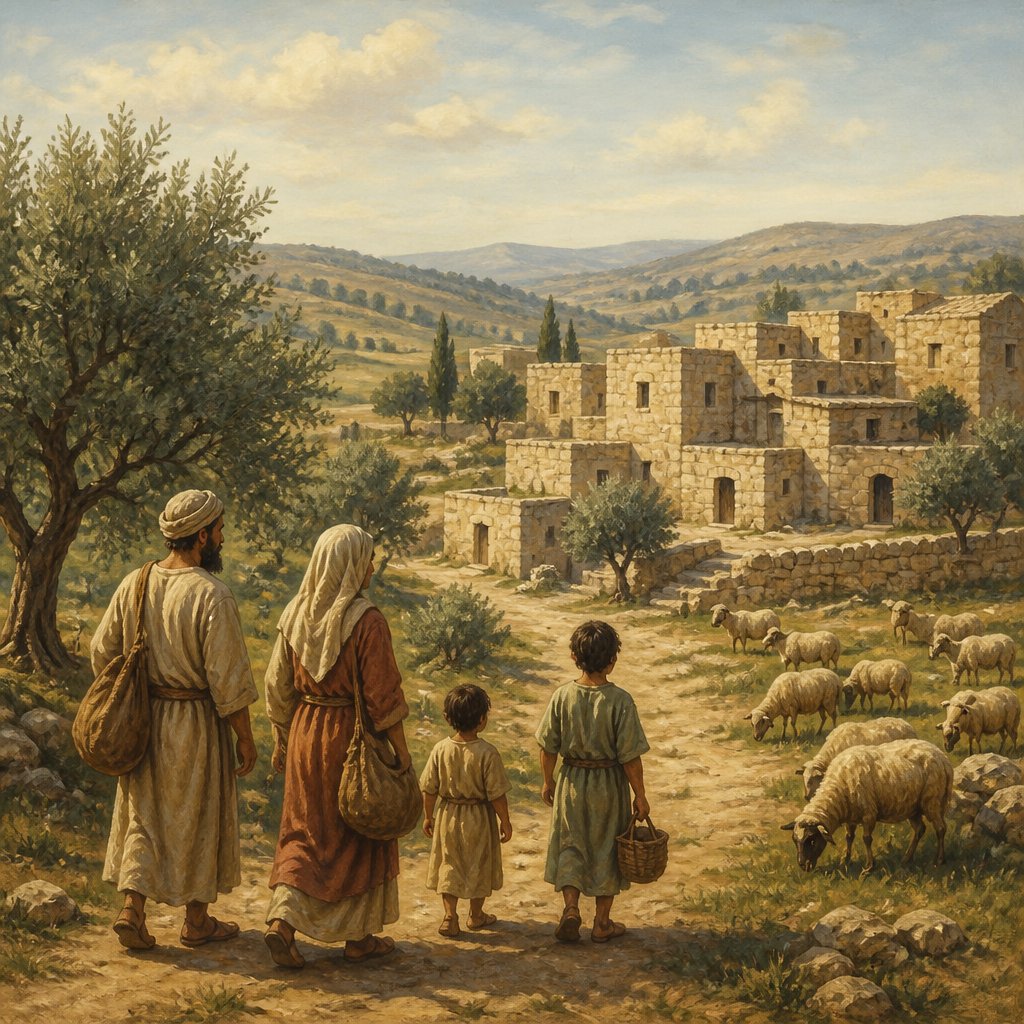
As we delve into 1 Chronicles 6:70, we find a seemingly straightforward account that lists the cities and territories belonging to the family of the remnant of the sons of Kohath. The verse states: “And out of the half tribe of Manasseh; Aner with her suburbs, and Bileam with her suburbs, for the family of the remnant of the sons of Kohath.” At first glance, this passage may appear to be merely a genealogical record, but within it lies profound truths about faith, heritage, and the responsibilities that churches and families hold in their spiritual legacy.
To appreciate the significance of this verse, we must understand the importance of the Kohathites within Israel’s history. The sons of Kohath were part of the Levites, a tribe set apart for sacred duties in the service of the Lord. They were responsible for the care of the most holy items in the tabernacle, including the Ark of the Covenant, table of showbread, and the lampstand. The heritage of the Kohathites represents not just a physical inheritance but a spiritual calling that echoed throughout generations.
In the broader context of God’s plan, every mention of the geographical inheritances in Scripture reveals a God who is intentional about His people, ensuring their needs are met both physically and spiritually. The choice of Aner and Bileam as cities for the sons of Kohath illustrates God's desire to provide for those dedicated to Him. In modern times, this speaks to us about the meaning of faithfulness and commitment in our personal lives and communities.
These cities, highlighted in the territory of the half-tribe of Manasseh, serve as a reminder that our legacy is built not just on what we possess, but on how we live out our faith. The Kohathites were tasked with an important ministry, and as bearers of His presence, their example teaches us about dedication. Just as Kohath’s descendants were entrusted with sacred responsibilities, so too are we entrusted with the care of our families, our communities, and the church as a whole.
What does it mean to live faithfully in our calling? It means treating every aspect of our lives—our work, our relationships, and our daily actions—with an understanding that we represent God’s kingdom on Earth. Each interaction we have, each decision we make, has spiritual implications that resonate beyond our current scope. The life we lead is an invitation to others to experience the love and grace of God.
The reference to the suburbs of Aner and Bileam indicates that the Kohathites had a place to dwell, a community where their family legacy could flourish. The importance of community in nurturing one’s faith cannot be overstated. Just as Kohath’s descendants had their city, we too must cultivate environments—whether in our homes, churches, or neighborhoods—that foster spiritual growth and a deeper understanding of God.
Moreover, the term ‘remnant’ speaks volumes about perseverance. Throughout history, God has always preserved a remnant of believers who remain steadfast amidst trials and tribulations. As the world changes around us, we must hold dearly to our faith, just as the remnant of Kohath has. It is in identifying ourselves as part of God's faithful remnant that we find true purpose and strength.
In conclusion, while 1 Chronicles 6:70 may appear to be nothing more than a historical note, it invites us to reflect on our own spiritual heritages and responsibilities. Are we living faithfully in our callings? Are we nurturing our communities to honor God? May we be inspired by the legacy left by the sons of Kohath, to value not just the physical, but the eternal impact of our lives as we serve God wholeheartedly.
Get our apps


Artwork for 1 Chronicles 6:70

1 Chronicles 6:70 - "And out of the half tribe of Manasseh; Aner with her suburbs, and Bileam with her suburbs, for the family of the remnant of the sons of Kohath."
"And out of the half tribe of Manasseh; Aner with her suburbs, and Bileam with her suburbs, for the family of the remnant of the sons of Kohath." - 1 Chronicles 6:70

John 6:70 - "Jesus answered them, Have not I chosen you twelve, and one of you is a devil?"

Luke 1:70 - "As he spake by the mouth of his holy prophets, which have been since the world began:"

Psalms 70:1 - "Make haste, O God, to deliver me; make haste to help me, O LORD."

1 Chronicles 6:6 - "And Uzzi begat Zerahiah, and Zerahiah begat Meraioth,"

1 Chronicles 1:6 - "And the sons of Gomer; Ashchenaz, and Riphath, and Togarmah."

1 Chronicles 6:1 - "The sons of Levi; Gershon, Kohath, and Merari."
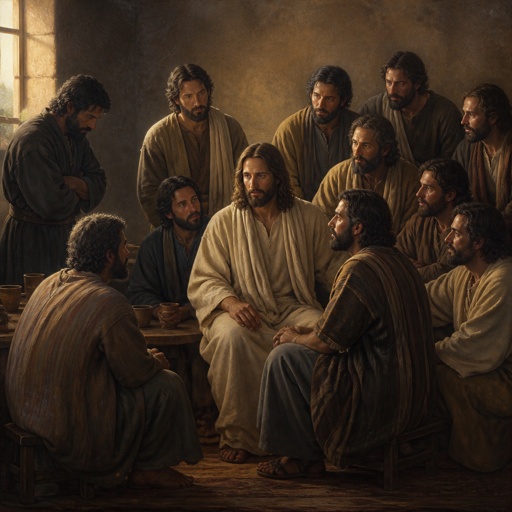
"Jesus answered them, Have not I chosen you twelve, and one of you is a devil?" - John 6:70

1 Chronicles 14:6 - "And Nogah, and Nepheg, and Japhia,"

1 Chronicles 3:6 - "Ibhar also, and Elishama, and Eliphelet,"

1 Chronicles 6:25 - "And the sons of Elkanah; Amasai, and Ahimoth."

1 Chronicles 6:16 - "¶ The sons of Levi; Gershom, Kohath, and Merari."

1 Chronicles 6:17 - "And these be the names of the sons of Gershom; Libni, and Shimei."

1 Chronicles 6:28 - "And the sons of Samuel; the firstborn Vashni, and Abiah."

1 Chronicles 6:58 - "And Hilen with her suburbs, Debir with her suburbs,"

1 Chronicles 6:12 - "And Ahitub begat Zadok, and Zadok begat Shallum,"

1 Chronicles 6:45 - "The son of Hashabiah, the son of Amaziah, the son of Hilkiah,"

1 Chronicles 6:11 - "And Azariah begat Amariah, and Amariah begat Ahitub,"

1 Chronicles 6:14 - "And Azariah begat Seraiah, and Seraiah begat Jehozadak,"

1 Chronicles 7:6 - "¶ The sons of Benjamin; Bela, and Becher, and Jediael, three."

1 Chronicles 6:53 - "Zadok his son, Ahimaaz his son."

1 Chronicles 6:5 - "And Abishua begat Bukki, and Bukki begat Uzzi,"

1 Chronicles 6:9 - "And Ahimaaz begat Azariah, and Azariah begat Johanan,"

1 Chronicles 6:41 - "The son of Ethni, the son of Zerah, the son of Adaiah,"

1 Chronicles 6:40 - "The son of Michael, the son of Baaseiah, the son of Malchiah,"

1 Chronicles 12:6 - "Elkanah, and Jesiah, and Azareel, and Joezer, and Jashobeam, the Korhites,"

1 Chronicles 6:8 - "And Ahitub begat Zadok, and Zadok begat Ahimaaz,"

1 Chronicles 6:7 - "Meraioth begat Amariah, and Amariah begat Ahitub,"

1 Chronicles 6:13 - "And Shallum begat Hilkiah, and Hilkiah begat Azariah,"