From Geba to Manahath: A Journey of Leadership and Legacy
“And these are the sons of Ehud: these are the heads of the fathers of the inhabitants of Geba, and they removed them to Manahath:” — 1 Chronicles 8:6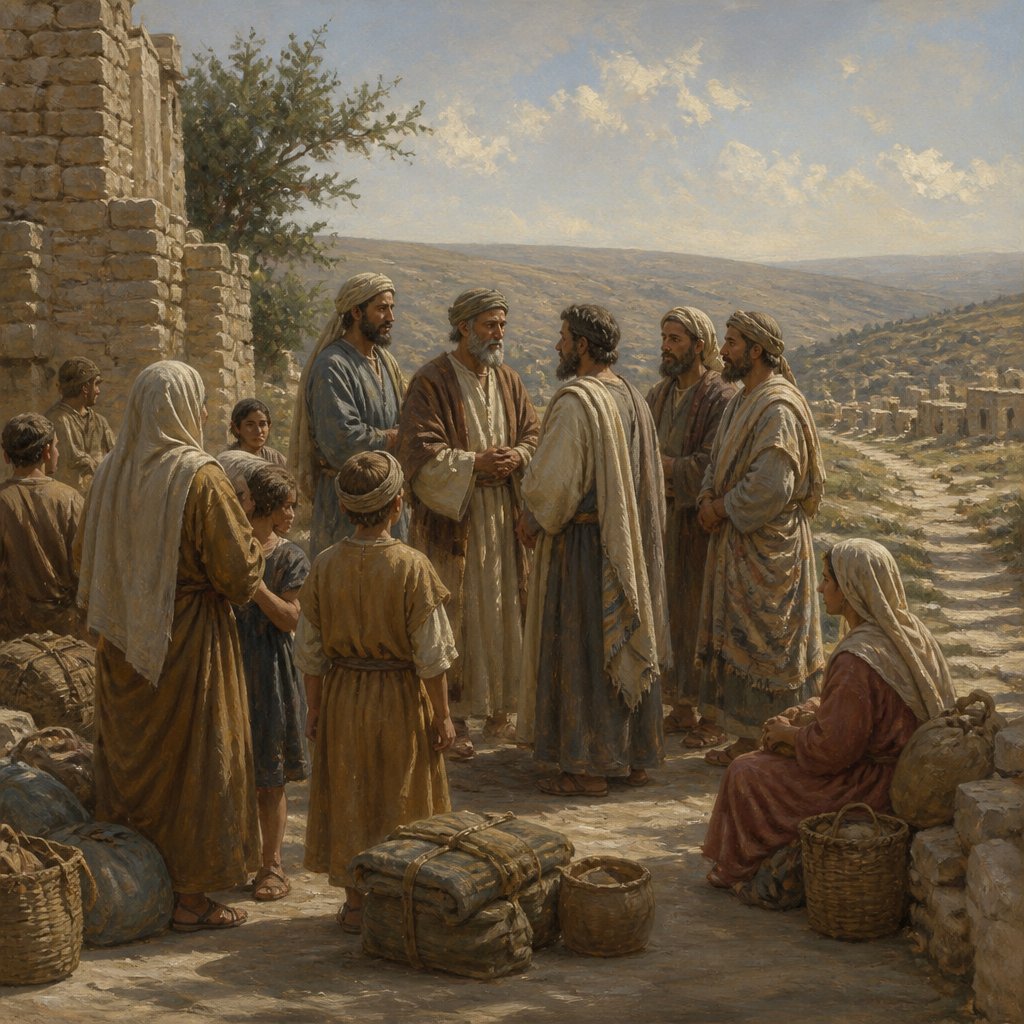
The passage from 1 Chronicles 8:6 states, "And these are the sons of Ehud: these are the heads of the fathers of the inhabitants of Geba, and they removed them to Manahath." At first glance, this verse may appear to be a simple historical record of lineage and migration. However, upon deeper reflection, it reveals profound insights about leadership, legacy, and divine purpose.
Ehud, the name mentioned in this verse, signifies much more than just an individual; it represents the weight of responsibility and heritage passed down through generations. In the biblical narrative, Ehud is recognized as a hero who delivered Israel from oppression (Judges 3:15-30). His legacy resonates beyond his life, influencing the course of history for the nation of Israel. When we consider the "sons of Ehud," we are reminded that leadership is not merely about authority or position; it is about shaping the future through the guidance and example set by predecessors.
The inhabitants of Geba symbolize a community facing challenges and transitions. The term "Geba" itself means "hill," indicating a place of elevation but also of vantage—where one can see and be seen. However, it also signifies a point of conflict, as it was taken from the Israelites by the Benjamites. Leadership necessitates not just awareness of one's current situation but also the ability to facilitate change. The movement from Geba to Manahath symbolizes a shift—a response to the prompting of the Holy Spirit that can lead individuals or communities away from struggles and towards a promised land.
Manahath, which means “resting place,” illustrates a biblical truth: God leads His people into a place of peace and restoration. It emphasizes the importance of following divine direction, as the journey between Geba and Manahath is significant. In our own lives, we may find ourselves in moments of Geba—places of strife, confusion, and uncertainty. Yet, God’s promise is continual; He desires to lead us out of those difficulties toward a place of spiritual rest and fulfillment. This transition serves as a reminder of our own need to remain receptive to God’s voice, both as individuals and as a church community.
Moreover, the passage underlines the importance of being leaders in our respective domains, be it family, workplace, or church. As the heads of the families, the sons of Ehud were entrusted with the responsibility not just of governance, but of nurturing faith within their households. Leadership extends beyond authority; it involves cultivating relationships, guiding others through struggles, and inspiring a collective faith that seeks God’s will. This calls to mind the words of Paul in Ephesians 6:4, which urge fathers to bring up their children in the nurture and admonition of the Lord.
As believers, we are constantly faced with opportunities to lead, to influence, and to serve those around us. In an era marked by division, strife, and uncertainty, we are called to be peacemakers, architects of hope, and purveyors of God's love. The journey from Geba to Manahath emphasizes that while the journey may be fraught with challenges, it is within our grasp to navigate these moments under God’s guidance, where we seek not only our own rest but also extend that peace to others.
In conclusion, let us reflect on our spiritual journey today. Are there areas in our lives where we feel stuck in a ‘Geba’ moment? Are we ready to embrace God’s leadership that invites us to a ‘Manahath’ of rest and restoration? May we each take up the mantle of leadership—like the sons of Ehud—shaping our legacies in faith and guiding others towards God’s peace. As we surrender our aspirations to the Lord, we trust that our paths are not just about reaching destinations but about fulfilling our purpose in His great unfolding story.
Get our apps


Artwork for 1 Chronicles 8:6

1 Chronicles 8:6 - "And these are the sons of Ehud: these are the heads of the fathers of the inhabitants of Geba, and they removed them to Manahath:"
"And these are the sons of Ehud: these are the heads of the fathers of the inhabitants of Geba, and they removed them to Manahath:" - 1 Chronicles 8:6

1 Chronicles 6:8 - "And Ahitub begat Zadok, and Zadok begat Ahimaaz,"
"And Ahitub begat Zadok, and Zadok begat Ahimaaz," - 1 Chronicles 6:8

1 Chronicles 6:6 - "And Uzzi begat Zerahiah, and Zerahiah begat Meraioth,"

1 Chronicles 1:6 - "And the sons of Gomer; Ashchenaz, and Riphath, and Togarmah."

1 Chronicles 1:8 - "¶ The sons of Ham; Cush, and Mizraim, Put, and Canaan."

1 Chronicles 6:1 - "The sons of Levi; Gershon, Kohath, and Merari."

1 Chronicles 8:31 - "And Gedor, and Ahio, and Zacher."

1 Chronicles 8:20 - "And Elienai, and Zilthai, and Eliel,"

1 Chronicles 8:19 - "And Jakim, and Zichri, and Zabdi,"

1 Chronicles 8:24 - "And Hananiah, and Elam, and Antothijah,"

1 chronicles 12:8

1 Chronicles 8:2 - "Nohah the fourth, and Rapha the fifth."

1 Chronicles 8:26 - "And Shamsherai, and Shehariah, and Athaliah,"

1 Chronicles 8:5 - "And Gera, and Shephuphan, and Huram."

1 Chronicles 8:22 - "And Ishpan, and Heber, and Eliel,"

1 Chronicles 2:8 - "And the sons of Ethan; Azariah."

1 Chronicles 8:14 - "And Ahio, Shashak, and Jeremoth,"

1 Chronicles 8:23 - "And Abdon, and Zichri, and Hanan,"

1 Chronicles 8:4 - "And Abishua, and Naaman, and Ahoah,"

1 Chronicles 8:15 - "And Zebadiah, and Arad, and Ader,"

Genesis 1:6-8

Genesis 1:6-8

1 Chronicles 14:6 - "And Nogah, and Nepheg, and Japhia,"

1 Kings 8:6-8

1 Chronicles 3:8 - "And Elishama, and Eliada, and Eliphelet, nine."

1 Chronicles 8:11 - "And of Hushim he begat Abitub, and Elpaal."

1 Chronicles 8:17 - "And Zebadiah, and Meshullam, and Hezeki, and Heber,"

1 Chronicles 8:25 - "And Iphedeiah, and Penuel, the sons of Shashak;"