The Legacy of Micah's Sons: Faithfulness in the Details
“And the sons of Micah were, Pithon, and Melech, and Tahrea, and Ahaz.” — 1 Chronicles 9:41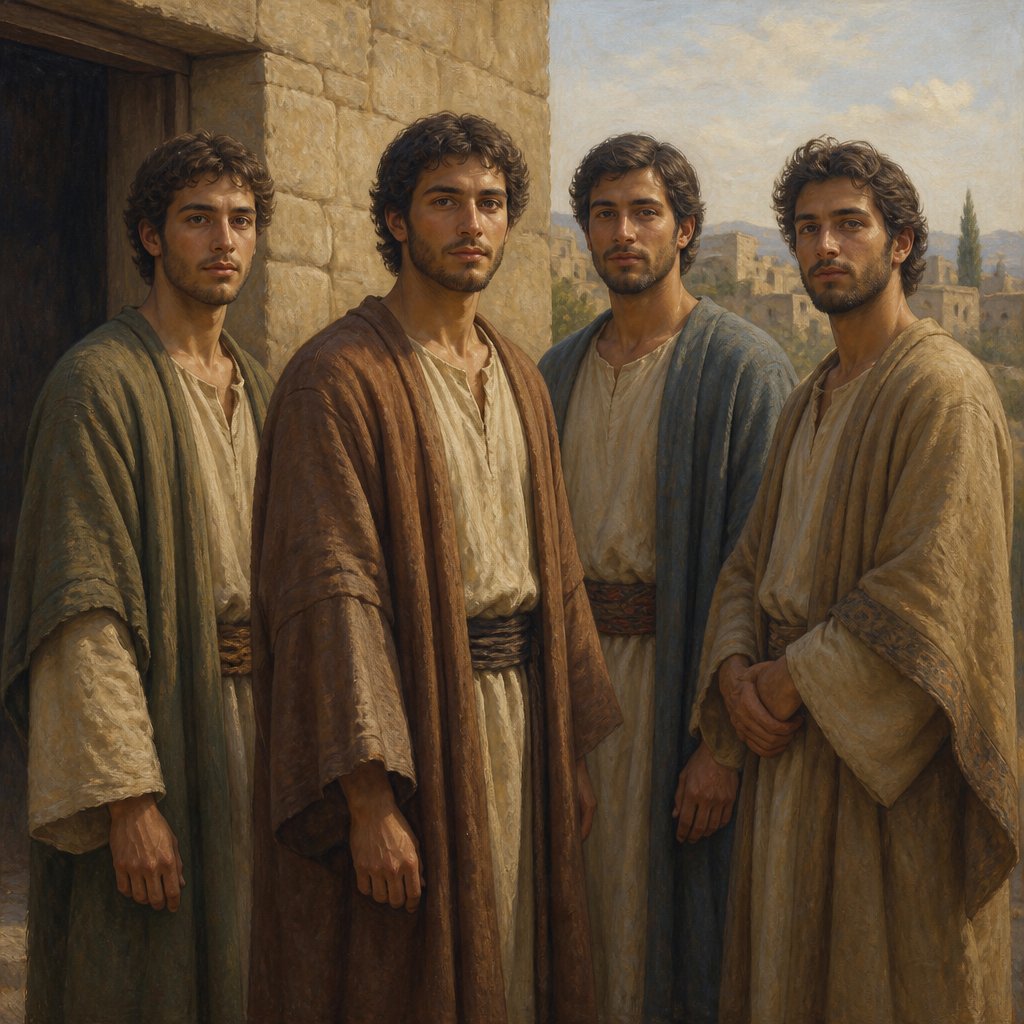
In the midst of genealogies and chronicled records in the book of 1 Chronicles, we find a simple yet profound verse: "And the sons of Micah were, Pithon, and Melech, and Tahrea, and Ahaz" (1 Chronicles 9:41, KJV). At first glance, this might seem like just another listing of names, a fragment of an ancient text that bears little relevance to our modern lives. Yet, if we look deeper, we can glean essential insights about legacy, identity, and the faithfulness required of us as we live out our own stories.
Genealogies in the Bible serve not merely as a historical account but as a theological declaration of God's faithfulness and the continuity of His covenant with His people. The records often remind the reader that each name represents a life, a journey, and a legacy that impacts future generations. Micah, as noted in this verse, is a figure whose lineage is counted among the Levites, a tribe set apart for holy service. His sons, Pithon, Melech, Tahrea, and Ahaz, carry the promise and responsibility of that heritage.
Revisiting the names of Micah's sons prompts a significant reflection on our own families and communities. Each name listed in Scripture carries weight; it speaks not only of personal identity but also of familial and spiritual legacies. The lives of these sons, though not elaborately detailed in the scriptures, matter deeply in the unfolding story of God’s people. They exemplify the truth that every individual - regardless of the scale of their actions - plays a role in the divine tapestry of God's plan.
When we consider the names, let us ask ourselves: What do my children or those I mentor inherit from me? What legacy am I crafting through my actions and choices? In their capacity as descendants of Micah, Pithon, Melech, Tahrea, and Ahaz were enveloped in a rich tradition of faith, service, and community responsibility. They were raised in an environment that undoubtedly instilled the values and principles vital for their spiritual journey. This should inspire us to be intentional in nurturing those we influence - whether they are our children, siblings, or friends.
The identities of Micah’s sons are simple in their presentation but profound in their implications. Each of these names can represent different traits and characteristics that can be cultivated within our families: Pithon (meaning “a turn or change”) could embody adaptability and resilience; Melech (meaning “king”) might remind us to cultivate leadership qualities; Tahrea (likely derived from meanings associated with great willingness) encourages us to embrace a heart of service; and Ahaz (meaning “he has taken”) could invoke a call to accountability and stewardship over what we’ve been given.
Moreover, this verse urges us to reflect on our role within the larger community of believers. We are part of a lineage that stretches back to our Lord and Savior Jesus Christ, who fulfills the ultimate covenant with humanity. As believers, we are not isolated individuals but active participants in God's family. The names of Micah's sons serve as a reminder that our lives are intertwined with others, and our actions contribute to a greater legacy.
In a world captivated by celebrity and the grandiose, this simple verse encourages us to find meaning in the often-overlooked details of life. God sees every heart, every struggle, and every act of service. Just like Micah’s sons, our lives may seem small when viewed alongside history's great events, but they hold eternal significance in God's kingdom.
Let us commit ourselves to being faithful stewards of the legacy we are building for others to follow. May we strive to live in a manner that reflects God’s love, purpose, and commitment. As we conclude our reflection, may the lineage of Micah and his sons inspire us toward faithfulness in life’s details, knowing that they are sovereignly woven into God’s story.
Get our apps


Artwork for 1 Chronicles 9:41

1 Chronicles 9:41 - "And the sons of Micah were, Pithon, and Melech, and Tahrea, and Ahaz."

"And the sons of Micah were, Pithon, and Melech, and Tahrea, and Ahaz." - 1 Chronicles 9:41

1 Chronicles 1:41 - "The sons of Anah; Dishon. And the sons of Dishon; Amram, and Eshban, and Ithran, and Cheran."

1 Chronicles 2:41 - "And Shallum begat Jekamiah, and Jekamiah begat Elishama."

1 Chronicles 6:41 - "The son of Ethni, the son of Zerah, the son of Adaiah,"

1 Chronicles 11:41 - "Uriah the Hittite, Zabad the son of Ahlai,"

John 9:1-41

"Uriah the Hittite, Zabad the son of Ahlai," - 1 Chronicles 11:41

"And Shallum begat Jekamiah, and Jekamiah begat Elishama." - 1 Chronicles 2:41

"The son of Ethni, the son of Zerah, the son of Adaiah," - 1 Chronicles 6:41

"The sons of Anah; Dishon. And the sons of Dishon; Amram, and Eshban, and Ithran, and Cheran." - 1 Chronicles 1:41

1 Chronicles 16:41 - "And with them Heman and Jeduthun, and the rest that were chosen, who were expressed by name, to give thanks to the LORD, because his mercy endureth for ever;"

1 Chronicles 9:37 - "And Gedor, and Ahio, and Zechariah, and Mikloth."

1 Chronicles 9:10 - "¶ And of the priests; Jedaiah, and Jehoiarib, and Jachin,"

1 Chronicles 4:41 - "And these written by name came in the days of Hezekiah king of Judah, and smote their tents, and the habitations that were found there, and destroyed them utterly unto this day, and dwelt in their rooms: because there was pasture there for their flocks."

1 Chronicles 24:9 - "The fifth to Malchijah, the sixth to Mijamin,"

1 Chronicles 9:5 - "And of the Shilonites; Asaiah the firstborn, and his sons."

1 Chronicles 6:9 - "And Ahimaaz begat Azariah, and Azariah begat Johanan,"

1 Chronicles 9:30 - "And some of the sons of the priests made the ointment of the spices."

1 Chronicles 12:9 - "Ezer the first, Obadiah the second, Eliab the third,"

1 Chronicles 14:9 - "And the Philistines came and spread themselves in the valley of Rephaim."

1 Chronicles 1:9 - "And the sons of Cush; Seba, and Havilah, and Sabta, and Raamah, and Sabtecha. And the sons of Raamah; Sheba, and Dedan."

1 Chronicles 26:9 - "And Meshelemiah had sons and brethren, strong men, eighteen."

1 Chronicles 21:9 - "¶ And the LORD spake unto Gad, David's seer, saying,"

1 Chronicles 9:9 - "And their brethren, according to their generations, nine hundred and fifty and six. All these men were chief of the fathers in the house of their fathers."

1 Chronicles 9:6 - "And of the sons of Zerah; Jeuel, and their brethren, six hundred and ninety."

1 Chronicles 15:9 - "Of the sons of Hebron; Eliel the chief, and his brethren fourscore:"

1 Chronicles 9:21 - "And Zechariah the son of Meshelemiah was porter of the door of the tabernacle of the congregation."

1 Chronicles 9:40 - "And the son of Jonathan was Merib-baal: and Merib-baal begat Micah."

1 Chronicles 11:9 - "So David waxed greater and greater: for the LORD of hosts was with him."