The Gathering that Divides: A Call to Unity
“Now in this that I declare unto you I praise you not, that ye come together not for the better, but for the worse.” — 1 Corinthians 11:17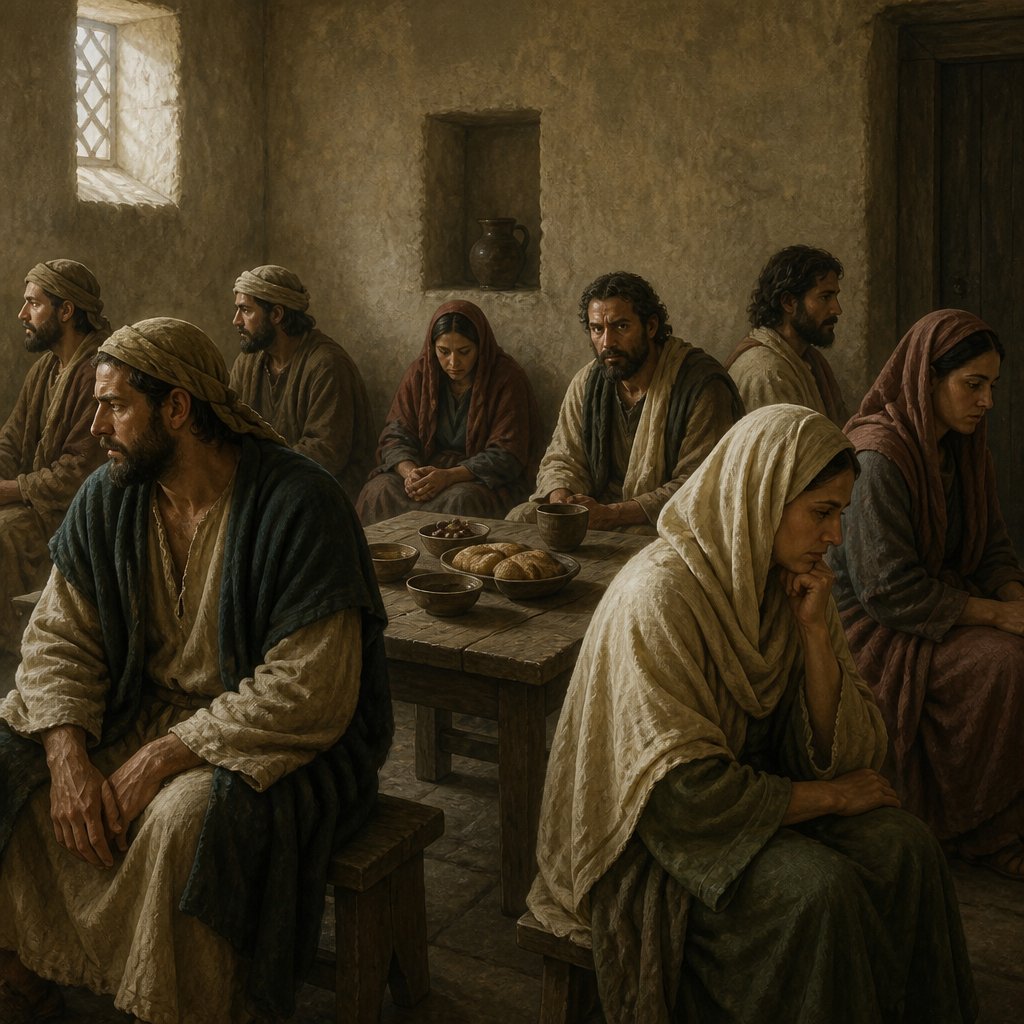
In 1 Corinthians 11:17, the Apostle Paul takes a firm stance towards the gatherings of the Corinthian church: "Now in this that I declare unto you I praise you not, that ye come together not for the better, but for the worse." This verse holds profound significance as it captures a critical moment in the life of the early church, addressing issues that resonate deeply with contemporary believers.
Paul begins this portion of his letter with the phrase "I praise you not." This is a stark contrast to his previous commendation, where he expressed gratitude for their faithfulness and adherence to traditions (1 Corinthians 11:2). However, as he transitions into discussing their gatherings, it becomes evident that there is a serious problem among them. Here, the somber note of his message sets the stage for a heartfelt rebuke. The church of Corinth was initially filled with promise and potential, yet their communal activities had devolved into practices that brought about division rather than unity.
The gatherings mentioned by Paul were intended to be a time of spiritual nourishment, fellowship, and worship. However, the dysfunction of the community led to the opposite effect—Paul states they were coming together "not for the better, but for the worse." The phrase implies that their meetings were causing more harm than good, which prompts serious self-reflection on our current congregational practices. What does it mean for our gatherings today? Are we cultivating an environment that promotes growth and love? Or are we all too often engaging in practices that sow discord and division among us?
The context of their failures is essential to understand. The Corinthian church was marked by intense social stratification. The wealthy and the poor were divided, leading to situations where the rich would feast while the poor were left wanting. In these moments, the Eucharist, a symbol of unity and Christ’s sacrifice, was distorted into a spectacle of inequality and shame. Thus, the very act that was meant to symbolize Christ’s sacrifice for all became a source of contention and judgment.
Paul’s declaration rings true, reminding us that in all our church activities, whether it be communion, worship services, or any form of gathering, our aim should be unity—reflecting the nature of the body of Christ. As we examine our own church communities, it is crucial to root out those practices that may inadvertently alienate others or promote exclusivity. This may require deliberate efforts to include marginalized voices, ensure equitable participation, and foster an attitude of humility and grace.
In examining our own approaches to gathering, let us consider several vital questions: Are our meetings characterized by a spirit of love and inclusivity, or is there an undertone of rivalry and indifference? Does our fellowship provide space for everyone to share, pray, and encourage one another? Most importantly, does our corporate worship reflect the heart of Christ?
Unity, as proclaimed in Ephesians 4:3, should be the foundation of our coming together: "Endeavoring to keep the unity of the Spirit in the bond of peace." We should strive to ensure that our gatherings reflect the richness of diversity within the body of Christ while focusing on what binds us together—the grace of God and the love of Christ.
As we ponder these truths, let’s repent of times we've allowed our socioeconomic, cultural, or personal biases to disrupt the unity that Christ desires. Let’s seek to make our gatherings not merely an occurrence of ritual but a true representation of the love and unity Jesus prayed for (John 17:21). May our meetings be for the better, radiating the glory of God and inspiring others to join in our community of faith.
Get our apps


Artwork for 1 Corinthians 11:17

1 Corinthians 11:17 - "Now in this that I declare unto you I praise you not, that ye come together not for the better, but for the worse."
"Now in this that I declare unto you I praise you not, that ye come together not for the better, but for the worse." - 1 Corinthians 11:17

1 corinthians 3:16-17

1 corinthians 3:16-17

1 corinthians 3:16-17

2 Corinthians 11:17 - "That which I speak, I speak it not after the Lord, but as it were foolishly, in this confidence of boasting."

1 Corinthians 11:26-29

1 Corinthians 11:26-29

1 Corinthians 11:8 - "For the man is not of the woman; but the woman of the man."

1 Corinthians 14:17 - "For thou verily givest thanks well, but the other is not edified."

1 Corinthians 11:1 - "Be ye followers of me, even as I also am of Christ."

1 Corinthians 6:17 - "But he that is joined unto the Lord is one spirit."

1 Corinthians 11:11 - "Nevertheless neither is the man without the woman, neither the woman without the man, in the Lord."

1 Corinthians 15:8-11

1 Corinthians 11:9 - "Neither was the man created for the woman; but the woman for the man."

1 Corinthians 11:31 - "For if we would judge ourselves, we should not be judged."

Exodus 17:11

1 Corinthians 15:17 - "And if Christ be not raised, your faith is vain; ye are yet in your sins."

1 Corinthians 11:30 - "For this cause many are weak and sickly among you, and many sleep."

1 Corinthians 11:13 - "Judge in yourselves: is it comely that a woman pray unto God uncovered?"

1 Corinthians 1:17 - "For Christ sent me not to baptize, but to preach the gospel: not with wisdom of words, lest the cross of Christ should be made of none effect."

1 Corinthians 11:10 - "For this cause ought the woman to have power on her head because of the angels."

The old has gone, the new is here. — 2 Corinthians 5:17

1 Corinthians 11:20 - "When ye come together therefore into one place, this is not to eat the Lord's supper."

1 Corinthians 10:17 - "For we being many are one bread, and one body: for we are all partakers of that one bread."

1 Corinthians 1:11 - "For it hath been declared unto me of you, my brethren, by them which are of the house of Chloe, that there are contentions among you."

1 Corinthians 11:32 - "But when we are judged, we are chastened of the Lord, that we should not be condemned with the world."

1 Corinthians 11:16 - "But if any man seem to be contentious, we have no such custom, neither the churches of God."

1 Corinthians 8:11 - "And through thy knowledge shall the weak brother perish, for whom Christ died?"

1 Corinthians 12:11 - "But all these worketh that one and the selfsame Spirit, dividing to every man severally as he will."