Feeding the Soul: Understanding Communion and Community
“And if any man hunger, let him eat at home; that ye come not together unto condemnation. And the rest will I set in order when I come.” — 1 Corinthians 11:34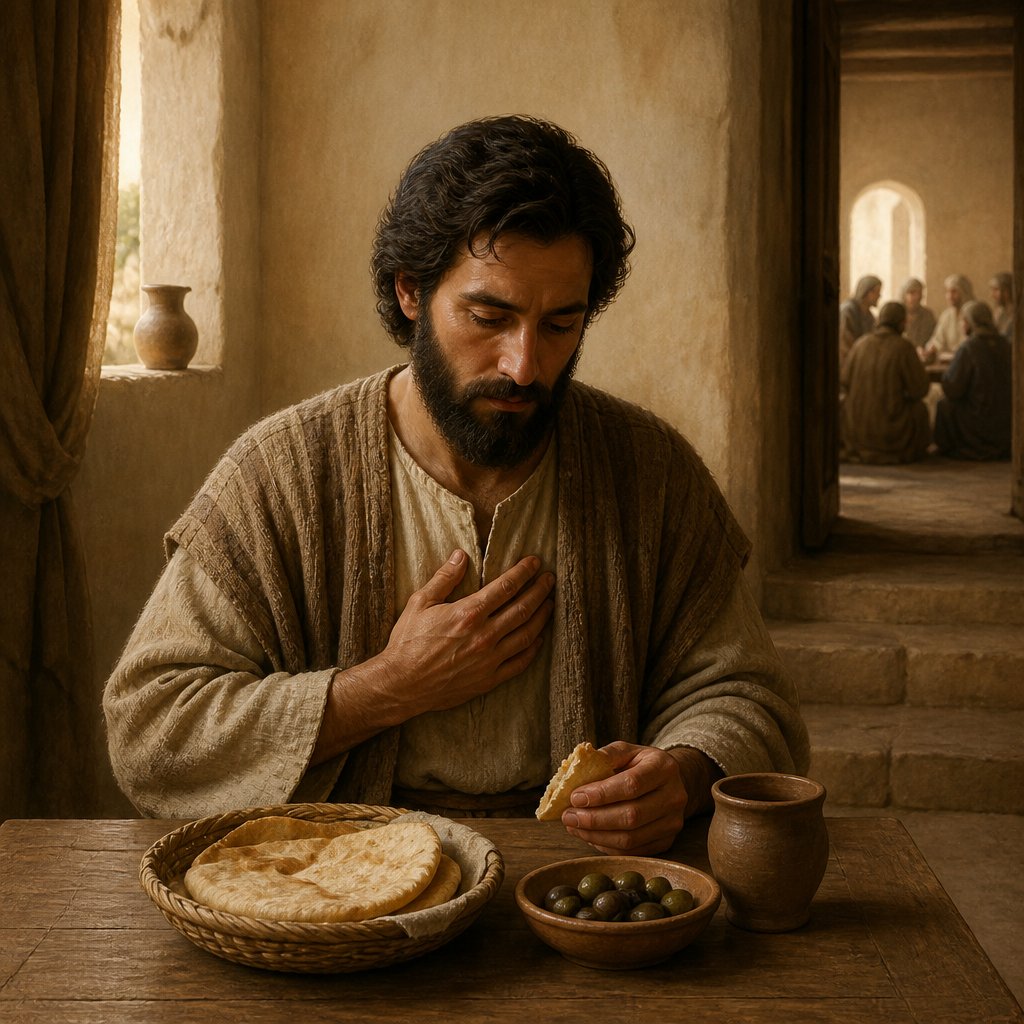
As we reflect on the apostle Paul’s words in 1 Corinthians 11:34, we find a profound teaching that not only addresses our physical needs but speaks volumes about our spiritual communion and community. The verse states, "And if any man hunger, let him eat at home; that ye come not together unto condemnation. And the rest will I set in order when I come" (KJV). By exploring this verse, we will uncover layers of meaning that are crucial for our walk with Christ and our role within the body of the Church.
The context of this verse lies in the larger discourse Paul has with the Corinthian Church regarding the Lord’s Supper. The church in Corinth was a diverse community, filled with both rich and poor, a melting pot of cultures and statuses. Unfortunately, this diversity led to social divisions, especially when it came to communal meals and the observance of the Eucharist. Paul addresses these issues not simply from a standpoint of etiquette but as a matter of spiritual integrity.
When Paul urges believers to eat at home if they are hungry, he highlights an important principle: our gathering as a body should not result in discord or condemnation. Rather than turning the Lord's Supper into a moment of gluttony or apathy, it should be a time for reflection, reverence, and unity under Christ. Paul’s instruction invites us to examine our hearts and our motivations. We are reminded that coming together to partake in communion should elevate our spirit and strengthen our community, not push us further apart.
The figurative 'table' that we gather around is not just a physical one, but a spiritual one where we partake of the grace of God. Every time we share in the Bread of Life, we are not merely observing a ritual; we are embodying our mutual dependence on Christ. The call to eat at home is thus not merely about physical hunger, but about recognizing that our sustenance ultimately comes from our relationship with God. He is the one who satisfies our deepest longings and fills our cups to overflow.
Furthermore, Paul’s admonition that “ye come not together unto condemnation” serves as a sobering reminder that how we engage with these sacred acts has ramifications. To take part in communion without understanding its significance, without self-examination, is to risk inviting judgment upon ourselves. The spiritual act of communion is one that calls us to a place of repentance, acknowledgment of our sins, and a commitment to pursue a life modeled after Christ’s love and forgiveness.
Thus, each time we gather to partake of communion, it should lead us to sincere reflection. Are there unresolved conflicts in our hearts? Are we harboring resentment towards a brother or sister in Christ? Are we genuinely seeking reconciliation in our relationships? Paul’s message encourages us to first seek solitude, to address our struggles and hunger spiritually, before we come together as a community.
Moreover, Paul's statement, "And the rest will I set in order when I come," implies that there is an ongoing work of restoration and order that God desires for His people. The church is a living, breathing organism, responsive to the grace and correction of God. Our gatherings are a taste of the Kingdom of Heaven, a reality that should be reflective of harmony and love.
As we meditate on 1 Corinthians 11:34, let us be challenged to conceptualize our gatherings as both a privilege and a responsibility. Are we using our times of communion to draw closer to Christ and to one another? Are we being diligent to ensure that our participation in these sacred acts enhances, rather than undermines, the unity of the body?
Ultimately, we are called not only to feed our souls but to feed the community with love, service, and grace, transforming our common gatherings into celebrations of Christ’s love that honor Him and each other. May we always remember that every act of coming together in His name should reflect His mercy and bring us closer to His likeness as we await His return.
Get our apps


Artwork for 1 Corinthians 11:34

1 Corinthians 11:34 - "And if any man hunger, let him eat at home; that ye come not together unto condemnation. And the rest will I set in order when I come."
"And if any man hunger, let him eat at home; that ye come not together unto condemnation. And the rest will I set in order when I come." - 1 Corinthians 11:34

1 Corinthians 15:34 - "Awake to righteousness, and sin not; for some have not the knowledge of God: I speak this to your shame."

1 Corinthians 11:26-29

1 Corinthians 11:26-29

1 Corinthians 11:8 - "For the man is not of the woman; but the woman of the man."

1 Corinthians 11:1 - "Be ye followers of me, even as I also am of Christ."

1 Chronicles 11:34 - "The sons of Hashem the Gizonite, Jonathan the son of Shage the Hararite,"

1 Corinthians 11:11 - "Nevertheless neither is the man without the woman, neither the woman without the man, in the Lord."

1 Corinthians 14:34 - "Let your women keep silence in the churches: for it is not permitted unto them to speak; but they are commanded to be under obedience, as also saith the law."

1 Corinthians 15:8-11

1 Corinthians 11:9 - "Neither was the man created for the woman; but the woman for the man."

1 Corinthians 11:31 - "For if we would judge ourselves, we should not be judged."

1 Corinthians 11:30 - "For this cause many are weak and sickly among you, and many sleep."

1 Corinthians 11:13 - "Judge in yourselves: is it comely that a woman pray unto God uncovered?"

1 Corinthians 11:10 - "For this cause ought the woman to have power on her head because of the angels."

1 Corinthians 11:20 - "When ye come together therefore into one place, this is not to eat the Lord's supper."

1 Corinthians 1:11 - "For it hath been declared unto me of you, my brethren, by them which are of the house of Chloe, that there are contentions among you."

1 Corinthians 11:32 - "But when we are judged, we are chastened of the Lord, that we should not be condemned with the world."

1 Corinthians 11:16 - "But if any man seem to be contentious, we have no such custom, neither the churches of God."

1 Corinthians 8:11 - "And through thy knowledge shall the weak brother perish, for whom Christ died?"

1 Corinthians 3:11 - "For other foundation can no man lay than that is laid, which is Jesus Christ."

1 Corinthians 12:11 - "But all these worketh that one and the selfsame Spirit, dividing to every man severally as he will."

1 Corinthians 11:12 - "For as the woman is of the man, even so is the man also by the woman; but all things of God."

1 Corinthians 15:11 - "Therefore whether it were I or they, so we preach, and so ye believed."

1 Corinthians 11:33 - "Wherefore, my brethren, when ye come together to eat, tarry one for another."

1 Corinthians 11:28 - "But let a man examine himself, and so let him eat of that bread, and drink of that cup."

"For the man is not of the woman; but the woman of the man." - 1 Corinthians 11:8

1 Corinthians 11:4 - "Every man praying or prophesying, having his head covered, dishonoureth his head."

1 Corinthians 11:15 - "But if a woman have long hair, it is a glory to her: for her hair is given her for a covering."