Unity in Christ: The Call to Care for One Another
“That there should be no schism in the body; but that the members should have the same care one for another. And whether one member suffer, all the members suffer with it; or one member be honoured, all the members rejoice with it. Now ye are the body of Christ, and members in particular.” — 1 Corinthians 12:25-27
In the bustling world we inhabit, it is easy to overlook the significance of unity and mutual care among believers. Yet, 1 Corinthians 12:25-27 encapsulates a profound truth about the nature of the Church—the body of Christ. The Apostle Paul, in his masterful discourse, urges us to transcend individualism and embrace a collective identity, emphasizing that as members of one body, we are called to care for one another deeply.
Verse 25 states, "That there should be no schism in the body; but that the members should have the same care one for another." The Greek word for "schism" (σχίσμα) implies a division or a fracture, something that exists despite the commonality we share as believers. Paul's exhortation reflects a divine design—God's intention for the Church to function as a harmonious entity, where each member is interconnected and interdependent.
In order to fulfill this calling, we must cultivate a deep sense of empathy and compassion. The "same care one for another" is not merely an insipid command; it reflects the heart of Christ, who wept at the tomb of Lazarus (John 11:35) and felt compassion for the multitudes who were like sheep without a shepherd (Matthew 9:36). When we genuinely care for one another, reflecting the love of Christ, we create an environment where healing and growth can flourish. Such care necessitates a willingness to listen, to support, and to bear one another's burdens, as Galatians 6:2 reminds us, "Bear ye one another's burdens, and so fulfil the law of Christ."
The impact of our relationships within the body of Christ extends beyond superficial interactions. In verse 26, Paul asserts, "And whether one member suffer, all the members suffer with it; or one member be honoured, all the members rejoice with it." This principle of shared experience—suffering and rejoicing—indicates a profound unity that should characterize our existence as believers. Consider the beauty of this reality: when we experience heartache, our brothers and sisters stand alongside us, lifting us up in prayer and love. Conversely, during our triumphs, their joy amplifies our own, leading to a collective celebration that uplifts the entire body.
Paul's choice of the word "whether" underscores the universality of this principle; it applies to all members, regardless of their status or prominence within the Church. Each member’s experience is vital, teaching us that there is no room for envy or competition. Rather, we are called to genuine concern for one another's wellbeing as we reflect on Christ, who taught us that the greatest among us will be our servants (Mark 10:43-44).
In verse 27, Paul brings it all together: "Now ye are the body of Christ, and members in particular." This declaration is both a privilege and a responsibility. Each of us holds a unique place within this divine body—each talent, each weakness, and each story adds to the richness of our collective existence. Realizing that every member has a role emphasizes our interconnectedness and the necessity of our contributions, however small they may seem.
As we navigate our communal life as the Church, let us reflect on the implications of being the body of Christ. Do we actively care for our fellow members? Are we attuned to the joys and sorrows of those around us? When one person suffers, do we allow that suffering to resonate in our hearts? Do we cheer for our fellow members in their successes, recognizing that their honor is our honor?
In conclusion, 1 Corinthians 12:25-27 serves as a timely reminder for us to embody unity and mutual care in our relationships. May we strive to live out the truths contained in these verses, embodying the love of Christ among ourselves, and reflecting His calling to be a community that cares deeply, suffers together, and rejoices together, for in doing so, we truly become the body of Christ in the world.
Get our apps


Artwork for 1 Corinthians 12:25-27

1 Corinthians 12:25-27 - "So that there may be no dissension within the body, but the members may have the same care for one another. If one member suffers, all suffer together; if one member is honored, all rejoice together. Now you are the body of Christ and individually members of it."

"So that there may be no dissension within the body, but the members may have the same care for one another. If one member suffers, all suffer together; if one member is honored, all rejoice together. Now you are the body of Christ and individually members of it." - 1 Corinthians 12:25-27

1 Corinthians 9:25-27

1 Corinthians 9:25-27

1 Corinthians 9:25-27

1 Corinthians 9:25-27

1 Corinthians 12:27

1 Corinthians 12:27 - "Now ye are the body of Christ, and members in particular."

1 Corinthians 12:25 - "That there should be no schism in the body; but that the members should have the same care one for another."
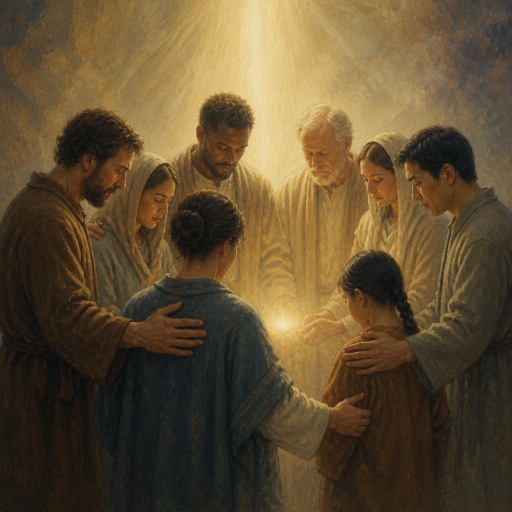
"Now ye are the body of Christ, and members in particular." - 1 Corinthians 12:27

1 Chronicles 25:27 - "The twentieth to Eliathah, he, his sons, and his brethren, were twelve:"
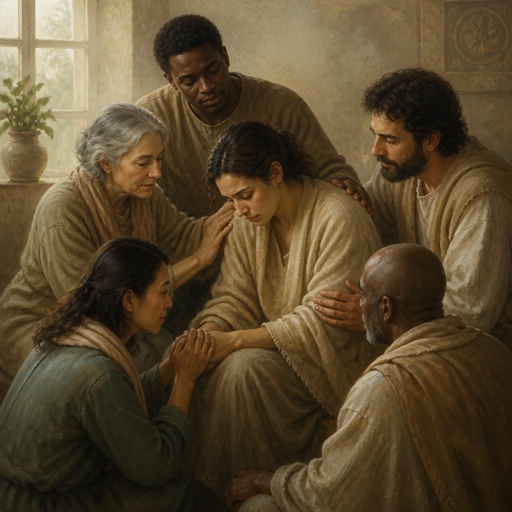
"That there should be no schism in the body; but that the members should have the same care one for another." - 1 Corinthians 12:25

1 Corinthians 12:12

1 corinthians 2:12

1 corinthians 2:12

1 corinthians 2:12

1 corinthians 2:12

1 Corinthians 12:12-13

1 Corinthians 12:12-22

1 Corinthians 1:25 - "Because the foolishness of God is wiser than men; and the weakness of God is stronger than men."

1 Corinthians 10:25 - "Whatsoever is sold in the shambles, that eat, asking no question for conscience sake:"

Eternal Victor's Crown: 1 Corinthians 9:25

1 Corinthians 12:3-13

1 Corinthians 12:14 - "For the body is not one member, but many."

1 Corinthians 12:5 - "And there are differences of administrations, but the same Lord."

1 Corinthians 12:4 - "Now there are diversities of gifts, but the same Spirit."

1 Corinthians 12:20 - "But now are they many members, yet but one body."

1 Corinthians 12:1 - "Now concerning spiritual gifts, brethren, I would not have you ignorant."

1 Corinthians 14:27 - "If any man speak in an unknown tongue, let it be by two, or at the most by three, and that by course; and let one interpret."

1 Corinthians 15:25 - "For he must reign, till he hath put all enemies under his feet."