The Divine Paradox: Finding God in Foolishness
“For after that in the wisdom of God the world by wisdom knew not God, it pleased God by the foolishness of preaching to save them that believe.” — 1 Corinthians 1:21
In the bustling and chaotic nature of our world, we often find ourselves seeking wisdom and understanding through the lens of human intellect. We have been conditioned to equate knowledge and intelligence with value, prestige, and sometimes, even divinity. Yet, the Apostle Paul, in his letter to the Corinthians, introduces us to a divine paradox that challenges our perceptions of wisdom and folly. As he writes in 1 Corinthians 1:21 (KJV), "For after that in the wisdom of God the world by wisdom knew not God; it pleased God by the foolishness of preaching to save them that believe."
This verse opens a profound theological discussion about God’s wisdom in contrast to the world’s wisdom. Paul asserts that the wisdom of God is fundamentally different and, at times, contradictory to the wisdom that is celebrated by society. He points out that the world, despite its pursuit of wisdom, does not recognize or know God. This raises an essential question: how can humanity, with all its intellectual pursuits, be so blind to the Creator?
The answer lies in understanding what we define as wisdom. Human wisdom tends to be self-referential, often rooted in empirical evidence and logic, dismissing the supernatural and the divine. In stark opposition, God’s wisdom is infinite, encompassing all that we understand and all that we cannot comprehend. It operates outside the constraints of our earthly reasoning. When we try to find God through the wisdom of this world, we can easily become lost, walking in circles of philosophy, science, and human wisdom without ever arriving at the truth of who God is.
What Paul declares next is a bold proclamation: it pleased God by the foolishness of preaching to save them that believe. The term “foolishness” is especially striking. It suggests that God’s chosen method for revealing Himself and saving humanity seems absurd or nonsensical by human standards. The proclamation of the Gospel—the simple message of Christ’s life, death, and resurrection—does not boast of intellectual rigor. Instead, it appears to be a simple, almost foolish endeavor to many who prioritize knowledge and enlightenment. And yet, it is through this very perception of foolishness that God accomplishes His redemptive work.
The foolishness of preaching is also a powerful reminder of the heart of God’s plan. God, in His infinite wisdom, chose to use ordinary people—flawed, limited, and often inadequate—to communicate the Gospel. This reminds us that we do not need to be experts, theologians, or those with extensive qualifications to share the love of Christ. The potency of God's message does not rest on eloquence or intellect. Rather, it is empowered by the Holy Spirit, who works through our willingness to be vessels of His grace—even when we feel foolish for believing and proclaiming such truths.
As believers, we are called to embrace this divine paradox. We must acknowledge and perpetuate our faith in a workspace that often devalues the very core of our beliefs. In a world that applauds academic achievement and worldly wisdom, our adherence to a seemingly foolish Gospel can alienate us. However, we must remember that it is in our faith—often highlighted by our apparent foolishness—that God’s power shines brightest.
This call to faith and proclamation also serves as a reminder to those who are looking for salvation. There is an invitation extended to each soul: to believe in the message of grace, to accept what may appear foolish to many, and to trust in the God of the universe who delights in saving those who approach Him with childlike faith.
In conclusion, let us reflect upon our own understanding of wisdom. Are we allowing the chaos of worldly understanding to overshadow the divine wisdom of God? Are we willing to embrace the foolishness of preaching the Gospel, standing firm amidst skepticism? Let us lean deeply into God’s wisdom and commit ourselves to proclaiming His truth, confident in the knowledge that our simple faith can wonderfully and powerfully save those who believe.
Get our apps


Artwork for 1 Corinthians 1:21

1 Corinthians 1:21 - "For after that in the wisdom of God the world by wisdom knew not God, it pleased God by the foolishness of preaching to save them that believe."

"For after that in the wisdom of God the world by wisdom knew not God, it pleased God by the foolishness of preaching to save them that believe." - 1 Corinthians 1:21

1 Corinthians 16:21 - "The salutation of me Paul with mine own hand."

1 Corinthians 3:21 - "Therefore let no man glory in men. For all things are your's;"

1 Corinthians 15:21 - "For since by man came death, by man came also the resurrection of the dead."

2 Corinthians 1:21 - "Now he which stablisheth us with you in Christ, and hath anointed us, is God;"

1 Corinthians 4:21 - "What will ye? shall I come unto you with a rod, or in love, and in the spirit of meekness?"

1 Corinthians 7:21 - "Art thou called being a servant? care not for it: but if thou mayest be made free, use it rather."

1 Corinthians 11:21 - "For in eating every one taketh before other his own supper: and one is hungry, and another is drunken."

1 Corinthians 10:21 - "Ye cannot drink the cup of the Lord, and the cup of devils: ye cannot be partakers of the Lord's table, and of the table of devils."

"The salutation of me Paul with mine own hand." - 1 Corinthians 16:21
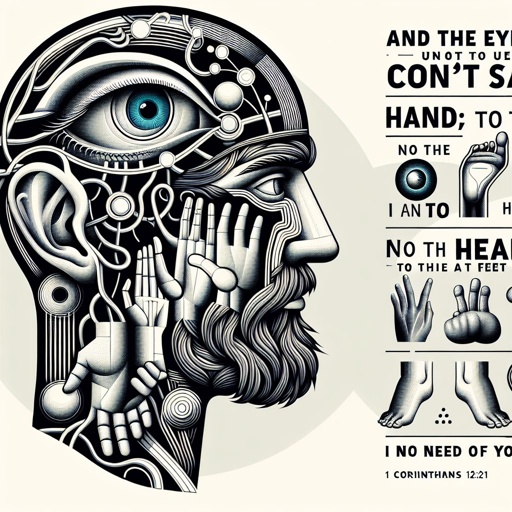
1 Corinthians 12:21 - "And the eye cannot say unto the hand, I have no need of thee: nor again the head to the feet, I have no need of you."

1 Corinthians 14:21 - "In the law it is written, With men of other tongues and other lips will I speak unto this people; and yet for all that will they not hear me, saith the Lord."
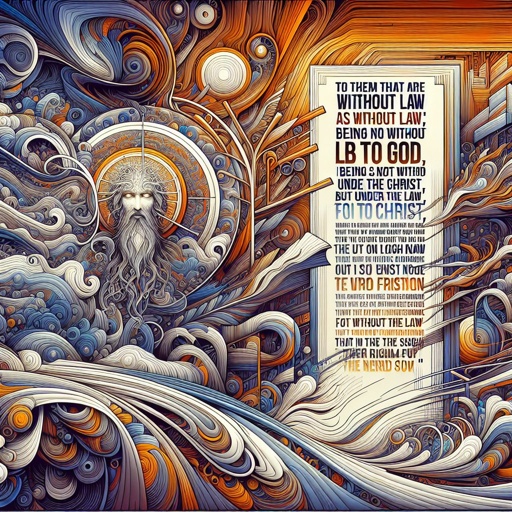
1 Corinthians 9:21 - "To them that are without law, as without law, (being not without law to God, but under the law to Christ,) that I might gain them that are without law."

"Therefore let no man glory in men. For all things are your's;" - 1 Corinthians 3:21

1 Corinthians 1:19-20

1 Corinthians 1:19-20

1 Corinthians 1:19-20

1 Corinthians 1:19-20

1 Corinthians 1:19-20

1 Corinthians 1:19-20

1 Corinthians 1:19-20

1 Corinthians 1:19-20

1 Corinthians 1:19-20

1 Corinthians 1:19-20

"For since by man came death, by man came also the resurrection of the dead." - 1 Corinthians 15:21

1 Corinthians 1:19-20

1 Corinthians 1:19-20

1 Corinthians 1:19-20

1 Corinthians 1:19-20