The Gentle Hand of Correction: Choosing Love Over Discipline
“What will ye? shall I come unto you with a rod, or in love, and in the spirit of meekness?” — 1 Corinthians 4:21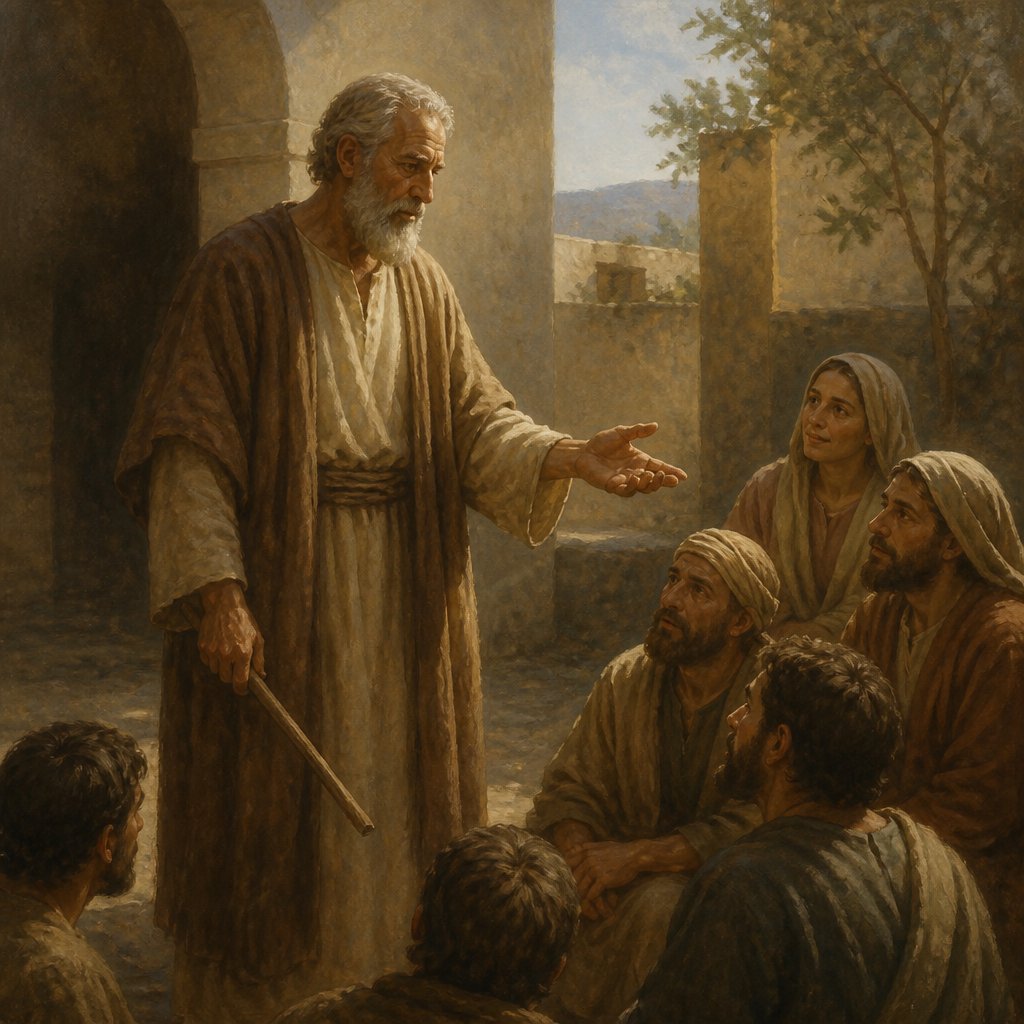
The Apostle Paul, in his first letter to the Corinthians, presents a profound question in 1 Corinthians 4:21, which states, "What will ye? shall I come unto you with a rod, or in love, and in the spirit of meekness?" This question encapsulates a deep emotional and spiritual challenge faced by spiritual leaders and believers alike as they navigate relationships within the body of Christ.
To understand the weight of this verse, we must first examine its context. The Corinthian church was rife with division, pride, immorality, and various other issues that challenged its unity and purpose. Paul had invested not just his teachings but his very heart in this community, and he sought to guide them towards corrective actions that would benefit their spiritual growth. The ‘rod’ he speaks of symbolizes discipline, authority, and the serious consequences of harboring sin or living in discord. Conversely, coming 'in love and in the spirit of meekness' depicts an approach characterized by tenderness, grace, and deep relational care.
Paul’s inquiry is a poignant reminder that spiritual leaders possess a choice when correcting their flock. They can choose to wield authority harshly or approach with the gentleness of love. Herein lies the first lesson: the method of correction matters. Was it not the Lord Himself who taught us the importance of love as the highest commandment? In Matthew 22:37-39, He emphasized, "Thou shalt love the Lord thy God with all thy heart, and with all thy soul, and with all thy mind... Thou shalt love thy neighbour as thyself." Paul embodies this principle, aiming to reflect Christ’s character in his actions.
The choice between the rod and love is not merely about style; it is also about substance. When discipline is administered without love, it can lead to destruction rather than restoration. It can create resentment rather than reconciliation. Thus, Paul is urging the Corinthians—and us—to ponder the intention behind correction.
In any church or fellowship, leaders are often faced with contentious issues requiring confrontation. A leader might ask themselves: "Will I confront this issue fiercely, imposing my will? Or will I seek to restore this brother or sister in Christ with compassion and understanding?" This choice delineates the character of the leader. The rod may seem a quicker, more straightforward approach, but love, tempered with meekness, opens the door for the Holy Spirit to work in the hearts of those being corrected.
Moreover, the spirit of meekness cannot be overlooked. In Galatians 6:1, we are instructed, "Brethren, if a man be overtaken in a fault, ye which are spiritual, restore such an one in the spirit of meekness; considering thyself, lest thou also be tempted." This humility in addressing another's failures is both restorative and protective, reminding us that we too are fallible beings in need of grace.
So, as we reflect on the question posed by Paul, we must ask ourselves about our relational dynamics with others—be they leaders, friends, or family. When presented with the responsibility to correct or guide, will we act with a heavy hand or gentle heart?
In this world, where correction can often be met with hostility, let us strive to embody Christ's love that casts out fear. The act of restoring someone should always result not in shame, but empowerment and growth in the knowledge of God's love. Let our hearts be filled with wisdom that recognizes when the rod is necessary—and when it is time to extend a hand of love in the spirit of meekness.
Ultimately, the posture we adopt reflects not only on us but on Christ Himself. Let us choose with intention, saying alongside Paul, "in love, and in the spirit of meekness."
In our devotional time today, let's pray for discernment to know when to correct with authority and when to embrace with love, allowing the Holy Spirit to guide our hearts and actions.
Get our apps


Artwork for 1 Corinthians 4:21

1 Corinthians 4:21 - "What will ye? shall I come unto you with a rod, or in love, and in the spirit of meekness?"

"What will ye? shall I come unto you with a rod, or in love, and in the spirit of meekness?" - 1 Corinthians 4:21

1 Corinthians 4:20

1 Corinthians 4:20

1 Corinthians 4:20

1 Corinthians 4:20

1 Corinthians 13:4-6

1 Corinthians 13:4-6

1 Corinthians 13:4-6

1 Corinthians 13:4-6

1 Corinthians 13:4-6

1 Corinthians 13:4-6

1 Corinthians 13:4-6

1 Corinthians 13:4-6

1 Corinthians 16:21 - "The salutation of me Paul with mine own hand."

1 Corinthians 4:1-2

1 Corinthians 3:21 - "Therefore let no man glory in men. For all things are your's;"

1 Corinthians 15:21 - "For since by man came death, by man came also the resurrection of the dead."

1 Corinthians 1:21 - "For after that in the wisdom of God the world by wisdom knew not God, it pleased God by the foolishness of preaching to save them that believe."

1 Corinthians 4:20 - "For the kingdom of God is not in word, but in power."

1 Corinthians 13:4-7

1 Corinthians 9:4 - "Have we not power to eat and to drink?"

1 Corinthians 13:4-7

2 Corinthians 1:3-4

1 Corinthians 13:4-7

1 Corinthians 13:4-7

2 Corinthians 1:21 - "Now he which stablisheth us with you in Christ, and hath anointed us, is God;"

1 Corinthians 12:4 - "Now there are diversities of gifts, but the same Spirit."

1 Corinthians 4:2 - "Moreover it is required in stewards, that a man be found faithful."

1 Corinthians 4:1 - "Let a man so account of us, as of the ministers of Christ, and stewards of the mysteries of God."