Living Sacrificially: The Call to Stronger Love
“Wherefore, if meat make my brother to offend, I will eat no flesh while the world standeth, lest I make my brother to offend.” — 1 Corinthians 8:13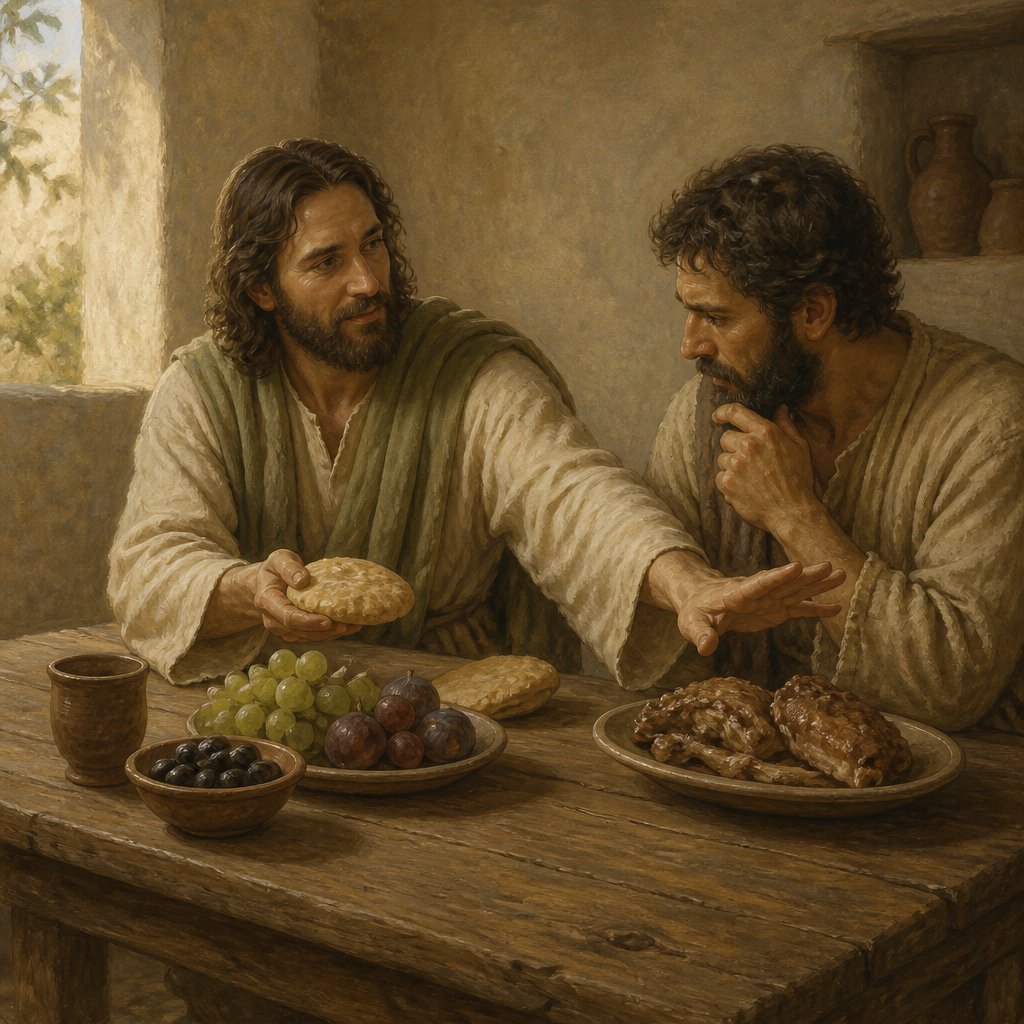
In 1 Corinthians 8:13, the Apostle Paul expresses a profound commitment to sacrificial love that challenges us to reconsider our daily choices and their impact on the community of believers: "Wherefore, if meat make my brother to offend, I will eat no flesh while the world standeth, lest I make my brother to offend." This verse speaks volumes about the essence of Christian love—bearing the burdens of one another and prioritizing our relationships over our freedoms.
To understand the depth of Paul's declaration, we must delve into the context of the Corinthian church, a community grappling with diverse backgrounds and beliefs. The early Christians were navigating the complexities of a society steeped in idolatry, where meat offered to idols was a common issue. For some believers, consuming such meat was an expression of their newfound freedom in Christ, while for others, it was a stumbling block that threatened their faith.
Paul identifies himself as a mature believer who recognizes that an idol is nothing and that food has no bearing on one’s relationship with God (1 Corinthians 8:4). However, he counters this knowledge with a resounding principle: love must govern knowledge. True freedom in Christ does not exist in isolation but rather in the context of community. It is here that Paul's declaration crystallizes: love compels us to forgo our rights for the sake of our brothers and sisters in Christ.
Let’s break down the significance of this commitment to self-denial. Paul is willing to abstain from eating meat altogether if it causes someone to stumble in their faith. This proactive stance illustrates a love that transcends personal comfort, revealing a depth of empathy that is rare in today’s self-centered culture. Biblical love, agape love, denotes a deliberate choice to seek the well-being of others. Paul doesn’t simply ask us to tolerate others’ weaknesses; he invites us to make actionable sacrifices that unify and build up the body of Christ.
This raises the question: what are we willing to sacrifice for the sake of our fellow believers? In an age where individualism reigns supreme, Paul’s resolution becomes particularly counter-cultural. How often do we cling to our rights and freedoms at the expense of causing others to stumble? It may be in our social interactions, opinions, or even lifestyle choices. Consider our speech, our media consumption, and our choices in how we relate to one another. Do these behaviors model Christ-like love, or do they risk offending our brethren?
As believers called to reflect Christ, we must ask ourselves if our actions are building bridges or creating barriers. When we interact within our communities, are we considerate of how our choices affect others? The challenge here is not merely to conform to the desires of others but to genuinely seek the edification of our brothers and sisters, even at our own expense. This is indeed a spiritual maturity test that Paul lays out clearly.
Furthermore, Paul’s statement, "while the world standeth," carries weight concerning the permanence of his commitment. This illustrates an indefinite promise, symbolizing that our walk in love is not a temporary act but a lifelong commitment. Our challenge is not simply to make occasional sacrifices but to embed this attitude deeply into our Christian living.
In conclusion, 1 Corinthians 8:13 beacons us to examine the true depth of our love for one another. How can we live out this principle today? As we go through our daily lives, may we earnestly seek the Holy Spirit’s wisdom to help us navigate these complex situations. Let us embrace a lifestyle that prioritizes love, compassion, and accountability, so that we can lift up and strengthen the faith of those around us. Let us bear our cross not only for our own spiritual growth but to ensure that none of our actions cause our brothers and sisters to falter in their walk with Christ. Ultimately, this is the path that draws us closer to Christ and to one another.
Get our apps


Artwork for 1 Corinthians 8:13

1 Corinthians 8:13 - "Wherefore, if meat make my brother to offend, I will eat no flesh while the world standeth, lest I make my brother to offend."
"Wherefore, if meat make my brother to offend, I will eat no flesh while the world standeth, lest I make my brother to offend." - 1 Corinthians 8:13

1 Corinthians 13:8 - "Charity never faileth: but whether there be prophecies, they shall fail; whether there be tongues, they shall cease; whether there be knowledge, it shall vanish away."

2 Corinthians 8:13 - "For I mean not that other men be eased, and ye burdened:"
![1 Corinthians 13:13
1 Corinthians 13:13
[13] So now faith, hope, and love abide, these three; but the greatest of these is love. (ESV)](https://media.bible.art/3da57222-9f49-4158-a2a3-7a49b5dc4437-thumbnail.jpg)
1 Corinthians 13:13 1 Corinthians 13:13 [13] So now faith, hope, and love abide, these three; but the greatest of these is love. (ESV)

1 Corinthians 13:13

1 Corinthians 13 :13

"Charity never faileth: but whether there be prophecies, they shall fail; whether there be tongues, they shall cease; whether there be knowledge, it shall vanish away." - 1 Corinthians 13:8

2 Corinthians 13:8 - "For we can do nothing against the truth, but for the truth."

1 Corinthians 13:4-6

1 Corinthians 13:4-6

1 Corinthians 13:4-6

1 Corinthians 13:4-6

1 Corinthians 13:4-6

1 Corinthians 13:4-6

1 Corinthians 13:4-6

1 Corinthians 13:4-6

1 Corinthians 13

"For I mean not that other men be eased, and ye burdened:" - 2 Corinthians 8:13

1 Corinthians 10:13

1 Corinthians 13:13 - "And now abideth faith, hope, charity, these three; but the greatest of these is charity."

1 Corinthians 10:13

1 Corinthians 10:13

1 Corinthians 15:13 - "But if there be no resurrection of the dead, then is Christ not risen:"

1 Corinthians 13:6 - "Rejoiceth not in iniquity, but rejoiceth in the truth;"

1 Corinthians 12:12-13

1 Corinthians 13:4-7

1 Corinthians 11:8 - "For the man is not of the woman; but the woman of the man."

1 Corinthians 12:3-13

1 Corinthians 13:4-7