Understanding Knowledge and Conscience: A Call to Love and Responsibility
“Howbeit there is not in every man that knowledge: for some with conscience of the idol unto this hour eat it as a thing offered unto an idol; and their conscience being weak is defiled.” — 1 Corinthians 8:7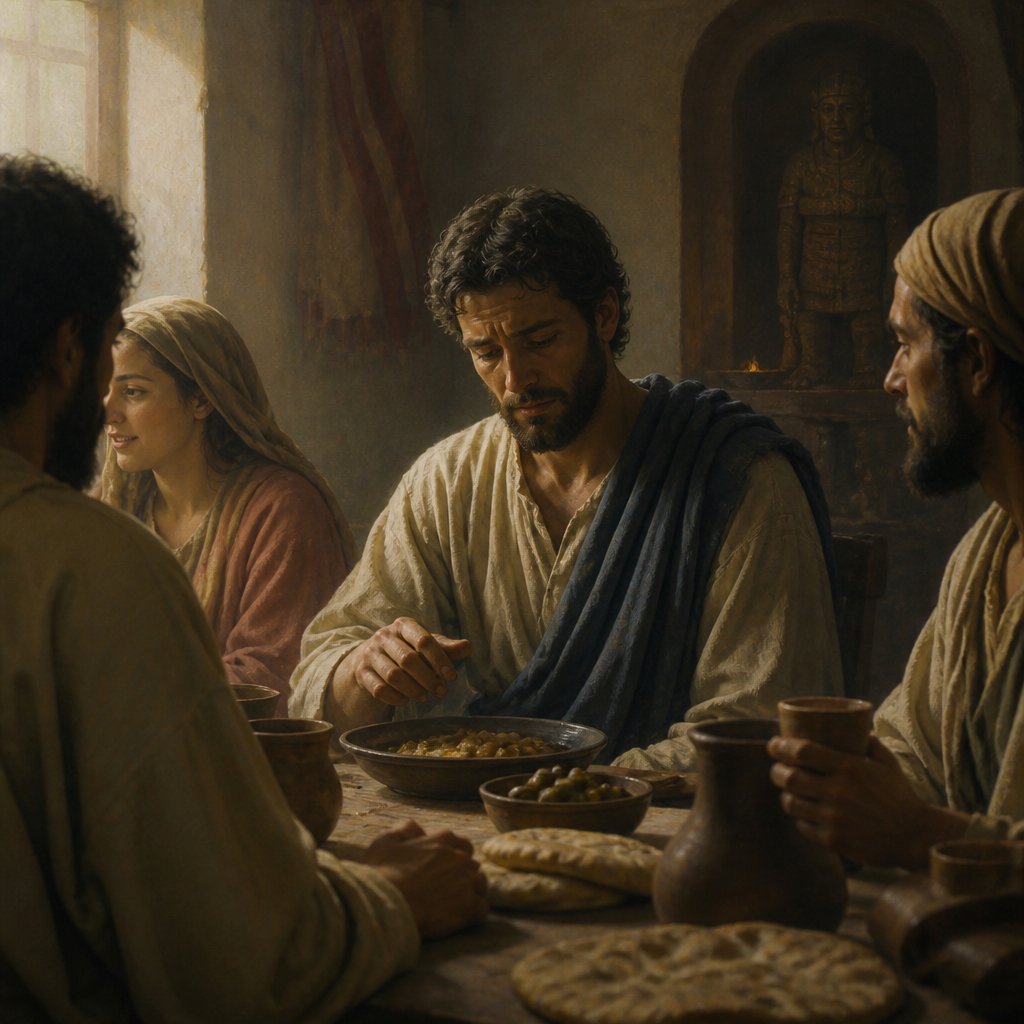
In 1 Corinthians 8:7, Paul states, "Howbeit there is not in every man that knowledge: for some with conscience of the idol unto this hour eat it as a thing offered unto an idol; and their conscience being weak is defiled." This verse takes us into the heart of an important issue concerning knowledge, conscience, and the exercise of Christian freedom. To unpack this verse, we must first understand the historical context of Corinthians and the implications of idolatry in the early Christian community.
In the city of Corinth, where Paul wrote this letter, idolatry was prevalent. Many believers came from backgrounds where worshipping idols was a normal part of life, and the food that had been sacrificed to idols was often eaten at communal feasts or sold in the marketplace. Therefore, when Christians partook of such food, it posed a significant question—could they do so without compromising their faith? Paul’s response leads us to the tensions between knowledge and conscience.
The "knowledge" that Paul refers to is the understanding that there is only one true God, and therefore, idols have no real existence or power (1 Corinthians 8:4). This knowledge allows mature believers to partake in food offered to idols without feeling guilty, believing that their standing before God is secure. However, Paul firmly illuminates that this knowledge is not universally held; "there is not in every man that knowledge."
Herein lies the bottle-neck of concern: some Christians, particularly those whose consciences are weakened by their past experiences, still view these idols as having authority. They associate the food offered to idols with the pagan ritual, and thus their conscience, in relation to their personal history and belief system, becomes a tripping point. Consuming this food creates an internal conflict for them, leading to a defilement of their conscience. A weaker conscience does not mean they lack faith; it reflects their spiritual journey and growth.
Consequently, this leads to a crucial lesson in Christian liberty. Our freedom in Christ is not merely about exercising our rights; rather, it encourages a deeper responsibility towards our brothers and sisters in Christ. Paul’s writing teaches us about the importance of love in action. If our exercise of knowledge creates stumbling blocks for those whose faith is still developing, our actions can lead to the spiritual downfall of others. "For if any man see thee which hast knowledge sit at meat in the idol's temple, shall not the conscience of him which is weak be emboldened to eat those things which are offered to idols?" (1 Corinthians 8:10).
This Scripture highlights a profound principle: our conduct as believers can influence the spiritual trajectory of others. Thus, Paul emphasizes the necessity of considering the implications of our actions. It reminds us to practice love over freedom, to seek the welfare of the weaker brother, and to ensure that our liberties do not become a source of distress for others.
As we ponder Paul’s teaching, we are called to reflect on our current practices and attitudes. Are we exercising our freedoms in a way that builds up the body of Christ, or are we causing division and distress? Are we allowing our understanding of doctrine to overshadow the call to love? May we recognize that knowledge, in itself, is not enough; it must be accompanied by love.
In our daily lives, let us seek to approach interpersonal relationships with grace, allowing our decisions to be filtered through the lens of love. In doing so, we will cultivate a community that not only values knowledge but also cherishes conscience and compassion as paramount. Let our goal be to edify rather than agitate, guiding us to act in ways that honor both God and our neighbors in faith.
Get our apps


Artwork for 1 Corinthians 8:7

1 Corinthians 8:7 - "Howbeit there is not in every man that knowledge: for some with conscience of the idol unto this hour eat it as a thing offered unto an idol; and their conscience being weak is defiled."

1 Corinthians 8: 7 However, there is not in everyone that knowledge; for some, with consciousness of the idol, until now eat it as a thing offered to an idol; and their conscience, being weak, is defiled.

1 Corinthians 8: 7 However, there is not in everyone that knowledge; for some, with consciousness of the idol, until now eat it as a thing offered to an idol; and their conscience, being weak, is defiled.
"Howbeit there is not in every man that knowledge: for some with conscience of the idol unto this hour eat it as a thing offered unto an idol; and their conscience being weak is defiled." - 1 Corinthians 8:7

1 Corinthians 7:8 - "I say therefore to the unmarried and widows, It is good for them if they abide even as I."
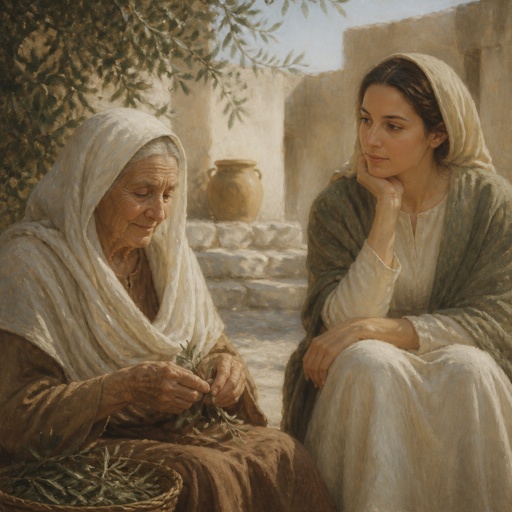
"I say therefore to the unmarried and widows, It is good for them if they abide even as I." - 1 Corinthians 7:8

1 Corinthians 11:8 - "For the man is not of the woman; but the woman of the man."

1 Corinthians 16:8 - "But I will tarry at Ephesus until Pentecost."

1 Corinthians 7:6 - "But I speak this by permission, and not of commandment."

1 Corinthians 15:8-11

1 Corinthians 13:4-7

1 Corinthians 13:4-7

1 Corinthians 13:4-7

1 Corinthians 13:4-7

1 Corinthians 15:7 - "After that, he was seen of James; then of all the apostles."

1 Corinthians 7:23 - "Ye are bought with a price; be not ye the servants of men."

1 Corinthians 6:8 - "Nay, ye do wrong, and defraud, and that your brethren."
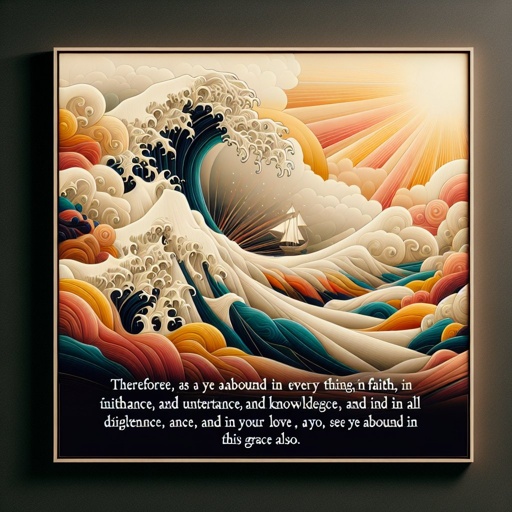
2 Corinthians 8:7 - "Therefore, as ye abound in every thing, in faith, and utterance, and knowledge, and in all diligence, and in your love to us, see that ye abound in this grace also."

1 Corinthians 7:19 - "Circumcision is nothing, and uncircumcision is nothing, but the keeping of the commandments of God."

1 Corinthians 7:31 - "And they that use this world, as not abusing it: for the fashion of this world passeth away."

1 Corinthians 8:3 - "But if any man love God, the same is known of him."

1 Corinthians 8:8 - "But meat commendeth us not to God: for neither, if we eat, are we the better; neither, if we eat not, are we the worse."

1 Corinthians 1:7 - "So that ye come behind in no gift; waiting for the coming of our Lord Jesus Christ:"

1 Corinthians 12:7 - "But the manifestation of the Spirit is given to every man to profit withal."

1 Corinthians 9:8 - "Say I these things as a man? or saith not the law the same also?"

1 Corinthians 14:8 - "For if the trumpet give an uncertain sound, who shall prepare himself to the battle?"

1 Corinthians 7:1 - "Now concerning the things whereof ye wrote unto me: It is good for a man not to touch a woman."

1 Corinthians 8:11 - "And through thy knowledge shall the weak brother perish, for whom Christ died?"

1 Corinthians 8:5 - "For though there be that are called gods, whether in heaven or in earth, (as there be gods many, and lords many,)"

1 Corinthians 12:8 - "For to one is given by the Spirit the word of wisdom; to another the word of knowledge by the same Spirit;"