The Divine Design of Provision: Living by the Gospel
“Do ye not know that they which minister about holy things live of the things of the temple? and they which wait at the altar are partakers with the altar? Even so hath the Lord ordained that they which preach the gospel should live of the gospel.” — 1 Corinthians 9:13-14
In 1 Corinthians 9:13-14, Paul presents a profound insight into God’s design for His ministers: “Do ye not know that they which minister about holy things live of the things of the temple? and they which wait at the altar are partakers with the altar? Even so hath the Lord ordained that they which preach the gospel should live of the gospel.” This passage invites us to explore the intricate relationship between spiritual service, provision, and the community of faith.
To understand this scripture deeply, we must appreciate the cultural and historical context in which Paul spoke. In Ancient Israel, the Levites were charged with the responsibility of serving in the temple. Their position was not merely one of duty, but also one of divine provision—God established a system where the Levites were supported by the offerings and sacrifices made by the people. Thus, their livelihood was intricately linked to their holy ministry.
This principle is echoed in the New Testament, where Paul applies it to the practitioners of the gospel. The ministers are called to dedicate their lives to the message of Christ, and as such, they should receive sustenance from the very community they serve.
The term ‘live of the gospel’ captures the essence of being wholly sustained by faith and community. It emphasizes that the work of preaching and ministering the gospel is not merely an occupation but a sacred vocation endowed with the responsibility of spiritual nourishment for others. Faithful preaching requires both spiritual dedication and practical sustenance; thus, pastors and missionaries are to be supported adequately by the church. This is a divine ordinance—an expectation that God Himself has established to ensure that His servants can focus wholly on their ministry.
In the modern church, this teaching prompts a vital reflection: How do we view our pastors and spiritual leaders? Are we co-laborers with them in the work of the gospel, or do we see them merely as hired hands? The distinction is essential because it leads to a more profound understanding of community. When we recognize that our spiritual leaders are not only teachers but also partakers of God’s blessings, we set the stage for a partnership in mission.
Moreover, Paul’s words compel each believer to examine how they contribute to the overall health of their congregational life. If we are to live of the gospel, it implies that each of us—not just the leaders—shares in the responsibility for the spiritual economy of our church. We are called to support one another in prayer, encouragement, and yes, materially, as God blesses us.
The invitation to partake in the blessings at the altar is a reminder that God provides for all His workers. However, this does not only refer to financial support but also includes emotional, spiritual, and physical encouragement. The vibrant life of any church does not solely depend on the ministers; rather, it flourishes when every member actively participates in its well-being. This calls for a communal effort where each member supports the others, recognizing that we are all part of a greater purpose.
In concluding, this profound truth reminds us that God has orchestrated a beautiful symbiosis in the body of Christ. The gospel is not just the responsibility of a few but a collective charge that fosters mutual support and care within the community of believers. As we reflect on 1 Corinthians 9:13-14, let us be moved to nurture our relationship with our pastors and spiritual leaders, recognizing that our contributions empower them to fulfill their divine calling. May we embody the spirit of sharing in our church lives, understanding that in lifting each other up, we are ultimately honoring the Lord who ordained this beautiful relationship in His divine plan.
Get our apps


Artwork for 1 Corinthians 9:13-14
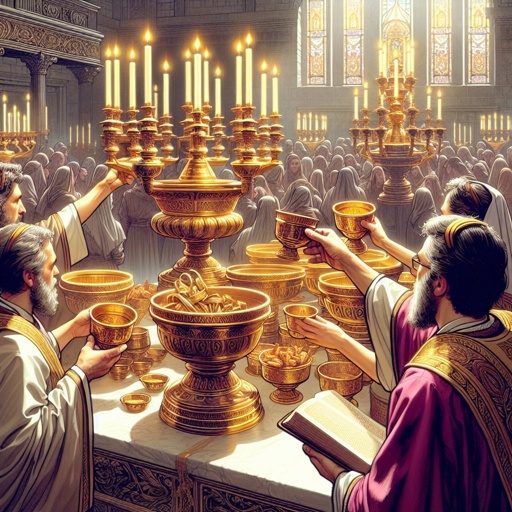
1 Corinthians 9:13-14 - "Do you not know that those who minister the holy things eat of the things of the temple, and those who serve at the altar partake of the offerings of the altar? Even so the Lord has commanded that those who preach the gospel should live from the gospel."
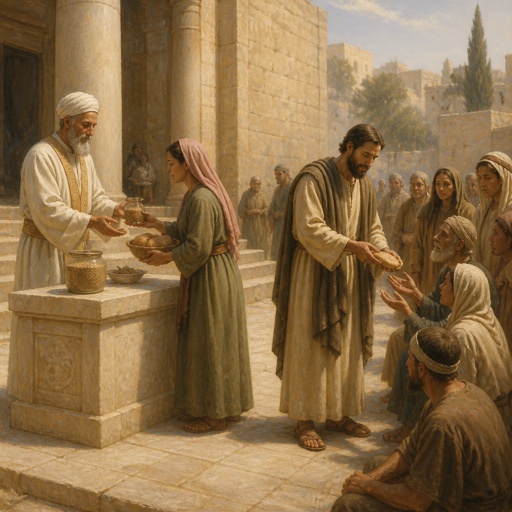
"Do you not know that those who minister the holy things eat of the things of the temple, and those who serve at the altar partake of the offerings of the altar? Even so the Lord has commanded that those who preach the gospel should live from the gospel." - 1 Corinthians 9:13-14

1 Corinthians 13:9 - "For we know in part, and we prophesy in part."

1 Corinthians 14:13 - "Wherefore let him that speaketh in an unknown tongue pray that he may interpret."

1 Corinthians 16:13-14 - "Be on your guard; stand firm in the faith; be courageous; be strong. Do everything in love."

1 Corinthians 9:13 - "Do ye not know that they which minister about holy things live of the things of the temple? and they which wait at the altar are partakers with the altar?"

1 Corinthians 9:14 - "Even so hath the Lord ordained that they which preach the gospel should live of the gospel."

"For we know in part, and we prophesy in part." - 1 Corinthians 13:9
![1 Corinthians 13:13
1 Corinthians 13:13
[13] So now faith, hope, and love abide, these three; but the greatest of these is love. (ESV)](https://media.bible.art/3da57222-9f49-4158-a2a3-7a49b5dc4437-thumbnail.jpg)
1 Corinthians 13:13 1 Corinthians 13:13 [13] So now faith, hope, and love abide, these three; but the greatest of these is love. (ESV)

1 Corinthians 14:9 - "So likewise ye, except ye utter by the tongue words easy to be understood, how shall it be known what is spoken? for ye shall speak into the air."

1 corinthians 16:13-14 with a men and woman dressed in body armor. Add the verses into the picture using the niv translation

1 Corinthians 13:13

1 Corinthians 13 :13

1 Corinthians 14:1

1 corinthians 14:1

1 Corinthians 13:4-6

1 Corinthians 13:4-6

1 Corinthians 13:4-6

1 Corinthians 13:4-6

1 Corinthians 13:4-6

1 Corinthians 14:36

1 Corinthians 13:4-6

1 Corinthians 13:4-6

1 Corinthians 13:4-6

1 Corinthians 9:25-27

1 Corinthians 9:25-27

1 Corinthians 13

1 Corinthians 14:36
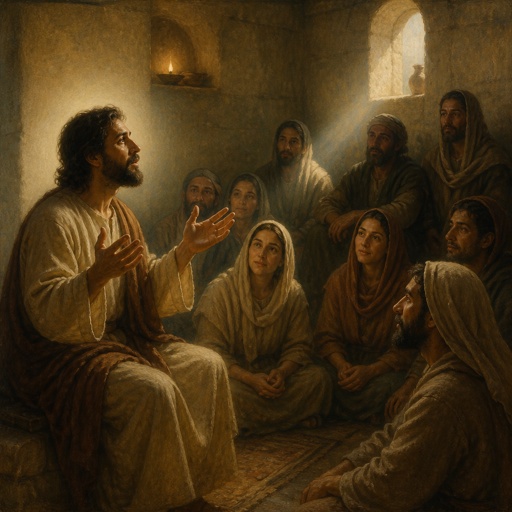
"Wherefore let him that speaketh in an unknown tongue pray that he may interpret." - 1 Corinthians 14:13

1 Corinthians 14:37