The Majesty of Solomon: A Reflection on Divine Provision and Creative Worship
“And the king made of the almug trees pillars for the house of the LORD, and for the king’s house, harps also and psalteries for singers: there came no such almug trees, nor were seen unto this day.” — 1 Kings 10:12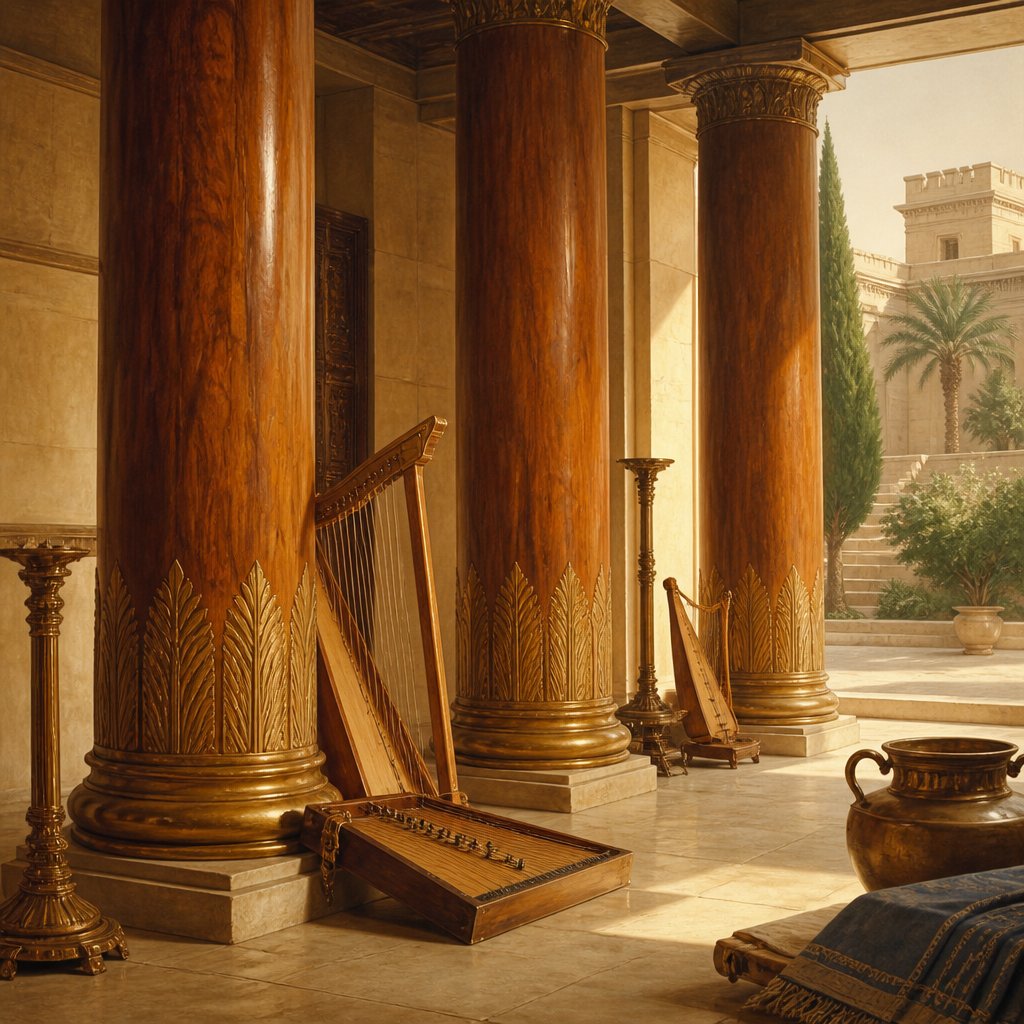
In our exploration of the Old Testament, we sometimes overlook the grandeur and significance of the materials that adorned the sacred and royal spaces of ancient Israel. One verse that magnificently illustrates this is 1 Kings 10:12, which states: "And the king made of the almug trees pillars for the house of the LORD, and for the king's house, harps also and psalteries for singers: there came no such almug trees, nor were seen unto this day."
The context of this verse is critical to understand not only the physical beauty that Solomon was crafting for both the temple of the Lord and his royal palace but also the undying symbol of God's providence and the extravagant worship that was central to Israel’s identity under his reign.
King Solomon, known for his wisdom, wealth, and dedication to God, brought a unique splendor to the construction of the temple. The almug tree, rare and precious, signifies the lengths to which Solomon went to create a place worthy of God's presence. The fact that no such almug trees were ever seen again emphasizes the extraordinary nature of what Solomon was able to accomplish—a divine gift that bore testimony to God's abundant provision.
This verse can prompt us to ponder several grand themes.
**1. Divine Provision**
The materials used by Solomon were indicative of God’s blessings upon his reign. The people of Israel had wandered in the wilderness, and after years of struggle, they were now experiencing the fullness of God’s provision through their king. It is vital that we remember that, as children of God, we too are recipients of divine blessings—though the nature of such blessings might not always resemble those of a king, they are nonetheless tailored to our needs and intended for His glory.
Bringing this personal application to mind, ask yourself: how has God provided for you in ways you couldn’t have anticipated? Are there areas in your life where you can recognize the "almug trees"—the gifts, talents, and provisions that God has given you? Whether it be relationships, opportunities, or even hardships that have built your faith, God’s provision frequently orchestrates the backdrop of our lives.
**2. Creative Worship**
The craftsmanship of Solomon extended beyond merely building structures; it encompassed artistry, music, and devotion. By making "harps also and psalteries for singers," Solomon was not just preparing a venue for worship but cultivating an atmosphere where praise could flourish. It highlights an essential aspect of worship—creativity. God is our Creator, and our worship should reflect creativity, drawn from our gifts and inspirations.
Consider this: how can you express your worship creatively? Maybe it’s through writing, music, painting, or even in your culinary endeavors. Each of us has a unique way to connect with God and offer our hearts and talents to Him as an act of worship.
**3. A Legacy of Perfection**
Finally, the verse hints at an enduring legacy—something that, like the almug trees, is rare and beautiful. Solomon's temple and creations were unparalleled and set a standard. We each have a legacy we are building every day through our actions and choices. In your daily life, pursue excellence that mirrors the beauty that Solomon aimed for in the house of the Lord.
As we meditate on this brief yet profound verse from 1 Kings 10:12, let us commit ourselves to recognize the gifts God has given us, to use our creativity in worship, and to build a legacy that reflects God's love and splendor. The almug trees may have been rare, but the opportunities we have today to glorify God in our lives are abundant.
In closing, let us pray:
"Lord, thank You for the abundant provisions in my life. Help me see the ‘almug trees’ You have placed around me, and may I use my gifts to create refreshing worship to glorify You. As I build my life and legacy, let every action reflect Your beauty and grace. Amen."
Get our apps


Artwork for 1 Kings 10:12

1 Kings 10:12 - "And the king made of the almug trees pillars for the house of the LORD, and for the king's house, harps also and psalteries for singers: there came no such almug trees, nor were seen unto this day."
"And the king made of the almug trees pillars for the house of the LORD, and for the king's house, harps also and psalteries for singers: there came no such almug trees, nor were seen unto this day." - 1 Kings 10:12

1 Kings 12:10

1 Kings 12:10

1 Kings 12:10

1 Kings 12:10

1 Kings 10:1

1 Kings 10:1

1 kings 10:1

2 Kings 10:12 - "¶ And he arose and departed, and came to Samaria. And as he was at the shearing house in the way,"

1 Kings 10:23 - "So king Solomon exceeded all the kings of the earth for riches and for wisdom."

1 Kings 12:11

1 Kings 12:11

1 kings 3:12

1 Kings 12:11
1 Kings 12:11

1 Kings 12:14

1 Kings 12:14

1 Kings 12:11

1 Kings 8:10

1 Kings 8:10

1 Kings 8:10

1 Kings 8:10

1 Kings 8:10

1 Kings 8:10

1 Kings 8:10

1 Kings 10:15 - "Beside that he had of the merchantmen, and of the traffick of the spice merchants, and of all the kings of Arabia, and of the governors of the country."

1 Kings 12:1 - "And Rehoboam went to Shechem: for all Israel were come to Shechem to make him king."

Psalm 10:12-18

1 Kings 1:10 - "But Nathan the prophet, and Benaiah, and the mighty men, and Solomon his brother, he called not."