The Cost of Compromise: Lessons from Joab’s Campaign
“( For six months did Joab remain there with all Israel, until he had cut off every male in Edom:)” — 1 Kings 11:16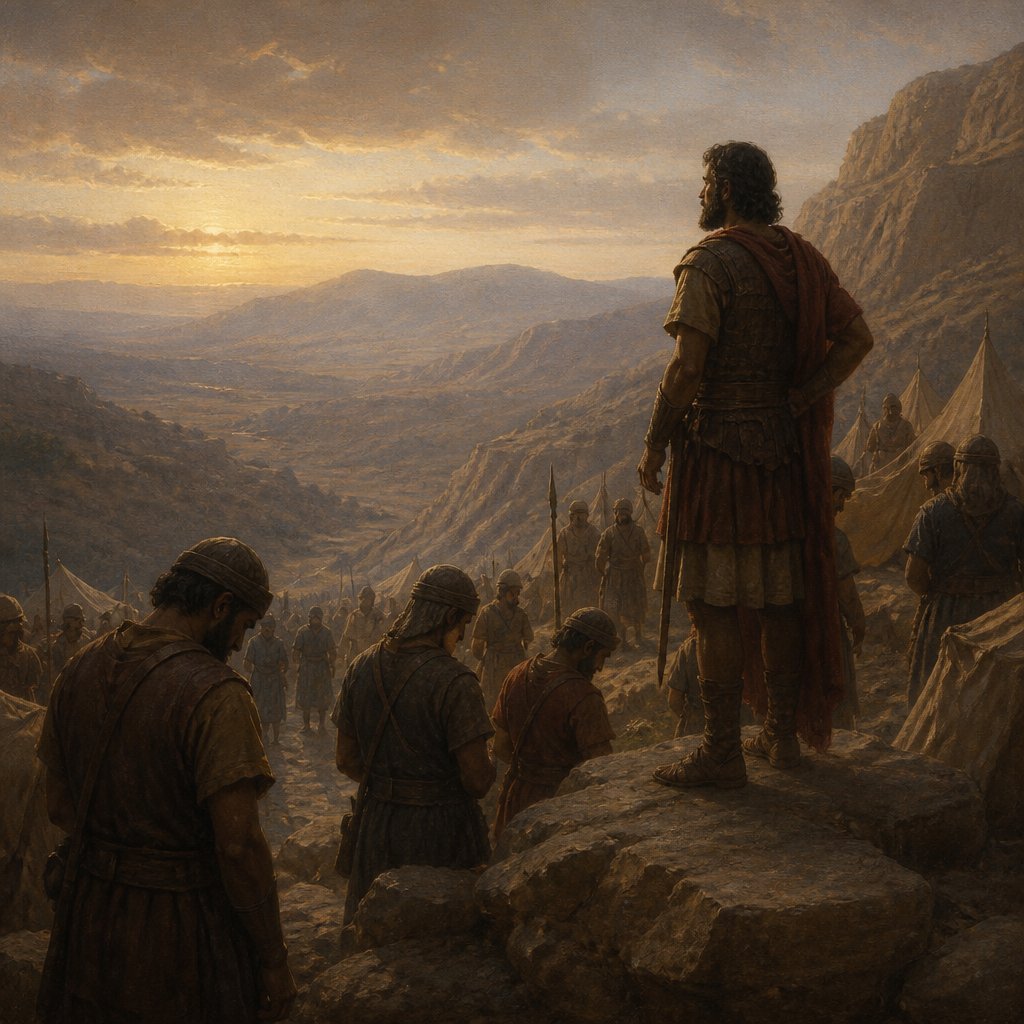
In the rich tapestry of biblical narratives, 1 Kings 11:16 offers a crucial glimpse into the consequential actions that shape the destiny of nations and individuals. The verse states, "For six months did Joab remain there with all Israel, until he had cut off every male in Edom:" (1 Kings 11:16, KJV). This verse not only bears witness to the severity of Joab’s military campaign but also reflects profound theological and moral lessons relevant to our faith journey today.
To better understand this passage, we must consider the context surrounding Joab's actions. Joab, the nephew of King David and commander of Israel’s military, was more than a soldier; he was a man caught up in the complexities of political power, loyalty, and, at times, moral ambiguity. When we think of Joab, we cannot overlook his violent legacy and the unyielding loyalty he showed toward King David, often at the expense of righteousness. One wonder often arises—what led to such decisive and ruthless measures against Edom?
Edom, descended from Esau, had a long and hostile history with Israel. Their conflicts were rooted not only in territorial disputes but also in deep-seated animosities and resentment. Despite Edom's ancestry connected to Jacob’s brother Esau—the forefather of Israel—the two nations found themselves at odds, often with Edom antagonizing and rebelling against Israelite sovereignty. Joab's six-month siege was not merely a military operation; it was an act of vengeance that reflected the culmination of old wounds between two nations.
Here lies the first lesson from Joab’s actions: the destructive power of unresolved strife. We all possess narratives in our lives filled with conflicts and grudges, some of which might span generations within our families or communities. Joab’s approach to conflict resolution was extreme and violent, a stark reminder that harboring anger and seeking revenge may lead to devastating outcomes—not only for the enemy but also for the individuals holding onto hate.
When we consider Joab’s campaign, we also see the shadows of a huge moral cost. Cutting off every male in Edom symbolizes a generational annihilation that contradicts the compassionate heart of God, who desires mercy over judgment (Micah 6:8). For us today, this serves as a poignant reminder of our responsibility to promote peace rather than retaliation, to seek forgiveness instead of revenge. In our workplaces, homes, and churches, nurturing hate only builds an Edom-like barrier that inhibits love. Our Savior, Jesus Christ, teaches that to follow Him is to love even our enemies (Matthew 5:44).
Moreover, Joab’s campaign, while seemingly victorious in the short term, ultimately foreshadows a series of implications that would affect Israel long after his conquest. The bloodshed laid a foundation of enmity and hostility that would haunt future generations and their relationships. This illustrates another spiritual principle: every decision we make has enduring consequences, and actions driven by vengeance yield a harvest of bitterness rather than resolution.
As we reflect on Joab's story, let us ask ourselves: are we engaging in conflict in a way that reflects God’s heart? Are we resolving our disputes with grace, or are we responding with Joab’s sword? Let the piercing reminder of this passage lead us towards reconciliation and healing.
Finally, as we meditate on the broader narrative of God’s redemptive plan, we can appreciate that there is always the hope of redemption. Even as nations and individuals fall into cycles of violence and revenge, God remains sovereign, offering pathways to healing and restoration. Through Christ, the true Prince of Peace, we find the ultimate answer to strife, enabling us to forgive and usher in His peace.
In conclusion, may we not find ourselves emulating Joab's uncompromising tactics in our lives, but rather seek to embody the grace, mercy, and forgiveness that leads to true reconciliation with one another and with God.
Get our apps


Artwork for 1 Kings 11:16

1 Kings 11:16 - "(For six months did Joab remain there with all Israel, until he had cut off every male in Edom:)"
"(For six months did Joab remain there with all Israel, until he had cut off every male in Edom:)" - 1 Kings 11:16

1 Kings 11:11

1 Kings 11:11

1 Kings 11:11

1 Kings 11:11

1 Kings 11:13

1 Kings 11:5

1 Kings 11:13

1 Kings 11:11

1 kings 11:11-13

1 Kings 11:11-13

1 Kings 11:29-32

1 Kings 11:11-13

1 Kings 11:1-5

2 Chronicles 16:11 - "¶ And, behold, the acts of Asa, first and last, lo, they are written in the book of the kings of Judah and Israel."

2 Kings 11:16 - "And they laid hands on her; and she went by the way by the which the horses came into the king's house: and there was she slain."

1 Kings 11:30-31

1 Kings 11:30-31

1 Kings 11:30-31
1 Kings 16:11 - "¶ And it came to pass, when he began to reign, as soon as he sat on his throne, that he slew all the house of Baasha: he left him not one that pisseth against a wall, neither of his kinsfolks, nor of his friends."

1 Kings 12:11

1 Kings 12:11

1 Kings 12:11

1 Kings 12:11

1 Kings 12:11

1 Kings 20:16 - "And they went out at noon. But Ben-hadad was drinking himself drunk in the pavilions, he and the kings, the thirty and two kings that helped him."

1 Kings 16:14 - "Now the rest of the acts of Elah, and all that he did, are they not written in the book of the chronicles of the kings of Israel?"

1 Kings 1:16 - "And Bath-sheba bowed, and did obeisance unto the king. And the king said, What wouldest thou?"

1 Kings 4:16 - "Baanah the son of Hushai was in Asher and in Aloth:"