Building Breaches or Breaching Bonds?
“And this was the cause that he lifted up his hand against the king: Solomon built Millo, and repaired the breaches of the city of David his father.” — 1 Kings 11:27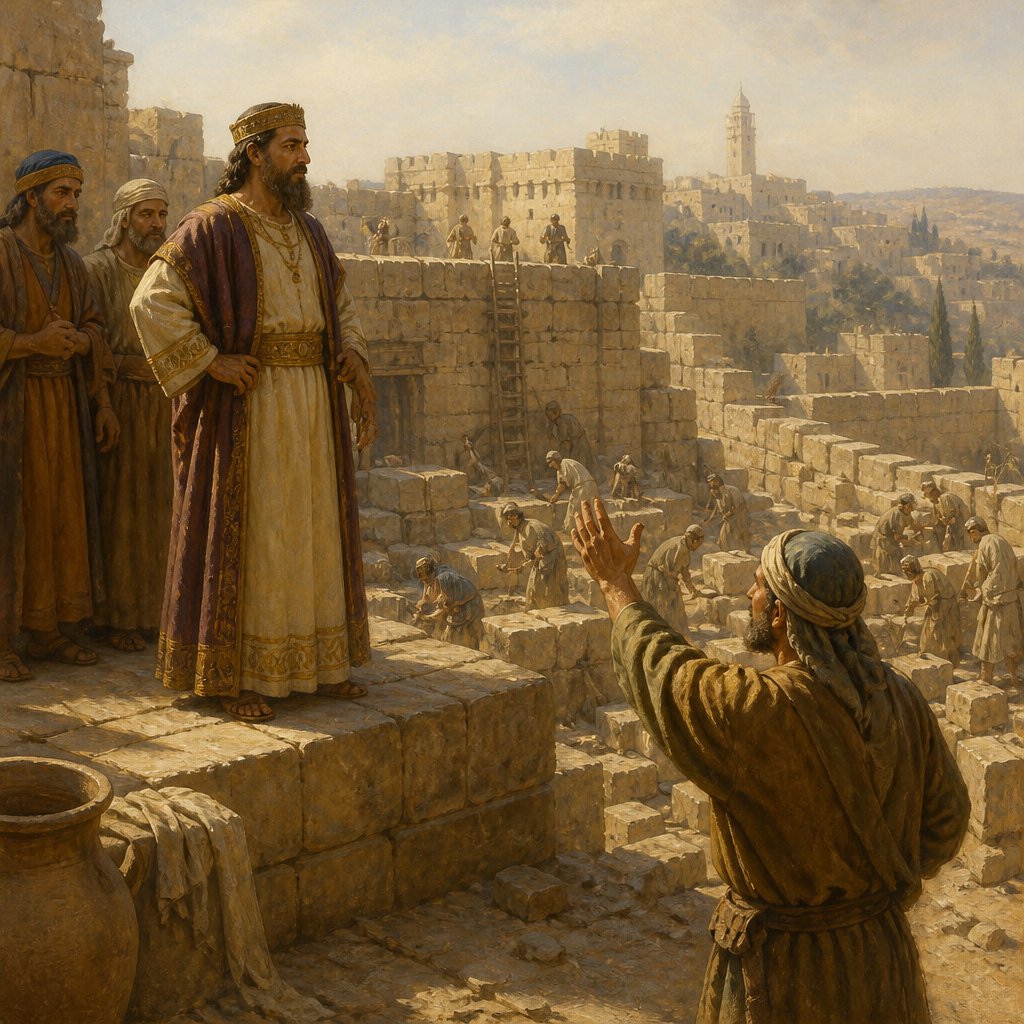
In 1 Kings 11:27, we read, "And this was the cause that he lifted up his hand against the king: Solomon built Millo, and repaired the breaches of the city of David his father." This seemingly simple verse speaks volumes about the complexities of leadership, loyalty, and rebellion in the kingdom of Israel. To comprehend the weight of this moment, we need to explore the fundamental themes surrounding this narrative.
The verse introduces Jeroboam, a man raised from obscurity to a crucial position of authority under King Solomon. The construction of Millo and the repairing of breaches in David's fortifications symbolizes an establishment of security, perhaps a necessary step to fortify the kingdom against external threats. Solomon's dedication to building projects was intended not only for the glory of his reign but also to ensure the continued prosperity of Israel. However, these actions incited adversarial feelings, as we see with Jeroboam’s eventual rebellion.
In our lives, God calls us to build—building relationships, ministries, and communities. Yet, how often do our endeavors to strengthen one area lead to tensions in another? Jeroboam's resentment seems to stem from a feeling of disenfranchisement. Solomon's focus on construction overshadowed the needs and concerns of the people he reigned over. The breach he repaired outwardly may not have addressed the spiritual and social fractures within the community.
When we look beyond the brick and mortar of our daily lives, we must ask ourselves: Are we building in a way that respects the essential connections among our community and most importantly, our relationship with God? The actions we take, although seemingly noble, should inspire growth in unity rather than division. Jeroboam’s rebellion teaches us that neglecting the hearts of people while focusing too heavily on tasks can sow seeds of discord.
As we break down further the phrase, "lifted up his hand against the king," we must consider the implications of rebellion. Rebellion in itself is a strong word, often accompanied by negative connotations. Jeroboam’s uprising was not just an act of treason against Solomon; it was the culmination of discontent that had been brewing underneath the surface. How often do we lift our hands in anger against those we once respected? It begins with dissatisfaction, morphing into resentment, and eventually leading to actions that can fragment our foundation.
This moment calls us to examine the state of our own hearts. Are we becoming resentful of authority in our lives, or do we respect and honor those in leadership while raising our concerns in genuine dialogue? Our words and actions can either repair the breaches in relationships or exacerbate them into rifts. Like Jeroboam, we might find ourselves in positions where decisions or actions negate our calling to build up rather than tear down.
Solomon stands as a representation of a leader who, despite his wisdom, allowed certain aspects of his kingship to lead to vulnerability. We are reminded, through this biblical account, of the necessity for introspection; the need to balance our ambitions with accountability—not only to ourselves but to those around us.
Reflecting on Jeroboam's eventual rise against Solomon, let us remember that building a community demands sensitivity and a heart attuned to the Spirit. Every ‘Millo’ we erect should be undergirded by a foundation of humility and service, ensuring it does not alienate others. Let us lift our hands in unity and purpose—to build bridges that can withstand the storms of dissent rather than raising our fists against the leaders God has placed over us.
In bringing this study to a close, we must grasp this vital truth from 1 Kings 11:27: Leadership is not merely about architectural monuments erected with bricks but also about the invisible bonds forged in love and understanding. May our lives be embodiments of God's calling to construct with intention and grace, fostering reconciliation in a world yearning for connection.
Get our apps


Artwork for 1 Kings 11:27

1 Kings 11:27 - "And this was the cause that he lifted up his hand against the king: Solomon built Millo, and repaired the breaches of the city of David his father."
"And this was the cause that he lifted up his hand against the king: Solomon built Millo, and repaired the breaches of the city of David his father." - 1 Kings 11:27

1 Kings 7:27-38

1 Kings 11:11

1 Kings 11:11

1 Kings 11:11

1 Kings 11:11

1 Kings 11:13

1 Kings 11:5

1 Kings 11:13

1 Kings 7:27-38

1 Kings 11:11

1 kings 11:11-13

1 Kings 11:11-13

1 Kings 11:29-32

1 Kings 11:11-13

1 Chronicles 11:27 - "Shammoth the Harorite, Helez the Pelonite,"

1 Kings 11:1-5

1 Kings 11:30-31

1 Kings 11:30-31

1 Kings 11:30-31
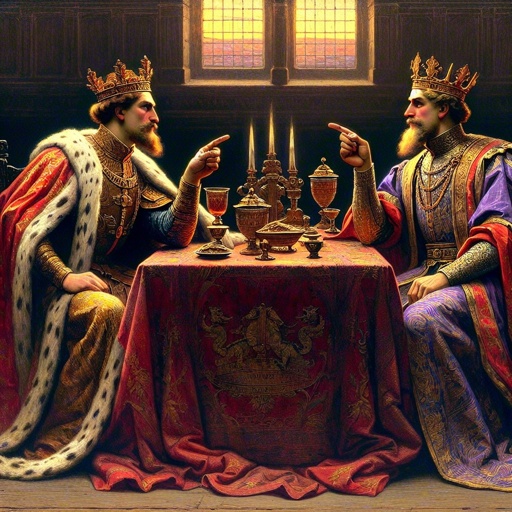
Daniel 11:27 - "And both these kings' hearts shall be to do mischief, and they shall speak lies at one table; but it shall not prosper: for yet the end shall be at the time appointed."

1 Kings 16:27 - "Now the rest of the acts of Omri which he did, and his might that he shewed, are they not written in the book of the chronicles of the kings of Israel?"

1 Kings 12:11

1 Kings 12:11

1 Kings 12:11

1 Kings 12:11

1 Kings 12:11

1 Kings 13:27 - "And he spake to his sons, saying, Saddle me the ass. And they saddled him."

1 Kings 10:27 - "And the king made silver to be in Jerusalem as stones, and cedars made he to be as the sycomore trees that are in the vale, for abundance."