The Consequences of Forsaking God: Lessons from Solomon's Downfall
“Because that they have forsaken me, and have worshipped Ashtoreth the goddess of the Zidonians, Chemosh the god of the Moabites, and Milcom the god of the children of Ammon, and have not walked in my ways, to do that which is right in mine eyes, and to keep my statutes and my judgments, as did David his father.” — 1 Kings 11:33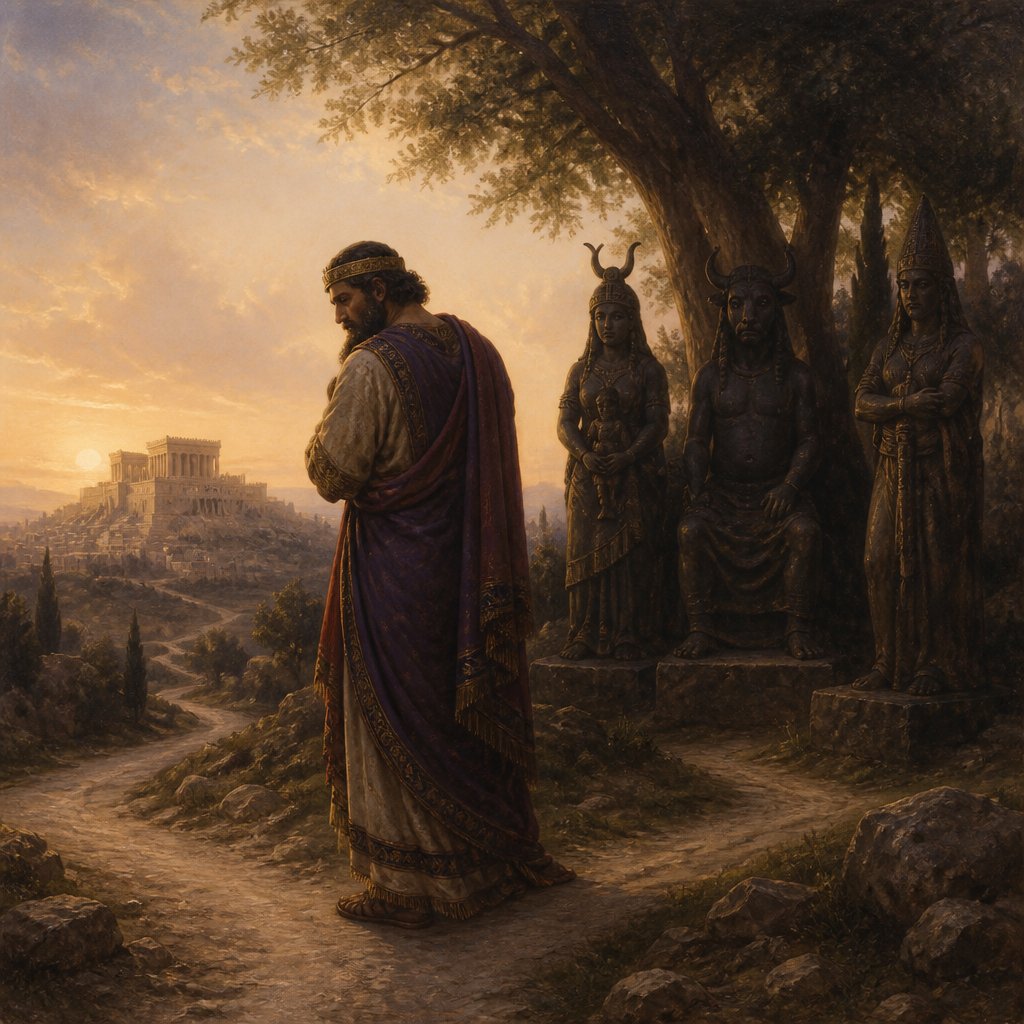
In 1 Kings 11:33 (KJV), we read a sobering declaration from God concerning Solomon: "Because that they have forsaken me, and have worshipped Ashtoreth the goddess of the Zidonians, Chemosh the god of the Moabites, and Milcom the god of the children of Ammon, and have not walked in my ways, to do that which is right in mine eyes, and to keep my statutes and my judgments, as did David his father." This verse encapsulates a pivotal moment in Israel's history and offers us profound lessons about the nature of faithfulness to God.
At the height of his reign, Solomon was one of the most revered kings of Israel, famed for his wisdom, wealth, and constructions, particularly the temple dedicated to God. However, despite these accomplishments, Solomon’s heart began to drift from the very God who had blessed him with such gifts. The allure of foreign gods prompted Solomon to forsake his covenant with the Lord, drawing the ire of God Himself.
This passage underscores the foundational truth that forsaking the Lord leads to dire consequences. When Solomon chose to worship Ashtoreth, Chemosh, and Milcom, he not only abandoned the worship of Yahweh, but he also influenced the people of Israel to do the same. Idolatry is not merely a personal failure; it is a communal disaster. The act of turning away from God initiated a chain reaction that would unravel the very fabric of Israelite society, leading them away from their unique identity as God’s chosen people.
Ashtoreth, a fertility goddess, symbolizes the pursuit of pleasure over devotion, while Chemosh and Milcom represent the temptation to compromise one's values for political or social gain. Solomon's lust for power and influence made him susceptible to these idols, highlighting a crucial point: that the greatest danger often lurks in the forms of our desires and ambitions. What Solomon did was not merely a change of faith; it was an exchange of his purpose. In our own lives, we must be vigilant. What foreign gods tempt us today? Is it materialism, success, relationships, or perhaps the idol of self?
The verse goes further, emphasizing the importance of walking in God’s ways, doing what is right in His eyes, and keeping His statutes and judgments. This is a call back to devotion and integrity rooted in God’s commands. Solomon’s downfall teaches us that faithfulness to God is demonstrated not just in isolated moments of worship but in a continuous walking in His ways. Our relationship with God requires active engagement; it demands our commitment to righteousness and His standards, rather than the shifting morals of the world around us.
Moreover, we see a poignant reminder in this verse comparing Solomon to his father, David. God highlights David's faithfulness and the steadfastness of his heart towards Him. David was not without flaws; he had made serious mistakes, but his heart remained tender towards God’s will. This contrast serves to challenge us: are we aligning our hearts with God's will as David did?
Ultimately, 1 Kings 11:33 serves as a cautionary tale. It beckons us to examine our lives and our allegiances. Are there areas where we have allowed worldly influences to overshadow God’s truth? Have we become lukewarm in our faith? In conclusion, let us commit ourselves to God daily, striving to keep His commandments close to our hearts and cultivating a love for His ways. In a culture rife with distractions, let us choose to be diligent so that when the moment of temptation arrives, our hearts will be steadfast, our worship will be pure, and we will remain loyal to the God who loves us deeply.
May we walk in His ways and live in alignment with His will, always remembering the lessons from those who have gone before us, standing firm against the echoes of an ever-distracting world.
Get our apps


Artwork for 1 Kings 11:33

1 Kings 11:33 - "Because that they have forsaken me, and have worshipped Ashtoreth the goddess of the Zidonians, Chemosh the god of the Moabites, and Milcom the god of the children of Ammon, and have not walked in my ways, to do that which is right in mine eyes, and to keep my statutes and my judgments, as did David his father."
"Because that they have forsaken me, and have worshipped Ashtoreth the goddess of the Zidonians, Chemosh the god of the Moabites, and Milcom the god of the children of Ammon, and have not walked in my ways, to do that which is right in mine eyes, and to keep my statutes and my judgments, as did David his father." - 1 Kings 11:33

Romana 11:33-36

1 Chronicles 11:33 - "Azmaveth the Baharumite, Eliahba the Shaalbonite,"

1 Kings 11:11

1 Kings 11:11

1 Kings 11:11

1 Kings 11:11

1 Kings 11:13

1 Kings 11:5

1 Kings 11:13

1 Kings 11:11

1 kings 11:11-13

1 Kings 11:11-13

1 Kings 11:29-32

1 Kings 16:33 - "And Ahab made a grove; and Ahab did more to provoke the LORD God of Israel to anger than all the kings of Israel that were before him."

1 Kings 11:11-13

1 Kings 22:33 - "And it came to pass, when the captains of the chariots perceived that it was not the king of Israel, that they turned back from pursuing him."

1 Kings 11:1-5

1 Kings 6:33 - "So also made he for the door of the temple posts of olive tree, a fourth part of the wall."

1 Kings 11:30-31

1 Kings 11:30-31

1 Kings 11:30-31

1 Corinthians 11:33 - "Wherefore, my brethren, when ye come together to eat, tarry one for another."

"Azmaveth the Baharumite, Eliahba the Shaalbonite," - 1 Chronicles 11:33

1 Kings 7:33 - "And the work of the wheels was like the work of a chariot wheel: their axletrees, and their naves, and their felloes, and their spokes, were all molten."

1 Kings 12:11

1 Kings 12:11

1 Kings 12:11
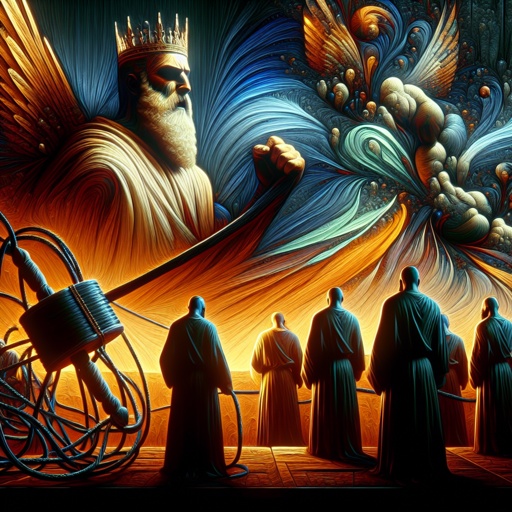
1 Kings 12:11