The Division of Hearts: A Call to Spiritual Unity
"So when all Israel saw that the king hearkened not unto them, the people answered the king, saying, What portion have we in David? neither have we inheritance in the son of Jesse: to your tents, O Israel: now see to thine own house, David. So Israel departed unto their tents." - 1 Kings 12:16
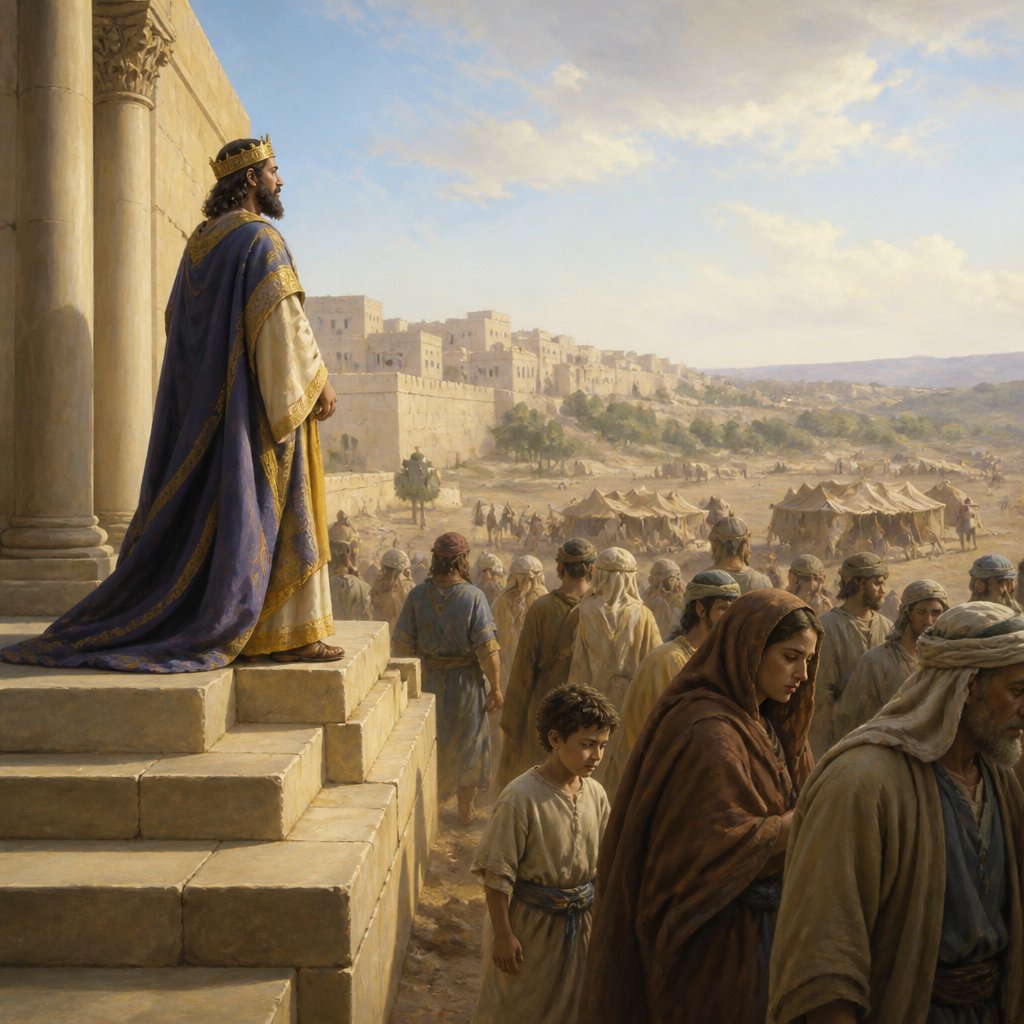
In the tumultuous narrative of 1 Kings 12:16, we encounter a pivotal moment in the history of Israel: "So when all Israel saw that the king hearkened not unto them, the people answered the king, saying, What portion have we in David? neither have we inheritance in the son of Jesse: to your tents, O Israel: now see to thine own house, David. So Israel departed unto their tents." This passage marks a striking shift in the dynamics of leadership and the relationship between a king and his people, illuminating the profound implications of unity and disunity.
As we reflect on the context of this verse, we find ourselves amidst a rebellion sparked by King Rehoboam's refusal to heed the wise counsel of elders. Instead, he chose to listen to his peers, offering a harsh response to the people’s plea for lighter burdens. His decision to ignore their heartfelt request resulted in a fracture among the tribes of Israel, leading to a monumental split in the kingdom. The people's question, "What portion have we in David?" echoes their deep-seated feelings of disconnection, betrayal, and loss.
At the heart of this encounter is a universal theme—the search for belonging and recognition. The Israelites, under the leadership of their forefather David, had tasted unity, prosperity, and divine favor. But Rehoboam’s refusal to acknowledge their needs created a chasm, igniting a crisis of identity and loyalty among the tribes. In this moment of rejection, the Israelites felt they had no inheritance in the legacy established by David, which represents a detachment from their spiritual heritage and a severing of ties with the very legacy that once defined them as a people.
In our contemporary context, we too find ourselves facing moments when our leaders fail to heed the voices of those they govern. Whether in organizations, communities, or even our churches, there can be instances when decisions are made that disregard the needs or cries of the masses. Such moments can lead to division, disillusionment, and a quest for identity and purpose outside of established authority or tradition.
The directive, "to your tents, O Israel," resonates deeply in our lives today. The call to abandon, to retreat to what feels safe, reflects how we often respond in hurt and frustration. Instead of seeking reconciliation or understanding, we may distance ourselves and build walls around our hearts. However, God calls us to a higher response. It is crucial to address the grievances in love and pursue unity, even in the midst of disagreement.
Rehoboam's failure was not just a political misstep; it was a spiritual one. He neglected to bring the people before God, the ultimate source of wisdom and unity. In moments when we feel marginalized or unheard, we have the opportunity to turn towards God rather than away from Him. Through prayer, we can seek His guidance, asking for wisdom to heal divisions and to foster open dialogue. We can meditate on the words of Psalm 133:1, "Behold, how good and how pleasant it is for brethren to dwell together in unity!"
Thus, as we meditate on 1 Kings 12:16, let us internalize the lessons of this confrontation. May we strive to be aware of the voices around us, taking the time to engage in meaningful conversations. Let us seek to mend the relationships frayed by misunderstandings and to build bridges rather than walls. We are reminded that true leadership, as modeled by Christ, involves listening, empathizing, and uniting people under shared values and purpose.
In conclusion, the division sparked by Rehoboam’s leadership serves not as a mere historical account but as an enduring reminder of the importance of communion in the body of Christ. May our hearts remain open, our ears attuned, and our spirits unified as we navigate the complexities of our journey together in faith. Let us choose to build upon the legacy of David, recognizing that irrespective of our differences, we all bear an inheritance in the love of the Father.
Want to reflect more on 1 Kings 12:16?
Continue your spiritual journey with Bible Chat — an AI-powered tool for exploring God's Word through conversation. Ask questions, discover connections, and deepen your understanding.
Get Our Apps


1 Kings 12:16 Artwork

1 Kings 12:16 - "¶ So when all Israel saw that the king hearkened not unto them, the people answered the king, saying, What portion have we in David? neither have we inheritance in the son of Jesse: to your tents, O Israel: now see to thine own house, David. So Israel departed unto their tents."
"¶ So when all Israel saw that the king hearkened not unto them, the people answered the king, saying, What portion have we in David? neither have we inheritance in the son of Jesse: to your tents, O Israel: now see to thine own house, David. So Israel departed unto their tents." - 1 Kings 12:16

1 Kings 16:12 - "Thus did Zimri destroy all the house of Baasha, according to the word of the LORD, which he spake against Baasha by Jehu the prophet,"

Proverbs 16:12 - "It is an abomination to kings to commit wickedness: for the throne is established by righteousness."

1 Kings 12:11

1 Kings 12:11

1 Kings 12:10

1 Kings 12:10

2 Kings 12:16 - "The trespass money and sin money was not brought into the house of the LORD: it was the priests'."

1 Kings 12:10

1 Kings 12:11

1 Kings 12:10
1 Kings 12:11

1 Kings 12:14

1 Kings 12:14

1 Kings 12:11

2 Kings 16:12 - "And when the king was come from Damascus, the king saw the altar: and the king approached to the altar, and offered thereon."

1 kings 3:12

Joshua 1:12-16

Joshua 1:12-16

Revelation 1:12-16

"It is an abomination to kings to commit wickedness: for the throne is established by righteousness." - Proverbs 16:12

1 Kings 20:16 - "And they went out at noon. But Ben-hadad was drinking himself drunk in the pavilions, he and the kings, the thirty and two kings that helped him."

Revelation 1:12-16

1 Kings 16:14 - "Now the rest of the acts of Elah, and all that he did, are they not written in the book of the chronicles of the kings of Israel?"

1 Kings 1:16 - "And Bath-sheba bowed, and did obeisance unto the king. And the king said, What wouldest thou?"

1 Kings 16:1 - "Then the word of the LORD came to Jehu the son of Hanani against Baasha, saying,"

1 Kings 4:16 - "Baanah the son of Hushai was in Asher and in Aloth:"

1 Kings 16:5 - "Now the rest of the acts of Baasha, and what he did, and his might, are they not written in the book of the chronicles of the kings of Israel?"

1 Kings 16:20 - "Now the rest of the acts of Zimri, and his treason that he wrought, are they not written in the book of the chronicles of the kings of Israel?"