Discerning True Worship: The Feast of Jeroboam
"And Jeroboam ordained a feast in the eighth month, on the fifteenth day of the month, like unto the feast that is in Judah, and he offered upon the altar. So did he in Beth-el, sacrificing unto the calves that he had made: and he placed in Beth-el the priests of the high places which he had made." - 1 Kings 12:32
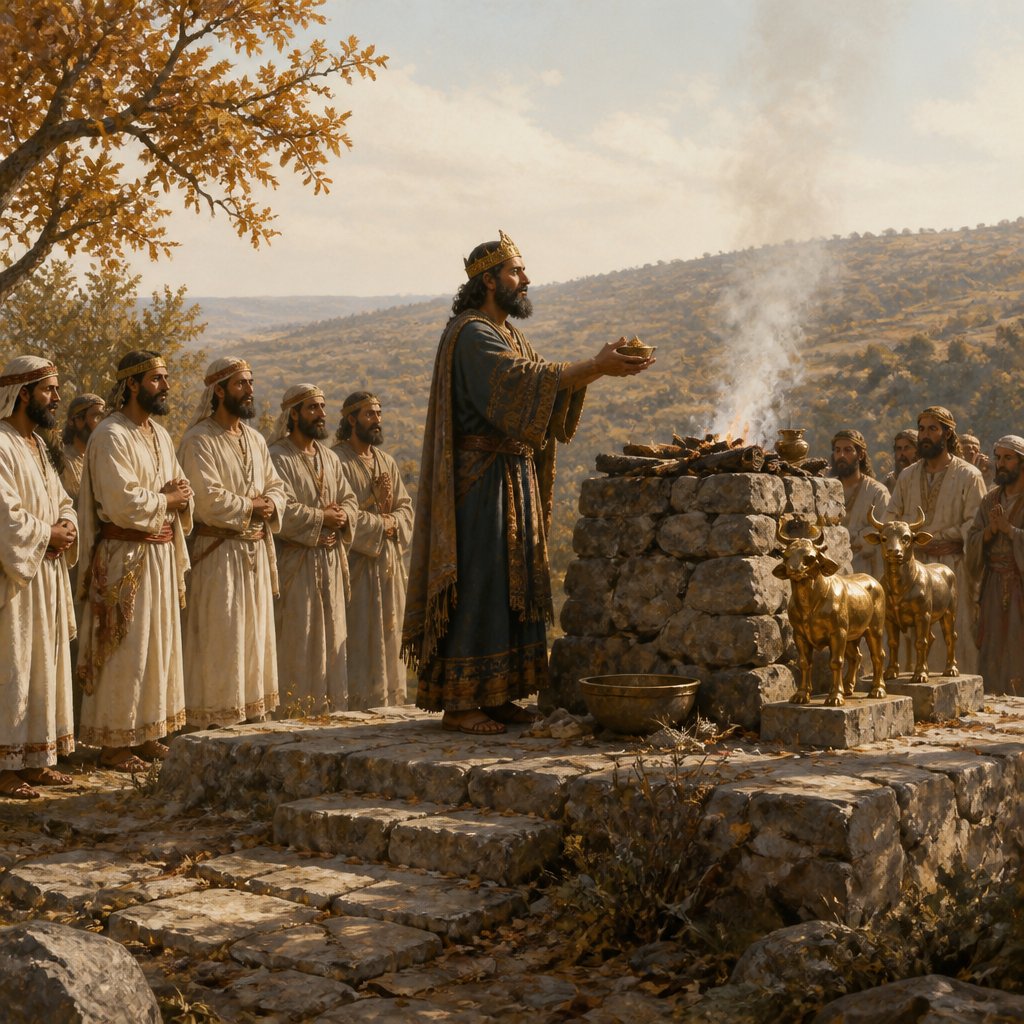
In 1 Kings 12:32, we encounter the narrative of Jeroboam, freshly minted king of Israel after the kingdom split from Judah. The scripture states, "And Jeroboam ordained a feast in the eighth month, on the fifteenth day of the month, like unto the feast that is in Judah, and he offered upon the altar. So did he in Beth-el, sacrificing unto the calves that he had made: and he placed in Beth-el the priests of the high places which he had made." This verse encapsulates a pivotal moment in the history of Israel, marked by a blend of anxiety, innovation, and deviation from divine standards.
Jeroboam, faced with the daunting task of solidifying his reign and preventing the people from returning to Rehoboam in Judah, undertook to create a new religious system that would keep his subjects loyal. Underpinning his decision lies an essential theme that resonates throughout scripture—the question of true worship versus false worship.
Jeroboam’s strategic feast, ordained in the eighth month, mirrors the authentic religious celebrations in Judah, specifically the Feast of Tabernacles, which occurs in the seventh month, as outlined in Leviticus 23:34-43. By establishing a feast that bore semblance to a God-ordained celebration, Jeroboam sought to retain the allegiance of the people while ensuring they did not venture south to the temple in Jerusalem, where they would encounter the true worship of Yahweh.
However, this political maneuver was deeply flawed. Intent on securing his power, Jeroboam constructed golden calves, which he positioned as intermediaries between the people and God. Such idols were reminiscent of the calf made by Aaron during Israel’s exodus from Egypt (Exodus 32), highlighting the recurring pattern of infidelity that plagued Israel’s history. Herein lies a profound lesson for us: our attempts to create shortcuts to God or to fashion His worship according to our desires often lead to spiritual demise.
Jeroboam’s eagerness to establish a localized worship system reflected a lack of genuine faith and dependence on the Lord. In doing so, he placed convenience over calling, tradition over truth, and innovation over divine instruction. We must ponder—are there areas in our own worship practices where we unconsciously prioritize what is easy over what is right? Are we content with a semblance of worship that lacks true devotion?
As believers, we are called to worship in spirit and truth (John 4:24). Our hearts should be oriented towards genuine communion with God, remembering that He desires our whole hearts—not just our religious rituals. The priests whom Jeroboam ordained were not of the lineage that God had established, reflecting a further deviation from the intended divine order. This act symbolizes how compromised leadership can pave the way for a broader spiritual decline.
Consider, too, the implications of Jeroboam’s actions on the people of Israel. His reforms set a dangerous precedent, leading the nation into a cycle of idolatry, division, and eventual downfall. Just as Jeroboam introduced worship practices that aligned more with his political aspirations than with God’s design, we too must be vigilant. Are we influenced by cultural trends that pull us away from the core truths of the Gospel? Are we allowing the pressures of modernity to alter the purity of our worship?
In conclusion, Jeroboam’s feast serves as a cautionary tale, urging us to reflect deeply on the nature of our worship. Let us strive to discern the difference between true worship and mere imitation. May our sacrifices be aligned with God’s heart and not merely for the sake of image or self-preservation. As we draw near to God in sincere worship, let us ensure that our practices genuinely reflect His glory, thus promoting unity and holiness within the body of Christ.
Want to reflect more on 1 Kings 12:32?
Continue your spiritual journey with Bible Chat — an AI-powered tool for exploring God's Word through conversation. Ask questions, discover connections, and deepen your understanding.
Get Our Apps


1 Kings 12:32 Artwork
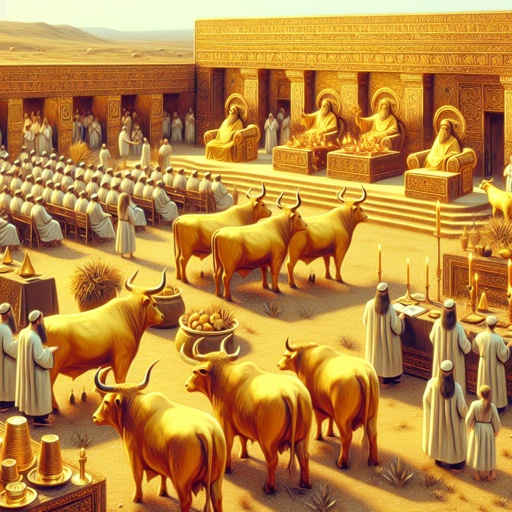
1 Kings 12:32 - "And Jeroboam ordained a feast in the eighth month, on the fifteenth day of the month, like unto the feast that is in Judah, and he offered upon the altar. So did he in Beth-el, sacrificing unto the calves that he had made: and he placed in Beth-el the priests of the high places which he had made."
"And Jeroboam ordained a feast in the eighth month, on the fifteenth day of the month, like unto the feast that is in Judah, and he offered upon the altar. So did he in Beth-el, sacrificing unto the calves that he had made: and he placed in Beth-el the priests of the high places which he had made." - 1 Kings 12:32

1 Kings 11:29-32

1 Kings 15:32 - "And there was war between Asa and Baasha king of Israel all their days."

1 Kings 12:11

1 Kings 12:11

1 Kings 12:10

1 Kings 12:10

1 Kings 12:10

1 Kings 12:11

1 Kings 12:10
1 Kings 12:11

1 Kings 12:14

1 Kings 12:14

1 Kings 12:11

1 Kings 1:32 - "¶ And king David said, Call me Zadok the priest, and Nathan the prophet, and Benaiah the son of Jehoiada. And they came before the king."

1 Kings 4:32 - "And he spake three thousand proverbs: and his songs were a thousand and five."

1 Kings 16:32 - "And he reared up an altar for Baal in the house of Baal, which he had built in Samaria."

1 kings 3:12

1 Kings 7:32 - "And under the borders were four wheels; and the axletrees of the wheels were joined to the base: and the height of a wheel was a cubit and half a cubit."

1 Kings 12:1 - "And Rehoboam went to Shechem: for all Israel were come to Shechem to make him king."

1 Kings 18:32 - "And with the stones he built an altar in the name of the LORD: and he made a trench about the altar, as great as would contain two measures of seed."

"And there was war between Asa and Baasha king of Israel all their days." - 1 Kings 15:32

1 Kings 22:32 - "And it came to pass, when the captains of the chariots saw Jehoshaphat, that they said, Surely it is the king of Israel. And they turned aside to fight against him: and Jehoshaphat cried out."

1 Kings 12:19 - "So Israel rebelled against the house of David unto this day."

1 Kings 21:12 - "They proclaimed a fast, and set Naboth on high among the people."

1 Kings 12:12 - "¶ So Jeroboam and all the people came to Rehoboam the third day, as the king had appointed, saying, Come to me again the third day."

1 Kings 11:32 - "(But he shall have one tribe for my servant David's sake, and for Jerusalem's sake, the city which I have chosen out of all the tribes of Israel:)"

1 Kings 12:22 - "But the word of God came unto Shemaiah the man of God, saying,"

1 Kings 12:13 - "And the king answered the people roughly, and forsook the old men's counsel that they gave him;"