The Consequences of Defiance: A Reflection on 1 Kings 13:4
"And it came to pass, when king Jeroboam heard the saying of the man of God, which had cried against the altar in Beth-el, that he put forth his hand from the altar, saying, Lay hold on him. And his hand, which he put forth against him, dried up, so that he could not pull it in again to him." - 1 Kings 13:4
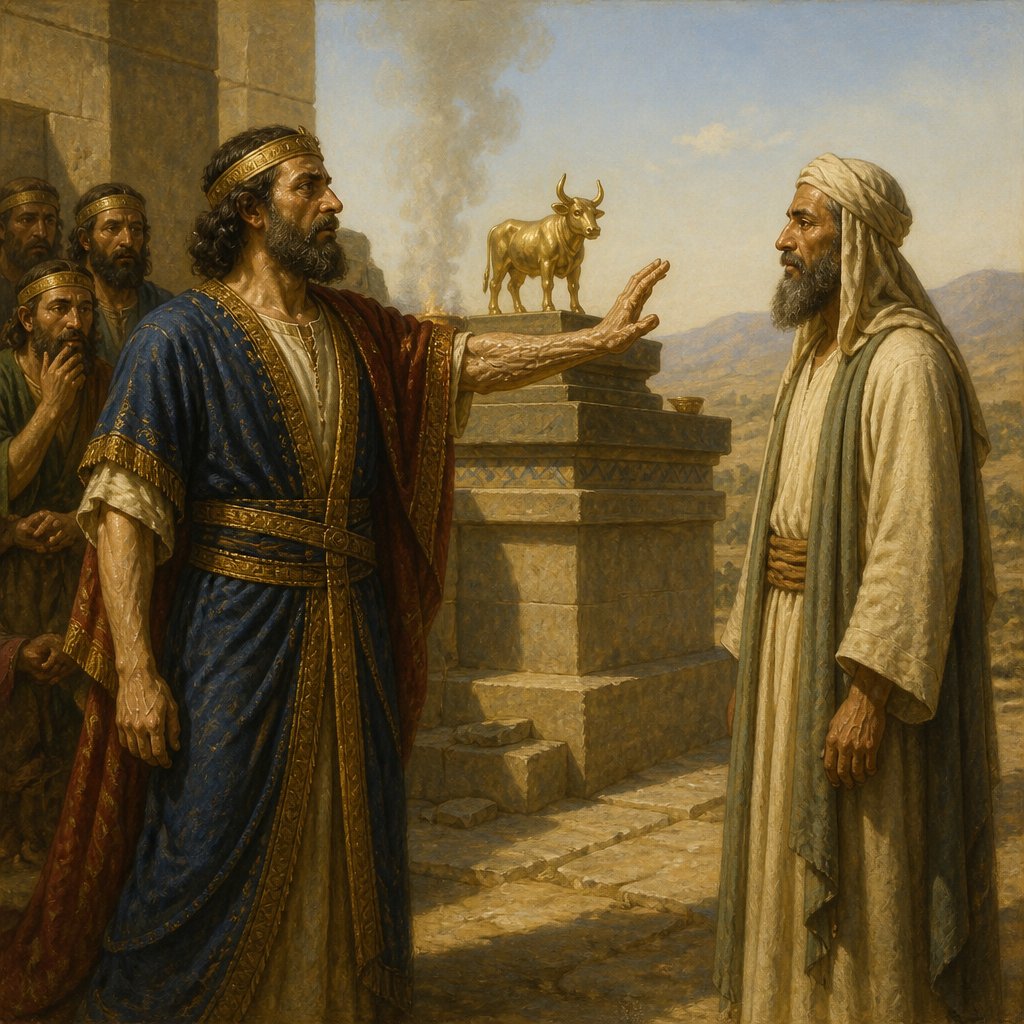
In 1 Kings 13:4 (KJV), we witness a pivotal moment in the life of King Jeroboam: "And it came to pass, when king Jeroboam heard the saying of the man of God, which had cried against the altar in Beth-el, that he put forth his hand from the altar, saying, Lay hold on him. And his hand, which he put forth against him, dried up, so that he could not pull it in again to him." This verse serves not only as a narrative of a king's reaction to a prophetic warning but also as a profound reminder of the consequences of opposing God's will.
Understanding the context of this scene is essential. Jeroboam, who had just established the northern kingdom of Israel, sought to ensure that his reign would not be undermined by the loyal practices of worshiping God in Jerusalem. In an effort to consolidate power, he introduced new altars and golden calves at Bethel and Dan, thereby leading his people into idolatry. Into this setting came a man of God, sent by the Lord, to declare judgment against the idolatrous practices of Jeroboam.
The significance of King Jeroboam's reaction is critical: instead of heeding the warning of God's message, he attempted to arrest the messenger. His immediate instinct was to use force against the man of God. By reaching out his hand, he symbolically elevated his authority above God's command. Unfortunately, this act of defiance rendered him powerless; his hand, a symbol of his strength and authority, became a demonstration of his impotence when confronted by the divine.
This narrative invites us to consider how often we, like Jeroboam, may find ourselves in a position where we hear God’s Word but choose defiance over obedience. In a world rife with distractions and challenges to our faith, it is all too easy to elevate our own reason, preferences, or even fears above God’s guidance. We can, at times unconsciously, place ourselves in the role of Jeroboam, vetoing God’s plans in favor of our comfort or perceived control.
What can we learn from this brutal lesson in consequence? Firstly, we must recognize that disobedience toward God brings about paralysis in our lives. Jeroboam's hand drying up was not just a physical condition; it served as a metaphor for his spiritual state. In our lives, when we resist God's instruction, we can become spiritually withered, too. We might experience a lack of direction, an inability to progress, or a deep sense of emptiness.
Moreover, the story underscores the importance of humility and repentance. After losing the use of his hand, Jeroboam was quick to plead with the man of God to pray for healing. In his desperation, he realized the severity of his actions, and only then did he seek to mend the relationship with God through the same one he attempted to silence. This mirrors the scriptural truth that God is abundant in mercy and that He welcomes back those who repent, as seen in 1 John 1:9, "If we confess our sins, he is faithful and just to forgive us our sins, and to cleanse us from all unrighteousness."
Finally, this account reminds us of God’s sovereignty. No matter how elevated a position one may hold, ultimately, no one escapes God’s authority. Jeroboam’s decree to seize the prophet was futile against God’s power. It demonstrates that attempting to stand against God is not only dangerous but ultimately self-defeating. God’s will shall prevail, whether we are on board or not.
As we meditate on 1 Kings 13:4, let us check our own hearts for areas where we may be resisting God’s guidance. May we choose humility over pride, obedience over rebellion, and prayer over reaction. Let us be reminded that every act of disobedience is an invitation for loss, while every act of submission brings us closer to the heart of God, where we experience true empowerment.
Want to reflect more on 1 Kings 13:4?
Continue your spiritual journey with Bible Chat — an AI-powered tool for exploring God's Word through conversation. Ask questions, discover connections, and deepen your understanding.
Get Our Apps


1 Kings 13:4 Artwork

1 Kings 13:4 - "And it came to pass, when king Jeroboam heard the saying of the man of God, which had cried against the altar in Beth-el, that he put forth his hand from the altar, saying, Lay hold on him. And his hand, which he put forth against him, dried up, so that he could not pull it in again to him."
"And it came to pass, when king Jeroboam heard the saying of the man of God, which had cried against the altar in Beth-el, that he put forth his hand from the altar, saying, Lay hold on him. And his hand, which he put forth against him, dried up, so that he could not pull it in again to him." - 1 Kings 13:4

1 Kings 11:13

1 Kings 11:13

1 Kings 4:13 - "The son of Geber, in Ramoth-gilead; to him pertained the towns of Jair the son of Manasseh, which are in Gilead; to him also pertained the region of Argob, which is in Bashan, threescore great cities with walls and brasen bars:"

1 Kings 6:11-13

1 kings 11:11-13

1 Kings 11:11-13

1 Kings 4:1 - "So king Solomon was king over all Israel."

1 Corinthians 13:4-6

1 Corinthians 13:4-6

1 Corinthians 13:4-6

1 Kings 6:11-13

1 Kings 6:11-13

1 Kings 6:11-13

1 Kings 6:11-13

1 Kings 11:11-13

2 Kings 13:4 - "And Jehoahaz besought the LORD, and the LORD hearkened unto him: for he saw the oppression of Israel, because the king of Syria oppressed them."

1 Corinthians 13:4-6

1 Corinthians 13:4-6

1 Corinthians 13:4-6

1 Corinthians 13:4-6

1 Corinthians 13:4-6

1 Kings 7:13 - "¶ And king Solomon sent and fetched Hiram out of Tyre."

Philippians 4:13

Philippians 4:13

1 Kings 4:4 - "And Benaiah the son of Jehoiada was over the host: and Zadok and Abiathar were the priests:"

1 Kings 1:4 - "And the damsel was very fair, and cherished the king, and ministered to him: but the king knew her not."

1 Kings 4:18 - "Shimei the son of Elah, in Benjamin:"

Daniel 4:13-14