The Rise and Fall of Kingdoms: Lessons from Rehoboam and Shishak
“And it came to pass in the fifth year of king Rehoboam, that Shishak king of Egypt came up against Jerusalem:” — 1 Kings 14:25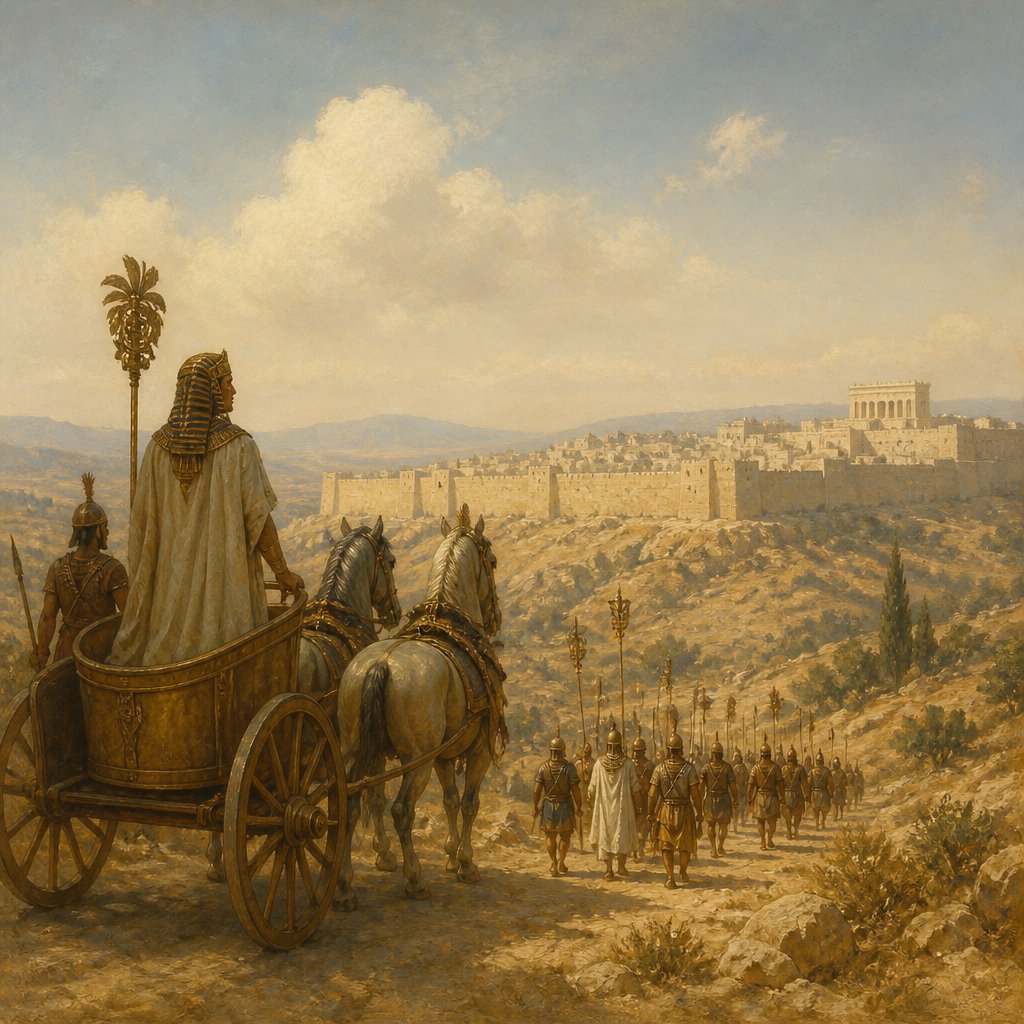
The events that unfold in 1 Kings 14:25 mark a significant moment in the history of Israel. The verse states, "And it came to pass in the fifth year of king Rehoboam, that Shishak king of Egypt came up against Jerusalem." This seemingly straightforward statement carries profound implications regarding the spiritual condition of God's people, the consequences of leadership, and the perennial struggle between faithfulness and folly.
To grasp the weight of this moment, we must first understand the context. Rehoboam, the son of Solomon, had ascended to the throne after Solomon's glorious reign. However, Rehoboam's leadership was marked by poor decisions and a disregard for wise counsel. Instead of listening to the elders who advised him to lighten the heavy burdens placed on the people by his father, he chose to heed the younger advisors who recommended further oppression. This led to a division in the kingdom, with ten tribes rejecting Rehoboam's rule and following Jeroboam, while only Judah and Benjamin remained loyal to him. In this context of disunity, we see the unraveling of a once-unified Israel.
Shishak's march against Jerusalem serves as both a literal and symbolic representation of the consequences of turning away from God. The Egyptians had a long history of enmity with Israel, and their king's attack illustrates the vulnerability of a nation that neglects its spiritual foundations. When a leader forsakes the teachings of the Lord and seeks to govern from human wisdom rather than divine guidance, the consequences can be catastrophic. Shishak's invasion is a sobering reminder that the security of God's people is not contingent upon their military might, but upon their faithfulness to God.
Moreover, Shishak’s assault underscores the idea that God allows adversity to come upon His people as a means of correction and awakening. The acts of disobedience by Rehoboam and the kingdom of Judah did not go unnoticed by God. The lack of repentance, the reliance on worldly counsel, and the eventual moral decline of the people led God to permit an external threat. In this, we are reminded that God often uses our circumstances, even those that seem dire, to draw us back to Himself. Similarly, in our own lives, when we stray from God’s ways, He may allow trials and tribulations to redirect our path toward Him.
As followers of Christ today, the lessons from Rehoboam's reign are still pertinent. The greatest challenge we face is to remain steadfast in our commitment to God's word and ways, even amid trials. Leaders are charged with the sacred responsibility of guiding their people towards righteousness, making decisions founded on prayer, wisdom, and discernment. Just like Rehoboam, today's leaders must navigate complex issues, but they must do so with humility and a heart that seeks God's will above their own.
Additionally, we see the importance of unity and fidelity within the body of Christ. Just as the divided kingdom faced turmoil, a divided Church will struggle in its mission. Our ability to overcome challenges stems from our commitment to unity through the Holy Spirit. When we let disagreements or personal agendas take priority over the mission of spreading the Gospel, we provide opportunities for the enemy to exploit our weaknesses, just as Shishak exploited the division within Israel.
Finally, let us reflect on our reliance upon God in the face of adversity. When challenges arise, it’s essential that we turn to the Lord for strength and guidance rather than attempting to resolve our problems through our own understanding or means. Like Israel, we may find ourselves in situations where we are overwhelmed and in need of divine assistance. In turning to God, we can find the assurance that He remains faithful, even when we falter. Just as He sought to gather His people back in Rehoboam's time, He desires to draw us close to Him today.
Therefore, let us heed the lessons of 1 Kings 14:25, encouraging ourselves and each other to remain steadfast in prayer, dedicated in our faith, and unified in our purpose to honor God in every aspect of our lives.
Get our apps


Artwork for 1 Kings 14:25

1 Kings 14:25 - "¶ And it came to pass in the fifth year of king Rehoboam, that Shishak king of Egypt came up against Jerusalem:"
"¶ And it came to pass in the fifth year of king Rehoboam, that Shishak king of Egypt came up against Jerusalem:" - 1 Kings 14:25

2 Kings 25:14 - "And the pots, and the shovels, and the snuffers, and the spoons, and all the vessels of brass wherewith they ministered, took they away."

1 Kings 14:1-20

1 Kings 14:26
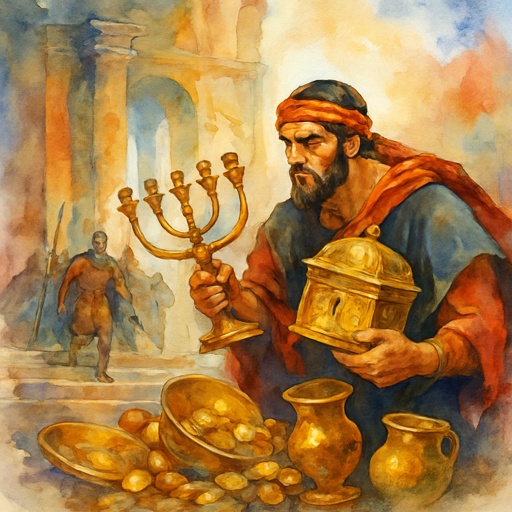
1 Kings 14:26

Jeremiah 25:14 - "For many nations and great kings shall serve themselves of them also: and I will recompense them according to their deeds, and according to the works of their own hands."
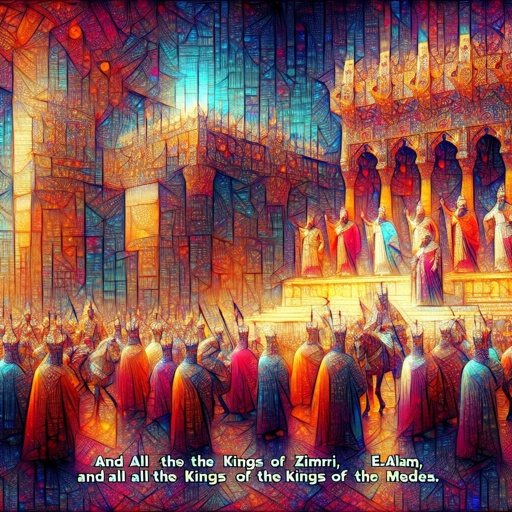
Jeremiah 25:25 - "And all the kings of Zimri, and all the kings of Elam, and all the kings of the Medes,"

1 Kings 12:14

1 Kings 12:14

1 Kings 14:1 - "At that time Abijah the son of Jeroboam fell sick."

1 Samuel 14:25 - "And all they of the land came to a wood; and there was honey upon the ground."

1 Kings 3:25 - "And the king said, Divide the living child in two, and give half to the one, and half to the other."

1 Kings 9:14 - "And Hiram sent to the king sixscore talents of gold."

1 Kings 14:29 - "¶ Now the rest of the acts of Rehoboam, and all that he did, are they not written in the book of the chronicles of the kings of Judah?"

1 Kings 16:14 - "Now the rest of the acts of Elah, and all that he did, are they not written in the book of the chronicles of the kings of Israel?"

1 Chronicles 25:14 - "The seventh to Jesharelah, he, his sons, and his brethren, were twelve:"

1 Kings 6:14 - "So Solomon built the house, and finished it."

1 Kings 4:14 - "Ahinadab the son of Iddo had Mahanaim:"

1 Kings 6:25 - "And the other cherub was ten cubits: both the cherubims were of one measure and one size."

2 Kings 25:1 show King Nebuchadnezzar in war zone

2 Kings 25:1 show King Nebuchadnezzar and the army and the Temple

1 Kings 2:25 - "And king Solomon sent by the hand of Benaiah the son of Jehoiada; and he fell upon him that he died."

1 Kings 21:14 - "Then they sent to Jezebel, saying, Naboth is stoned, and is dead."

1 Kings 14:30 - "And there was war between Rehoboam and Jeroboam all their days."

1 Kings 16:25 - "¶ But Omri wrought evil in the eyes of the LORD, and did worse than all that were before him."

1 Kings 14:19 - "And the rest of the acts of Jeroboam, how he warred, and how he reigned, behold, they are written in the book of the chronicles of the kings of Israel."

"And all the kings of Zimri, and all the kings of Elam, and all the kings of the Medes," - Jeremiah 25:25

1 Kings 12:25 - "¶ Then Jeroboam built Shechem in mount Ephraim, and dwelt therein; and went out from thence, and built Penuel."

1 Kings 1:14 - "Behold, while thou yet talkest there with the king, I also will come in after thee, and confirm thy words."