The Weight of Leadership: Lessons from Baasha
"And also by the hand of the prophet Jehu the son of Hanani came the word of the LORD against Baasha, and against his house, even for all the evil that he did in the sight of the LORD, in provoking him to anger with the work of his hands, in being like the house of Jeroboam; and because he killed him." - 1 Kings 16:7
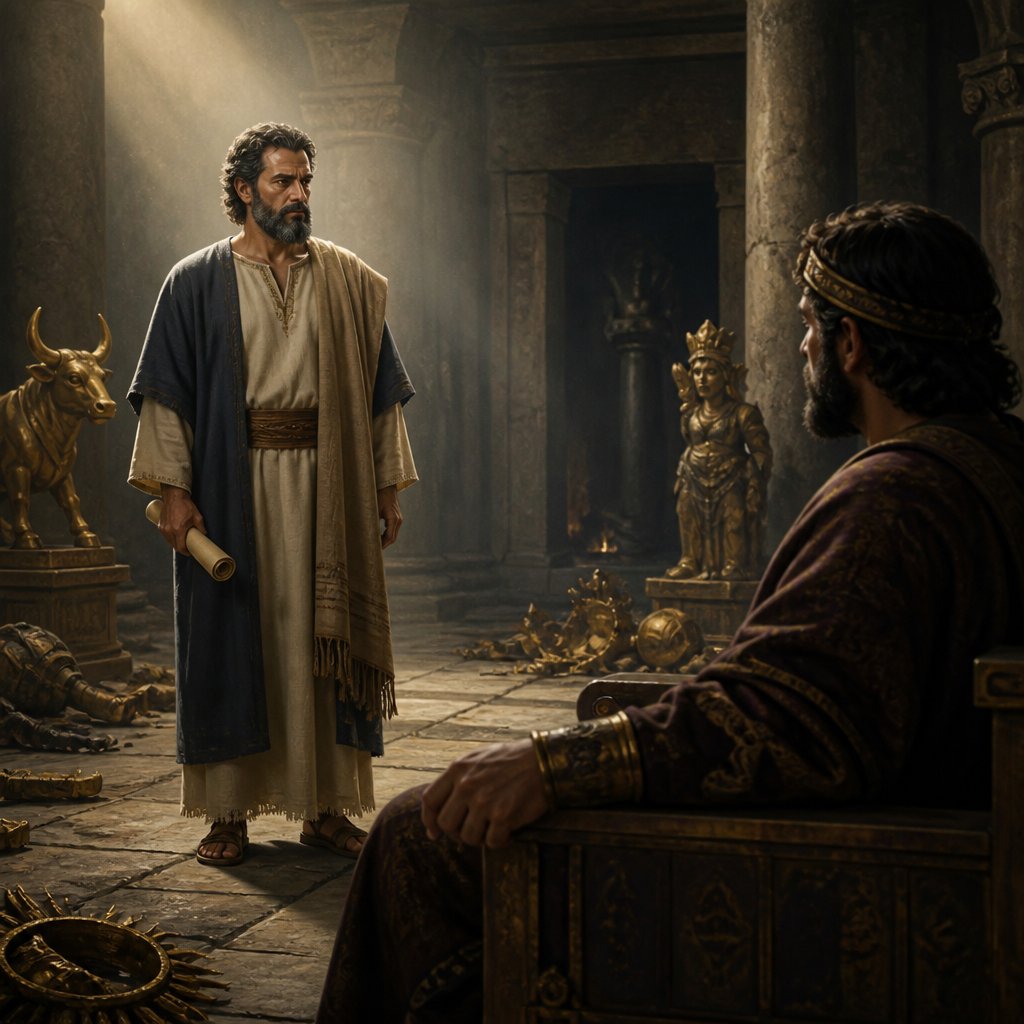
As we delve into the biblical account of 1 Kings 16:7, we are invited to reflect on the profound implications of leadership and the consequences of our actions. The verse states: "And also by the hand of the prophet Jehu the son of Hanani came the word of the LORD against Baasha, and against his house, even for all the evil that he did in the sight of the LORD, in provoking him to anger with the work of his hands, in being like the house of Jeroboam; and because he killed him." (1 Kings 16:7 KJV).
This verse encompasses a moment in Israel's tumultuous history, highlighting the reign of Baasha, a king who, despite his rise to power, acted in ways that were detestable to God. Here, we learn that a ruler's decisions have far-reaching effects, not just on their own household but on the entire nation. Baasha is brought to account not only for his actions but for the spiritual state of Israel as well.
**The Weight of Evil in Leadership**
As leaders—whether in our homes, workplaces, or communities—our decisions hold gravity that reverberates through the lives of others. Baasha is described as doing "evil in the sight of the LORD." These words serve as a grave reminder that our actions are observed by God. They matter. Leadership is not just about making declarations or achieving personal ambitions; it is also about representing the values of God before others. In Baasha's case, his reign is marred by sin, echoing the failures of his predecessor Jeroboam.
The phrase, "provoking him to anger with the work of his hands," brings to light the intrinsic relationship between our actions and God's displeasure. It illustrates that Baasha’s choices weren't merely political; they provoked a divine response, revealing the spiritual stakes involved. It’s a cautionary tale for us as we consider our own leadership roles—how do our choices reflect our faith and values? Are they leading others toward God or causing them to stumble?
**The Influence of Precedents**
Additionally, the comparison to Jeroboam's house indicates a legacy that is very often replicated. Leaders set trends and establish paths that others may follow. Baasha, in choosing the ways of Jeroboam, did not innovate or uplift his people but rather perpetuated a cycle of spiritual decline. This reminds us to critically assess the influences we allow into our lives and the paths we choose to walk. How often do we lean on old ways, familiar ruts that lead away from righteousness, simply because they are comfortable?
We become products of our choices, and the choices of those who influence us. The challenge for us today is to break free from negative patterns and to lead with vision and integrity. Let’s aspire to create legacies that honor God and encourage those around us to seek His heart.
**The Grace of Accountability**
Lastly, God sends a prophet—Jehu—to call out Baasha’s sins. This act demonstrates God’s mercy; He does not leave His people in their sin without warning. Prophets often carry difficult messages, yet they serve a loving God who desires repentance and restoration. Just as Jehu was tasked with delivering the word of the Lord, we, too, are called to speak truth to one another with grace. In our friendships, communities, and even families, we must be willing to address wrongs—not from a place of superiority but out of love and commitment to God’s truth.
In conclusion, 1 Kings 16:7 offers us timeless lessons about the responsibilities of leadership. Let us examine our actions, reconsider past influences, and embrace accountability with humility. As we lead, inspire, and influence, may we strive to do all things with God’s glory as our ultimate goal. For in every decision we make, let us remember: the eyes of the Lord are upon us.
Want to reflect more on 1 Kings 16:7?
Continue your spiritual journey with Bible Chat — an AI-powered tool for exploring God's Word through conversation. Ask questions, discover connections, and deepen your understanding.
Get Our Apps


1 Kings 16:7 Artwork

1 Kings 16:7 - "And also by the hand of the prophet Jehu the son of Hanani came the word of the LORD against Baasha, and against his house, even for all the evil that he did in the sight of the LORD, in provoking him to anger with the work of his hands, in being like the house of Jeroboam; and because he killed him."
"And also by the hand of the prophet Jehu the son of Hanani came the word of the LORD against Baasha, and against his house, even for all the evil that he did in the sight of the LORD, in provoking him to anger with the work of his hands, in being like the house of Jeroboam; and because he killed him." - 1 Kings 16:7

1 Kings 7:16 - "And he made two chapiters of molten brass, to set upon the tops of the pillars: the height of the one chapiter was five cubits, and the height of the other chapiter was five cubits:"

1 Kings 20:16 - "And they went out at noon. But Ben-hadad was drinking himself drunk in the pavilions, he and the kings, the thirty and two kings that helped him."

1 Kings 7:27-38

1 kings 8:7

1 Kings 16:14 - "Now the rest of the acts of Elah, and all that he did, are they not written in the book of the chronicles of the kings of Israel?"

1 Kings 1:16 - "And Bath-sheba bowed, and did obeisance unto the king. And the king said, What wouldest thou?"

1 kings 8:7

1 Kings 8:7

1 Kings 4:16 - "Baanah the son of Hushai was in Asher and in Aloth:"

1 Kings 16:1 - "Then the word of the LORD came to Jehu the son of Hanani against Baasha, saying,"

Isaiah 7:16 - "For before the child shall know to refuse the evil, and choose the good, the land that thou abhorrest shall be forsaken of both her kings."

1 Kings 16:5 - "Now the rest of the acts of Baasha, and what he did, and his might, are they not written in the book of the chronicles of the kings of Israel?"

1 Kings 16:20 - "Now the rest of the acts of Zimri, and his treason that he wrought, are they not written in the book of the chronicles of the kings of Israel?"

1 Timothy 6:15-16 – "God, the blessed and only Ruler, the King of kings and Lord of lords."

1 Timothy 6:15-16 – "God, the blessed and only Ruler, the King of kings and Lord of lords."
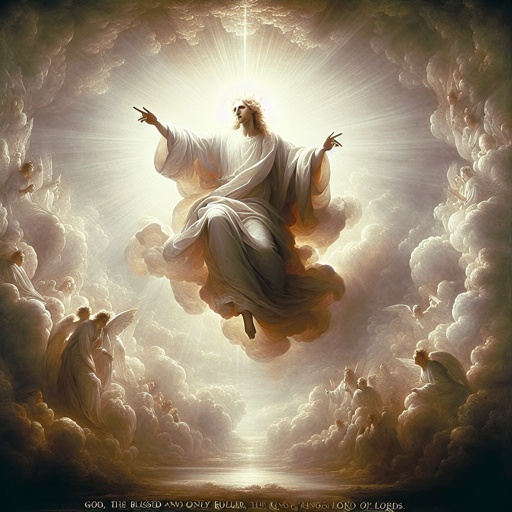
1 Timothy 6:15-16 – "God, the blessed and only Ruler, the King of kings and Lord of lords."

1 Timothy 6:15-16 – "God, the blessed and only Ruler, the King of kings and Lord of lords."

1 Kings 15:16 - "¶ And there was war between Asa and Baasha king of Israel all their days."

1 Timothy 6:15-16 – "God, the blessed and only Ruler, the King of kings and Lord of lords."

1 Kings 7:27-38

1 Kings 3:16 - "¶ Then came there two women, that were harlots, unto the king, and stood before him."

1 Kings 7:43 - "And the ten bases, and ten lavers on the bases;"

1 Kings 16:27 - "Now the rest of the acts of Omri which he did, and his might that he shewed, are they not written in the book of the chronicles of the kings of Israel?"

1 Kings 7:13 - "¶ And king Solomon sent and fetched Hiram out of Tyre."

1 Kings 16:33 - "And Ahab made a grove; and Ahab did more to provoke the LORD God of Israel to anger than all the kings of Israel that were before him."

1 Kings 7:44 - "And one sea, and twelve oxen under the sea;"

2 Kings 7:16 - "And the people went out, and spoiled the tents of the Syrians. So a measure of fine flour was sold for a shekel, and two measures of barley for a shekel, according to the word of the LORD."
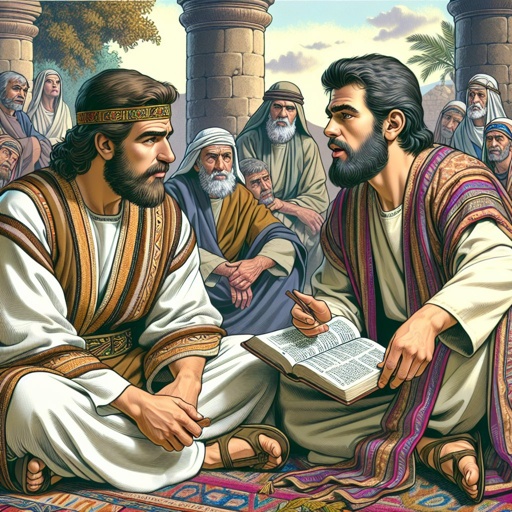
1 Kings 1:7 - "And he conferred with Joab the son of Zeruiah, and with Abiathar the priest: and they following Adonijah helped him."