The Line of Leadership: Lessons from Omri and Tibni
“But the people that followed Omri prevailed against the people that followed Tibni the son of Ginath: so Tibni died, and Omri reigned.” — 1 Kings 16:22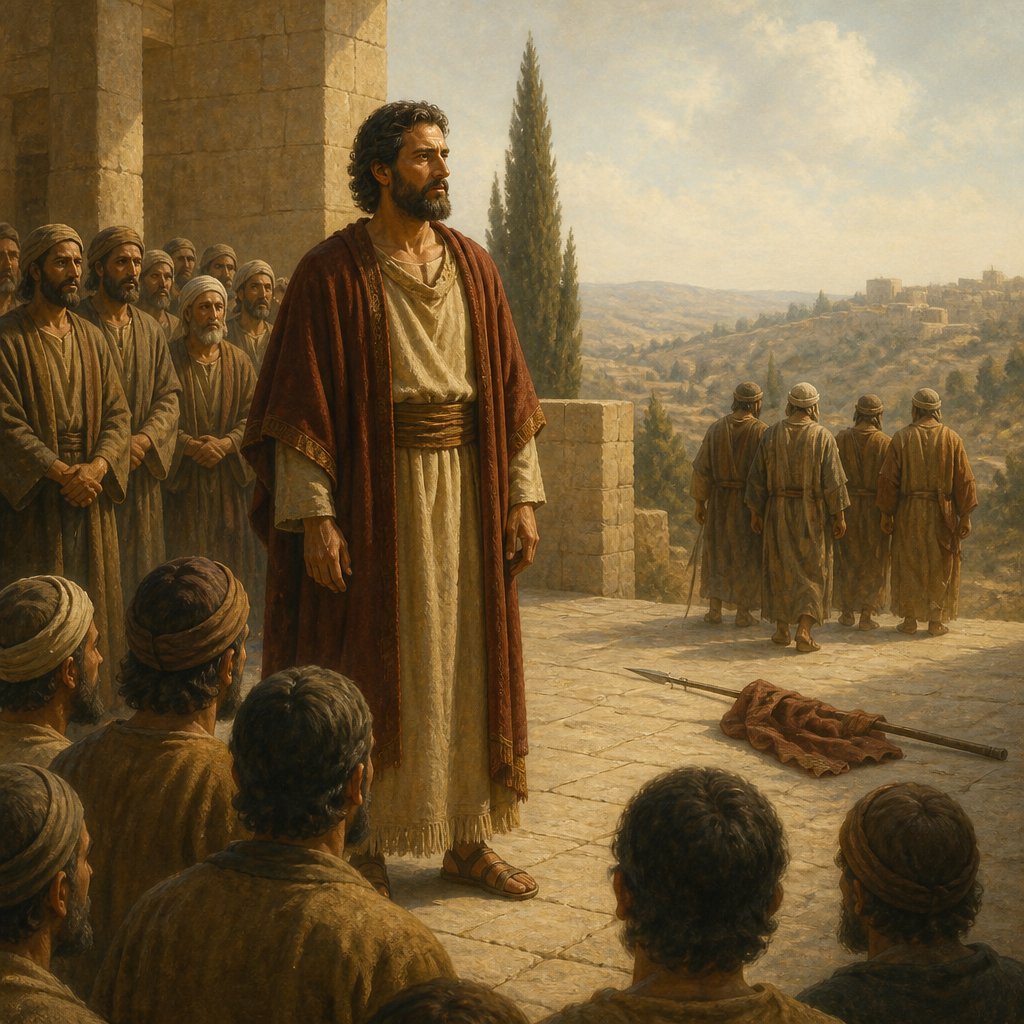
As we journey through the pages of biblical history, we often encounter pivotal moments that serve not only as historical accounts but as profound lessons for our personal and communal lives. One such moment is encapsulated in 1 Kings 16:22, which states, "But the people that followed Omri prevailed against the people that followed Tibni the son of Ginath: so Tibni died, and Omri reigned."
This brief yet powerful verse positions us at a significant crossroads in the narrative of Israel’s history—a time marked by conflict, leadership struggles, and the consequences of allegiance. We observe two figures, Omri and Tibni, vying for power and control over Israel, a nation already fraught with divisions and complexities. As we reflect upon this verse, we embark on a journey to uncover the deeper principles of leadership, loyalty, and the ever-present reality that choices carry weighty consequences.
In understanding the tumultuous atmosphere in which Omri and Tibni operated, we must first recognize the moral and spiritual climate of Israel at this time. The nation was caught in the grip of idol worship and had distanced itself from God’s commandments. In such a backdrop, the leadership is not merely about who reigns supreme but the direction in which that leadership guides the people. Tibni, though he may have had his own following, lacked the divine endorsement that Omri seemingly obtained. His defeat illustrates a critical point: human effort and charisma, while important, must be aligned with divine purposes to endure.
What can we learn from Tibni’s demise? First, it reveals that not all endeavors, even those with good intentions, stand the test of time when they are not fortified by God’s will. Is there a project, a relationship, or a vision we are holding onto that is not rooted in God’s plans for us? Tibni’s death serves as a warning that even the most passionate endeavors can falter if they are not aligned with God’s direction.
On the other hand, Omri’s ascendancy carries its lessons as well. Omri would eventually take the throne, but we must ask ourselves: at what cost? Though he prevailed in the political arena, it is essential to understand the nature of his reign. Omri is often remembered for solidifying Israel’s power and influence, yet his legacy is marred by the same idol worship that plagued his predecessors. The very victory that placed him on the throne was steeped in choices that did not honor sovereignty nor acknowledge the God of Israel. This raises critical questions about our own pursuits: Are we seeking success at the expense of our integrity? Are our victories in alignment with God’s character and purpose?
In life, the competition between good and evil is often played out in leadership dynamics, whether in our personal lives, workplaces, or communities. It reminds us that the effects of our decisions resonate beyond personal ambition; they ripple through the lives we influence. As Omri reigns, we witness the cyclical pattern of leadership that can steer a nation toward blessings or lead it further into chaos. Thus, it challenges us to consider our posture as leaders—whether in formal roles or informal settings. Are we cultivating a following that seeks righteousness?
As stewards of our influence, let us strive to lead with hearts steadfast in the view of God’s kingdom. The concluding sentiment of this verse, “so Tibni died, and Omri reigned,” can be a call to lay down our ambitions before the Lord. In every pursuit, let us seek His approval above all else and recognize that true leadership models humility, integrity, and devotion to divine guidance.
Finally, may this reflective journey through 1 Kings 16:22 redirect our focus from mere victories in life to the more profound question: how do we ensure our leadership aligns with God’s purpose? As we navigate our paths, may we earnestly desire to lead in ways that honor Him, remembering that our legacies are shaped not just by whom we follow, but by where we direct those who choose to follow us.
Get our apps


Artwork for 1 Kings 16:22
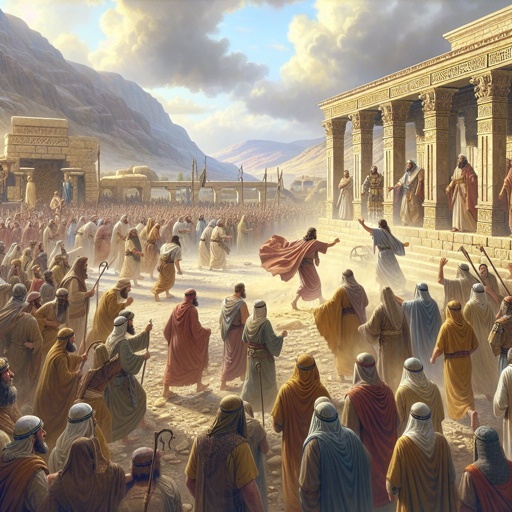
1 Kings 16:22 - "But the people that followed Omri prevailed against the people that followed Tibni the son of Ginath: so Tibni died, and Omri reigned."
"But the people that followed Omri prevailed against the people that followed Tibni the son of Ginath: so Tibni died, and Omri reigned." - 1 Kings 16:22
1 Kings 22:16 - "And the king said unto him, How many times shall I adjure thee that thou tell me nothing but that which is true in the name of the LORD?"

1 Kings 8:22

1 Kings 22:47 - "There was then no king in Edom: a deputy was king."

1 kings 22:19

1 Kings 22:44 - "And Jehoshaphat made peace with the king of Israel."

1 Kings 22:1 - "And they continued three years without war between Syria and Israel."

1 Kings 1:22 - "¶ And, lo, while she yet talked with the king, Nathan the prophet also came in."

1 Kings 22:37 - "¶ So the king died, and was brought to Samaria; and they buried the king in Samaria."

1 Kings 20:16 - "And they went out at noon. But Ben-hadad was drinking himself drunk in the pavilions, he and the kings, the thirty and two kings that helped him."

1 Kings 16:14 - "Now the rest of the acts of Elah, and all that he did, are they not written in the book of the chronicles of the kings of Israel?"

2 Kings 22:16 - "Thus saith the LORD, Behold, I will bring evil upon this place, and upon the inhabitants thereof, even all the words of the book which the king of Judah hath read:"

1 Kings 1:16 - "And Bath-sheba bowed, and did obeisance unto the king. And the king said, What wouldest thou?"

1 Kings 4:16 - "Baanah the son of Hushai was in Asher and in Aloth:"

1 Kings 16:1 - "Then the word of the LORD came to Jehu the son of Hanani against Baasha, saying,"

1 Kings 22:29 - "So the king of Israel and Jehoshaphat the king of Judah went up to Ramoth-gilead."

1 Kings 22:45 - "Now the rest of the acts of Jehoshaphat, and his might that he shewed, and how he warred, are they not written in the book of the chronicles of the kings of Judah?"

1 Kings 16:20 - "Now the rest of the acts of Zimri, and his treason that he wrought, are they not written in the book of the chronicles of the kings of Israel?"

1 Kings 16:5 - "Now the rest of the acts of Baasha, and what he did, and his might, are they not written in the book of the chronicles of the kings of Israel?"

1 Kings 12:22 - "But the word of God came unto Shemaiah the man of God, saying,"

1 Timothy 6:15-16 – "God, the blessed and only Ruler, the King of kings and Lord of lords."

1 Timothy 6:15-16 – "God, the blessed and only Ruler, the King of kings and Lord of lords."
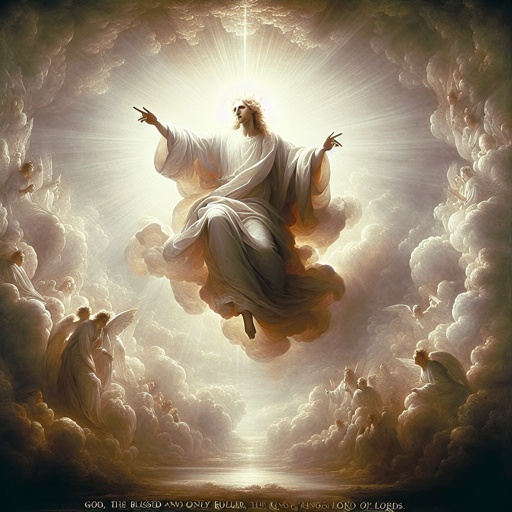
1 Timothy 6:15-16 – "God, the blessed and only Ruler, the King of kings and Lord of lords."

"There was then no king in Edom: a deputy was king." - 1 Kings 22:47

1 Kings 22:9 - "Then the king of Israel called an officer, and said, Hasten hither Micaiah the son of Imlah."

1 Kings 22:2 - "And it came to pass in the third year, that Jehoshaphat the king of Judah came down to the king of Israel."

1 Timothy 6:15-16 – "God, the blessed and only Ruler, the King of kings and Lord of lords."

1 Kings 15:16 - "¶ And there was war between Asa and Baasha king of Israel all their days."

1 Chronicles 16:22 - "Saying, Touch not mine anointed, and do my prophets no harm."