Whispers of God: Encountering the Sacred in Our Silence
“And it was so, when Elijah heard it, that he wrapped his face in his mantle, and went out, and stood in the entering in of the cave. And, behold, there came a voice unto him, and said, What doest thou here, Elijah?” — 1 Kings 19:13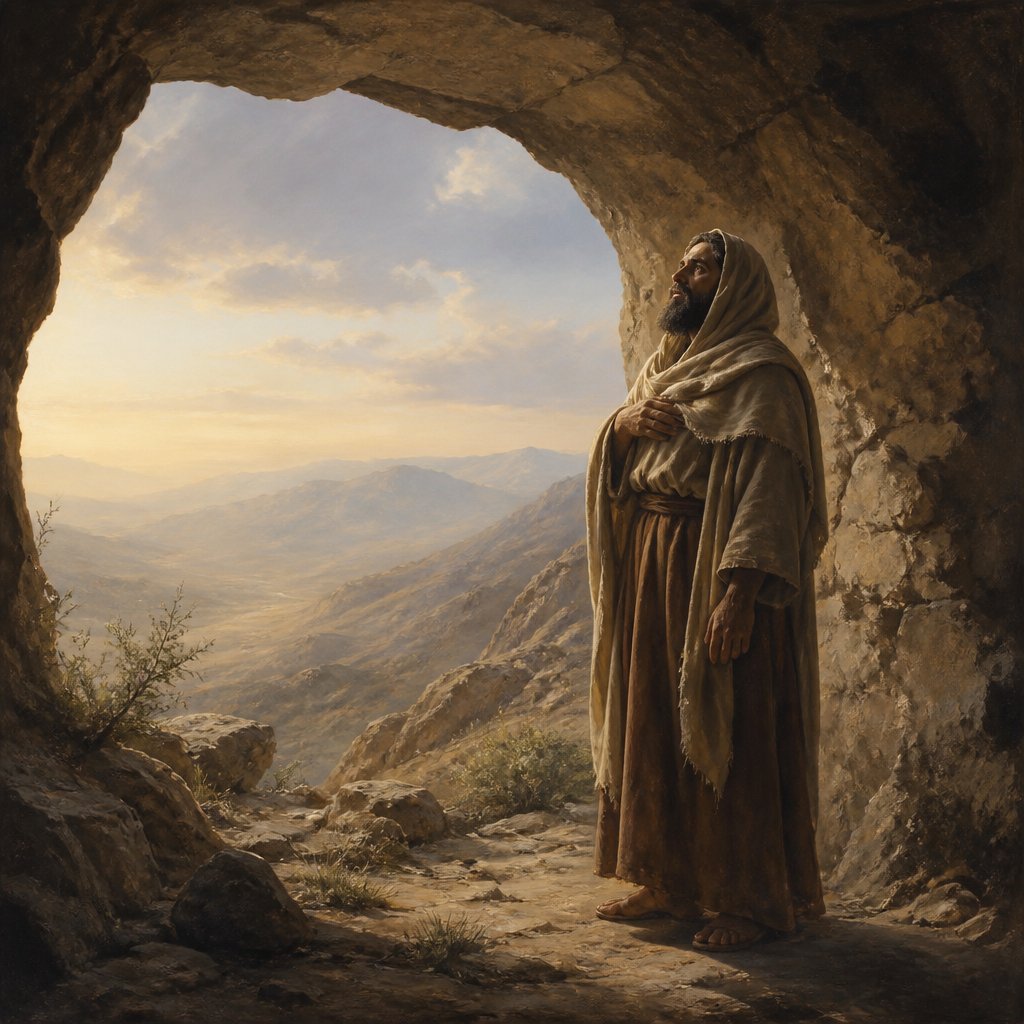
In the bustling chaos of life, we often seek God in the dramatic, the loud, and the overwhelming. Yet, as we reflect on 1 Kings 19:13 – "And it was so, when Elijah heard it, that he wrapped his face in his mantle, and went out, and stood in the entering in of the cave. And, behold, there came a voice unto him, and said, What doest thou here, Elijah?" – we are reminded of the profound and gentle ways in which God communicates with us.
The context of this verse is essential. Elijah, the prophet who had bravely confronted the prophets of Baal, found himself fleeing from Queen Jezebel, who had threatened his life. In his despair, he traveled into the wilderness, feeling utterly alone and defeated. He retreated to a cave, expecting perhaps to hear God in the mighty wind, the earthquakes, or the fire. Instead, God's voice came as a still, small whisper. This narrative invites us to consider how we listen for God during our own turbulent times.
In our modern world, we are often submerged in a cacophony of noise—ranging from the clamor of city life to the incessant buzzing of notifications on our phones. It's easy to believe that God can only be found in the extraordinary: the grand miracles, the powerful sermons, or the striking revelations. However, Elijah’s experience in the cave unveils a different truth. God’s most significant messages may come wrapped in subtlety, waiting patiently for us to quiet our hearts and minds so we can receive them.
When Elijah hears the gentle whisper, he wraps his face in his mantle. This act is deeply symbolic. In biblical tradition, one's mantle represents authority and calling. By wrapping his face, Elijah was preparing himself to approach the Holy presence of God. It reflects a posture of humility and reverence, reminding us that when we approach God, it is essential to do so with respect and acknowledgment of His greatness.
The question that follows, "What doest thou here, Elijah?" is striking in its simplicity yet profound in its implications. God is not merely asking for Elijah's geographical location; rather, He is probing deeper into Elijah's heart and purpose. This question can reverberate in our own lives as we encounter moments of discouragement or confusion. It compels us to examine our own journey: why are we in the places we find ourselves? What fears or anxieties drive us away from our calling? In our times of retreat and distress, God draws near and asks the hard questions.
Elijah’s response reveals his vulnerability. He expresses his feelings of isolation and despair, claiming, "I, even I only, am left; and they seek my life, to take it away." God listens actively to his lament and does not dismiss his emotions. This interaction teaches us that our feelings and struggles are valid before God. We need not put on a façade of strength; instead, we can approach Him sincerely, knowing that He understands our trials.
Furthermore, God’s response to Elijah is a mixture of affirmation and redirection. God sends him back to fulfill his purpose, indicating that chapter isn't quite closed yet. In our own lives, we may feel like giving up due to the weight of our circumstances, but God is often urging us onward, providing new assignments and paths to follow.
As we contemplate 1 Kings 19:13, let us seek the stillness necessary to hear God’s whisper in our lives. Are we willing to wrap our own faces in humility, approach the cave of our hearts, and listen for His voice? In times of struggle, may we find the strength to stand in the entrance of our caves and recognize God's longing to connect with us. He meets us in our silence, not to condemn, but to assure us of our purpose and presence in His story. In the gentle whispers of our daily lives, may we find the clarity and encouragement to answer His inviting question, "What doest thou here?" and step into the destiny He has prepared for us.
Get our apps


Artwork for 1 Kings 19:13

When Elijah heard it, he pulled his cloak over his face and went out and stood at the mouth of the cave. 1 Kings 19:13

1 Kings 19:13 - "And it was so, when Elijah heard it, that he wrapped his face in his mantle, and went out, and stood in the entering in of the cave. And, behold, there came a voice unto him, and said, What doest thou here, Elijah?"
"And it was so, when Elijah heard it, that he wrapped his face in his mantle, and went out, and stood in the entering in of the cave. And, behold, there came a voice unto him, and said, What doest thou here, Elijah?" - 1 Kings 19:13

1 Kings 13:19 - "So he went back with him, and did eat bread in his house, and drank water."

2 Kings 19:13 - "Where is the king of Hamath, and the king of Arpad, and the king of the city of Sepharvaim, of Hena, and Ivah?"

1 Kings 19:1-18

2 Kings 19:2

2 Kings 19:2

1 kings 22:19

"So he went back with him, and did eat bread in his house, and drank water." - 1 Kings 13:19

2 Kings 19:2

1 Kings 11:13

1 Kings 11:13

1 Kings 6:11-13

1 kings 11:11-13

1 Kings 11:11-13

1 Kings 3:19 - "And this woman's child died in the night; because she overlaid it."

1 Kings 14:19 - "And the rest of the acts of Jeroboam, how he warred, and how he reigned, behold, they are written in the book of the chronicles of the kings of Israel."

1 Kings 6:11-13

1 Kings 6:11-13

1 Kings 6:11-13

1 Kings 6:11-13

1 Kings 11:11-13

1 Kings 7:13 - "¶ And king Solomon sent and fetched Hiram out of Tyre."

1 Kings 12:19 - "So Israel rebelled against the house of David unto this day."

1 Kings 6:19 - "And the oracle he prepared in the house within, to set there the ark of the covenant of the LORD."

"Where is the king of Hamath, and the king of Arpad, and the king of the city of Sepharvaim, of Hena, and Ivah?" - 2 Kings 19:13

1 Kings 13:13 - "And he said unto his sons, Saddle me the ass. So they saddled him the ass: and he rode thereon,"

1 Kings 19:12 - "And after the earthquake a fire; but the LORD was not in the fire: and after the fire a still small voice."

1 Kings 19:1 - "And Ahab told Jezebel all that Elijah had done, and withal how he had slain all the prophets with the sword."