The Hidden Servant: Finding Value in the Overlooked
"And he hath slain oxen and fat cattle and sheep in abundance, and hath called all the sons of the king, and Abiathar the priest, and Joab the captain of the host: but Solomon thy servant hath he not called." - 1 Kings 1:19
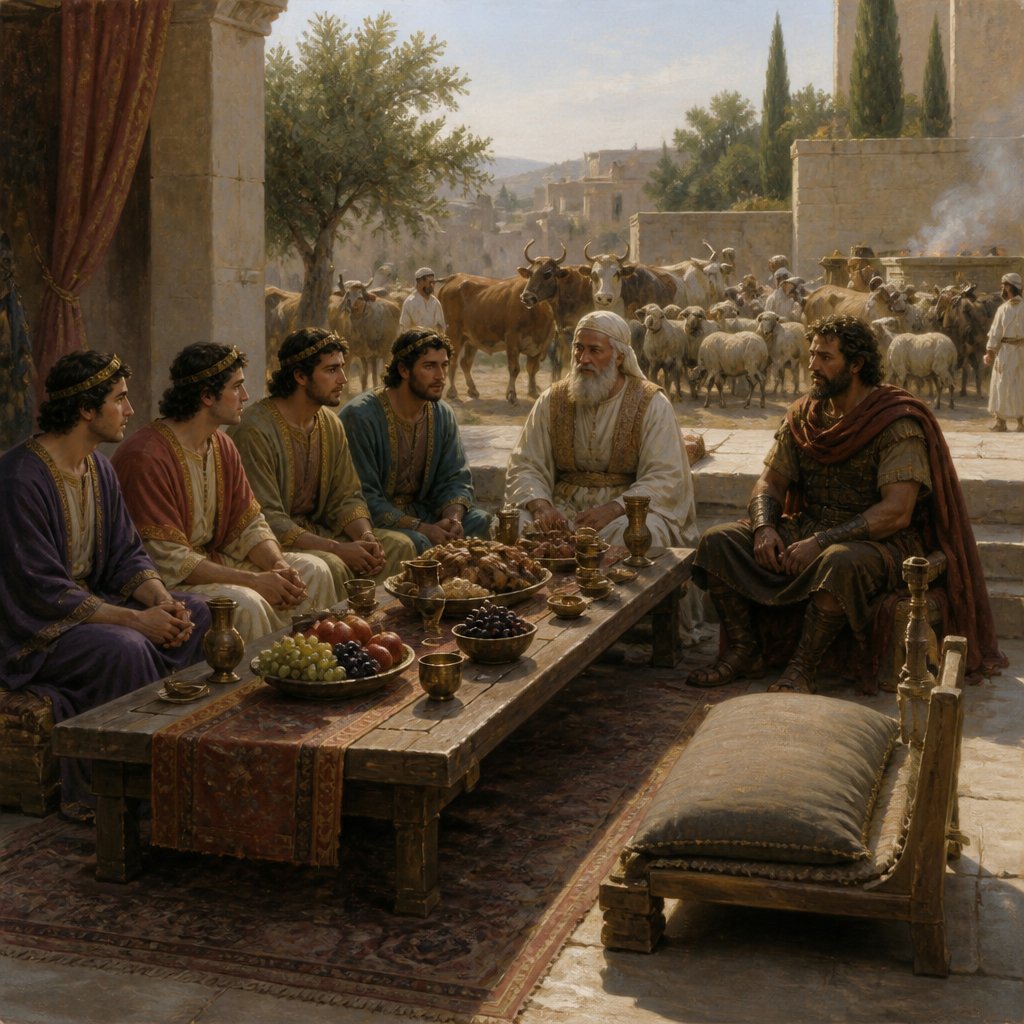
In sitting down to reflect on 1 Kings 1:19, we dive into a critical moment in the narrative of Israel’s monarchy—a moment swirling with intrigue, competition, and significance. The scripture reads: "And he hath slain oxen and fat cattle and sheep in abundance, and hath called all the sons of the king, and Abiathar the priest, and Joab the captain of the host: but Solomon thy servant hath he not called."
At first glance, the pomp and splendor of a royal feast immediately draw our attention. King David's sons, invited to partake in the feast, are gathered to support Adonijah in his claim to kingship. Yet, there is a conspicuous absence that signals a deeper narrative at play: the exclusion of Solomon, the rightful heir. This exclusion serves not just as a plot point but as a profound spiritual lesson on the nature of recognition, service, and the divine choice.
To unpack this verse, we must recognize the societal norms that govern the kingdom’s dynamics. Adonijah's actions showcase the typical behavior of those who seek power, often through the manipulation of relationships and the orchestration of public opinion. In ancient Israel, feasting and the sacrifice of cattle symbolized both celebration and a bid for legitimacy. By gathering influential figures like Abiathar and Joab, Adonijah aimed to solidify his claim not just through physical means but through strategic alliances.
However, amidst this atmosphere of rivalry and ambition, Solomon—the humble servant—stands in stark contrast. His absence from the festive gathering speaks volumes about his character and the nature of divine favor. Unlike his brother, who pursues the throne with fervent zeal, Solomon embodies a more subdued posture, one consistent with the servant heart that often goes unnoticed in the fray of worldly pursuits. This contrast prompts us to ask: What does it mean to be a servant, especially when overlooked by society?
We live in a world that oftentimes glorifies charisma, outward accomplishments, and visibility. In workplaces, churches, and communities, the temptation is to pursue recognition and status rather than to serve quietly and faithfully. Yet, the story of Solomon serves as a reminder that true greatness in the eyes of God often lies in faithful service, even when such service is unseen.
As Solomon’s narrative unfolds, we learn that God had chosen him—not because of his outward display, but due to his heart and his alignment with God’s will. This change of perspective challenges us to believe that even when we feel overlooked or sidelined, God has a purpose for our lives that may not align with worldly measures of success.
In our moments of feeling less than valued or seen—when we toil quietly and are overlooked—we should remember Solomon. The Lord sees our labor; He knows our hearts. As 1 Peter 5:6 states, "Humble yourselves therefore under the mighty hand of God, that he may exalt you in due time." The assurance is that those who serve faithfully, particularly in obscurity, may indeed find themselves raised up when the time is right.
Let us also consider the implications of our actions when it comes to inclusivity. Adonijah’s approach, built on exclusion, contrasts sharply with the call to unity that the kingdom of God embodies. Are we inclined to elevate certain voices while diminishing others? Do we prioritize visibility over value? In God’s kingdom, every person matters, and each servant plays a role in His divine narrative.
As we meditate on the actions surrounding Solomon’s exclusion from the feast, let us cultivate a spirit of humility and service. May we seek to honor those who are dedicated in their tasks, even when they remain in shadows and behind the scenes. Whether we are like Solomon, quietly doing God’s work, or we find ourselves in a position of calling others to service, let our hearts remain aligned with God’s purpose–one that champions the overlooked and uplifts the servants.
In closing, let us pray for a heart akin to Solomon’s—that we may embrace our divine appointments, serve without expectation of acknowledgment, and trust the Father to use our lives for His glory according to His perfect timing.
Want to reflect more on 1 Kings 1:19?
Continue your spiritual journey with Bible Chat — an AI-powered tool for exploring God's Word through conversation. Ask questions, discover connections, and deepen your understanding.
Get Our Apps


1 Kings 1:19 Artwork

1 Kings 1:19 - "And he hath slain oxen and fat cattle and sheep in abundance, and hath called all the sons of the king, and Abiathar the priest, and Joab the captain of the host: but Solomon thy servant hath he not called."
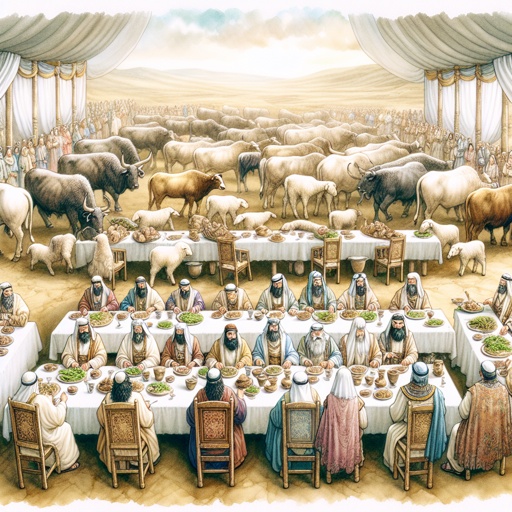
And he has slaughtered oxen and fat cattle and sheep in abundance, and has invited all the sons of the king, and Abiathar the priest, and Joab the commander of the army, but he has not invited your servant Solomon. 1 Kings 1:19
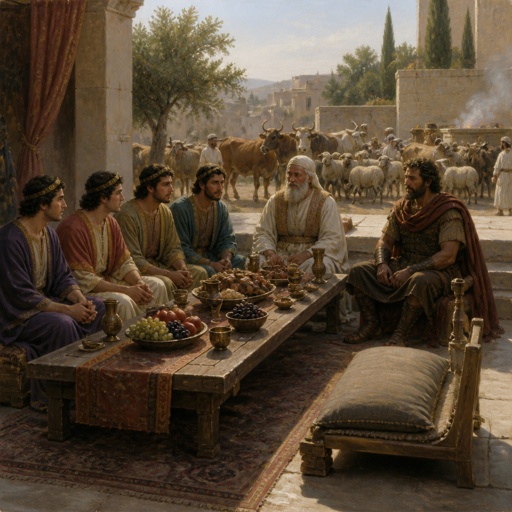
"And he hath slain oxen and fat cattle and sheep in abundance, and hath called all the sons of the king, and Abiathar the priest, and Joab the captain of the host: but Solomon thy servant hath he not called." - 1 Kings 1:19

1 Kings 19:1-18

2 Kings 19:2

2 Kings 19:2

2 Kings 19:2

1 kings 22:19

1 Kings 3:19 - "And this woman's child died in the night; because she overlaid it."

1 Kings 1:9 - "And Adonijah slew sheep and oxen and fat cattle by the stone of Zoheleth, which is by En-rogel, and called all his brethren the king's sons, and all the men of Judah the king's servants:"

1 Kings 19:1 - "And Ahab told Jezebel all that Elijah had done, and withal how he had slain all the prophets with the sword."

1 Kings 12:19 - "So Israel rebelled against the house of David unto this day."

1 Kings 14:19 - "And the rest of the acts of Jeroboam, how he warred, and how he reigned, behold, they are written in the book of the chronicles of the kings of Israel."

1 Kings 6:19 - "And the oracle he prepared in the house within, to set there the ark of the covenant of the LORD."
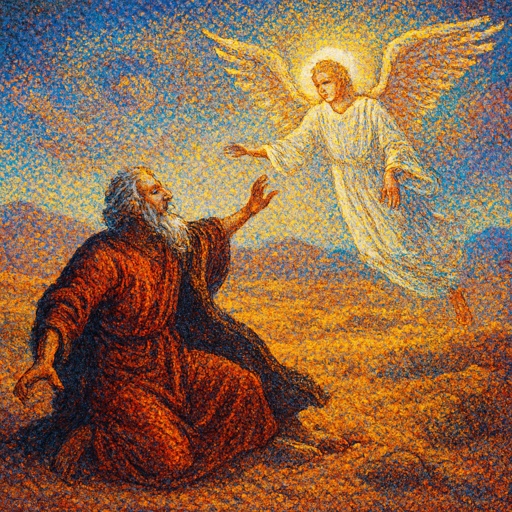
1 Kings 19: Elijah flew desperately in the dessert. THere, he has a vision of the angels of GOD.

1 Kings 19:12 - "And after the earthquake a fire; but the LORD was not in the fire: and after the fire a still small voice."

1 Kings 7:19 - "And the chapiters that were upon the top of the pillars were of lily work in the porch, four cubits."

Soothing the Soul: The Gospel of Gentle Care 1 Kings 19:3-8; 1 Samuel 16:14-23

1 Kings 13:19 - "So he went back with him, and did eat bread in his house, and drank water."

1 Kings 20:19 - "So these young men of the princes of the provinces came out of the city, and the army which followed them."

Soothing the Soul: The Gospel of Gentle Care 1 Kings 19:3-8; 1 Samuel 16:14-23

2 Kings 19:1 - "And it came to pass, when king Hezekiah heard it, that he rent his clothes, and covered himself with sackcloth, and went into the house of the LORD."

1 King 19:8
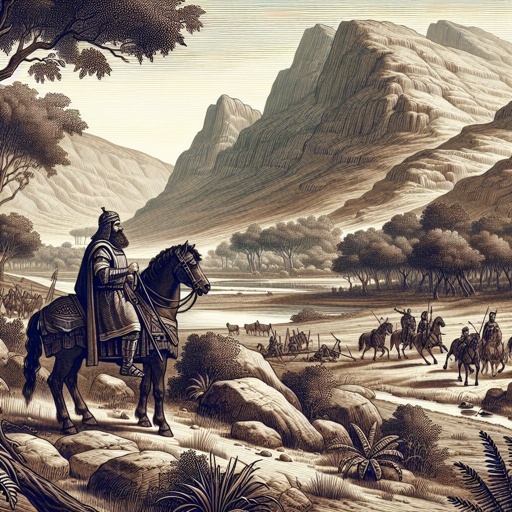
1 Kings 4:19 - "Geber the son of Uri was in the country of Gilead, in the country of Sihon king of the Amorites, and of Og king of Bashan; and he was the only officer which was in the land."

1 Kings 19:5 - "And as he lay and slept under a juniper tree, behold, then an angel touched him, and said unto him, Arise and eat."

1 Kings 19:7 - "And the angel of the LORD came again the second time, and touched him, and said, Arise and eat; because the journey is too great for thee."

1 Kings 19:11-12 – "The Lord said, 'Go out and stand on the mountain in the presence of the Lord, for the Lord is about to pass by.'"

1 Chronicles 19:9 - "And the children of Ammon came out, and put the battle in array before the gate of the city: and the kings that were come were by themselves in the field."

1 Kings 19:11-12 – "The Lord said, 'Go out and stand on the mountain in the presence of the Lord, for the Lord is about to pass by.'"

1 Kings 19:8 - "And he arose, and did eat and drink, and went in the strength of that meat forty days and forty nights unto Horeb the mount of God."