Catching Hold of Grace: Lessons from Joab's Flight to the Altar
“Then tidings came to Joab: for Joab had turned after Adonijah, though he turned not after Absalom. And Joab fled unto the tabernacle of the LORD, and caught hold on the horns of the altar.” — 1 Kings 2:28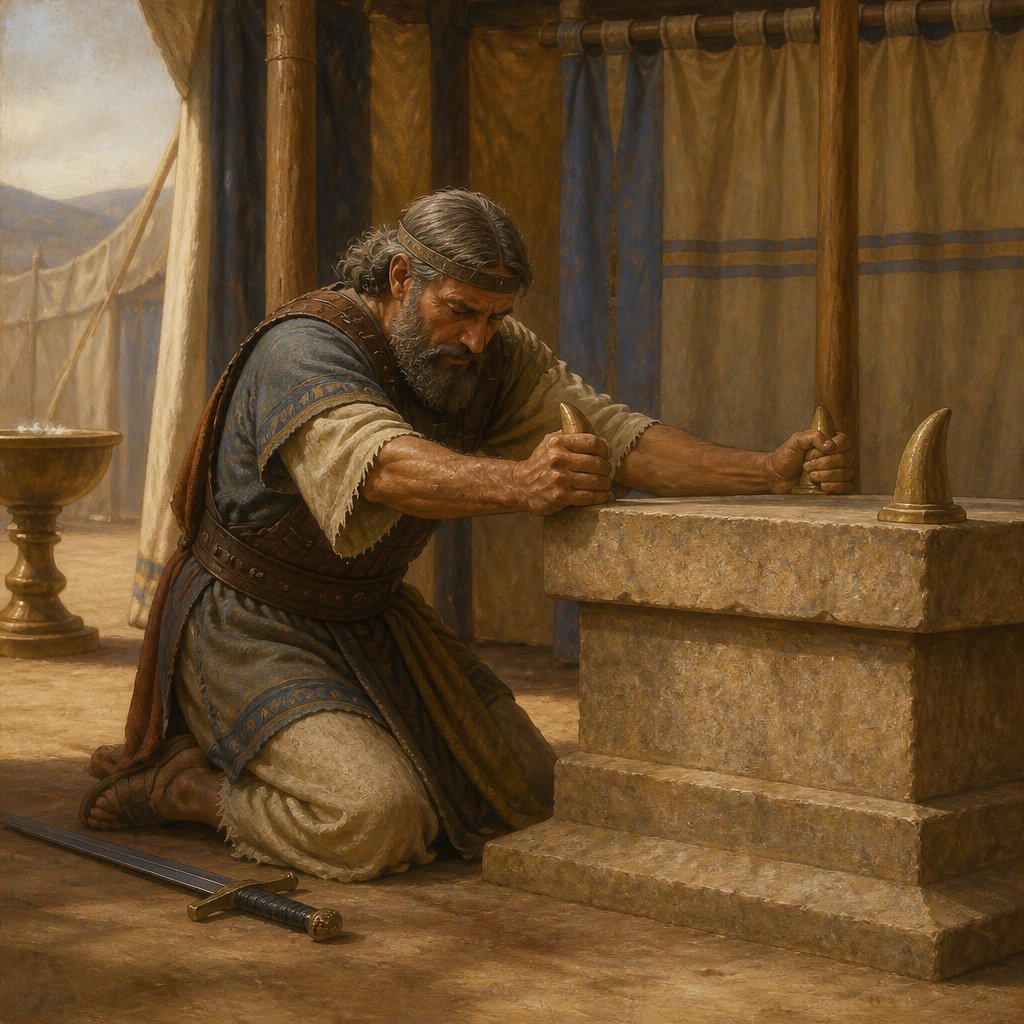
In 1 Kings 2:28, we find a dramatic scene that narrates not only Joab's desperate circumstances but also unveils deep spiritual truths. The verse reads: "Then tidings came to Joab: for Joab had turned after Adonijah, though he turned not after Absalom. And Joab fled unto the tabernacle of the LORD, and caught hold on the horns of the altar." This striking moment evokes contemplation on loyalty, the weight of choices, and the pursuit of grace.
Joab was a seasoned military captain, known for his fierce loyalty to David. Yet, his life was fraught with complexities, as he had chosen to align with Adonijah—King David's son who aspired to the throne—rather than stand behind the anointed successor, Solomon. This decision was rooted in political turmoil, familial strife, and perhaps a desire for power. The text delineates a pivotal contrast in Joab’s life: while he had once supported Absalom in rebellion against David, his loyalty had not wavered in David's time of need during the latter's most distressing moments. However, in siding with Adonijah, Joab not only abandoned his pledge to the king but also jeopardized his standing in the new kingdom.
Despite his past, Joab's response to his predicament reveals profound layers of human emotion and spiritual reality. Upon hearing the news of his impending downfall, he fled to the tabernacle and grasped the horns of the altar. This gesture was charged with significance, as the horns of the altar symbolized a place of sanctuary and mercy. By doing so, Joab sought not only refuge but also a return to grace. His grip upon the altar embodies the desperation of one seeking forgiveness amidst overwhelming guilt and fear. It begs us to ponder our own lives—how often do we find ourselves in situations where our choices have led us astray? Do we recognize the need for refuge in the arms of grace through repentance and seeking refuge in God?
This act of clinging to the altar evokes a raw authenticity in Joab's character. It underscores the struggle faced by many of us who grapple with the consequences of our decisions. The altar was a place designated for sacrifice, repentance, and restoration; Joab’s flight to this sacred space reminds us that no matter the depth of our failures or the weight of our sins, we can always return to God.
In the backdrop of Joab's story lies an invitation for us to reflect on our loyalty and allegiance—who or what do we serve in our own lives? The temptation to align with power, influence, or even rebellion against God's will can manifest in subtle ways, challenging our commitment to faith. As we examine our own tendencies to follow cultural norms or personal ambitions, we might also need to ask ourselves: where do we place our trust, and how does it affect our relationship with God?
In our modern context, fleeing to the altar may not involve a physical place, but it requires a heartfelt return to God through prayer, worship, and the confession of our sins. It is a reminder that grace is always available, beckoning us to rise despite our failures. Let us, like Joab, acknowledge our transgressions and choose to cling to the unchanging grace of the Holy One.
When we find ourselves in distress—trapped by our choices or tormented by guilt—we are called not to hide but to run into the presence of God. For He is not merely the judge of our actions but the gracious Redeemer who invites us, even in our darkest hours, to make a journey back to Him. May we always find the courage to catch hold of the horns of the altar, knowing that divine mercy awaits us there.
Get our apps


Artwork for 1 Kings 2:28

1 Kings 2:28 - "¶ Then tidings came to Joab: for Joab had turned after Adonijah, though he turned not after Absalom. And Joab fled unto the tabernacle of the LORD, and caught hold on the horns of the altar."
"¶ Then tidings came to Joab: for Joab had turned after Adonijah, though he turned not after Absalom. And Joab fled unto the tabernacle of the LORD, and caught hold on the horns of the altar." - 1 Kings 2:28

2 Kings 23:28 - "Now the rest of the acts of Josiah, and all that he did, are they not written in the book of the chronicles of the kings of Judah?"

1 Kings 6:28 - "And he overlaid the cherubims with gold."

2 Chronicles 28:2 - "For he walked in the ways of the kings of Israel, and made also molten images for Baalim."

2 Kings 10:28 - "Thus Jehu destroyed Baal out of Israel."

2 Kings 25:28 - "And he spake kindly to him, and set his throne above the throne of the kings that were with him in Babylon;"

1 Kings 21:28 - "And the word of the LORD came to Elijah the Tishbite, saying,"

2 Chronicles 28:16 - "¶ At that time did king Ahaz send unto the kings of Assyria to help him."

1 Kings 1:28 - "¶ Then king David answered and said, Call me Bath-sheba. And she came into the king's presence, and stood before the king."

1 Kings 7:28 - "And the work of the bases was on this manner: they had borders, and the borders were between the ledges:"

"And he overlaid the cherubims with gold." - 1 Kings 6:28
1 Kings 2:8 - "And, behold, thou hast with thee Shimei the son of Gera, a Benjamite of Bahurim, which cursed me with a grievous curse in the day when I went to Mahanaim: but he came down to meet me at Jordan, and I sware to him by the LORD, saying, I will not put thee to death with the sword."

2 Kings 18:28 - "Then Rabshakeh stood and cried with a loud voice in the Jews' language, and spake, saying, Hear the word of the great king, the king of Assyria:"

1 Kings 15:28 - "Even in the third year of Asa king of Judah did Baasha slay him, and reigned in his stead."

1 Kings 9:28 - "And they came to Ophir, and fetched from thence gold, four hundred and twenty talents, and brought it to king Solomon."

2 Kings 8:28 - "¶ And he went with Joram the son of Ahab to the war against Hazael king of Syria in Ramoth-gilead; and the Syrians wounded Joram."

1 Kings 10:28 - "¶ And Solomon had horses brought out of Egypt, and linen yarn: the king's merchants received the linen yarn at a price."

2 Kings 4:28 - "Then she said, Did I desire a son of my lord? did I not say, Do not deceive me?"

2 Kings 9:28 - "And his servants carried him in a chariot to Jerusalem, and buried him in his sepulchre with his fathers in the city of David."

1 Kings 14:28 - "And it was so, when the king went into the house of the LORD, that the guard bare them, and brought them back into the guard chamber."

"Thus Jehu destroyed Baal out of Israel." - 2 Kings 10:28

2 Chronicles 28:26 - "¶ Now the rest of his acts and of all his ways, first and last, behold, they are written in the book of the kings of Judah and Israel."

1 Kings 16:28 - "So Omri slept with his fathers, and was buried in Samaria: and Ahab his son reigned in his stead."

1 Kings 3:28 - "And all Israel heard of the judgment which the king had judged; and they feared the king: for they saw that the wisdom of God was in him, to do judgment."

2 Kings 14:28 - "¶ Now the rest of the acts of Jeroboam, and all that he did, and his might, how he warred, and how he recovered Damascus, and Hamath, which belonged to Judah, for Israel, are they not written in the book of the chronicles of the kings of Israel?"

"And the word of the LORD came to Elijah the Tishbite, saying," - 1 Kings 21:28

2 Kings 19:2

2 Kings 19:2

2 Kings 15:28 - "And he did that which was evil in the sight of the LORD: he departed not from the sins of Jeroboam the son of Nebat, who made Israel to sin."