Crafted by Divine Wisdom: Lessons from 1 Kings 7:14
“He was a widow’s son of the tribe of Naphtali, and his father was a man of Tyre, a worker in brass: and he was filled with wisdom, and understanding, and cunning to work all works in brass. And he came to king Solomon, and wrought all his work.” — 1 Kings 7:14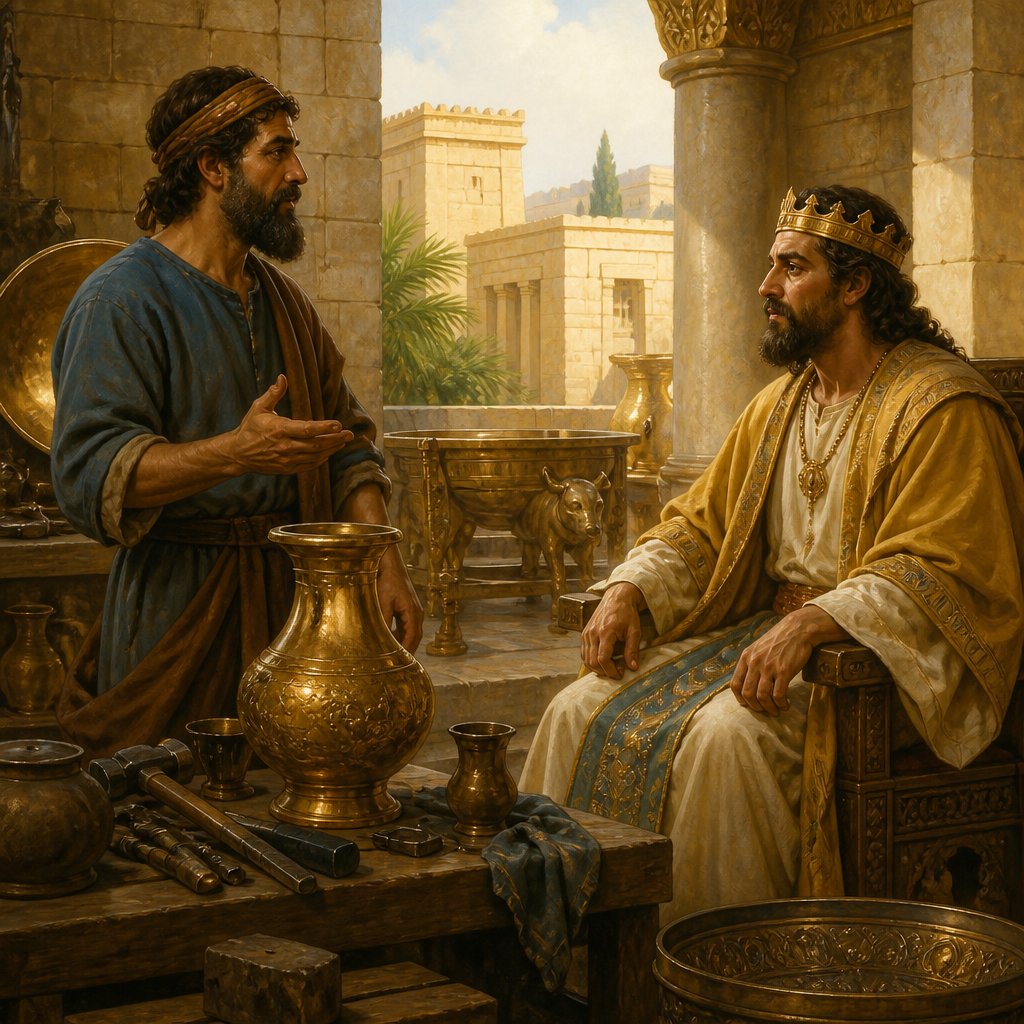
In the annals of the Bible, the brief mention of a craftsman named Hiram stands out as a testament to the remarkable ways God equips individuals for His purposes. 1 Kings 7:14 speaks of Hiram, who was "a widow's son of the tribe of Naphtali, and his father was a man of Tyre, a worker in brass: and he was filled with wisdom, and understanding, and cunning to work all works in brass. And he came to king Solomon, and wrought all his work." This verse invites us into a space of reflection about divine calling, human talent, and the significance of community.
Hiram's story begins with his background; he is identified as a widow's son from the tribe of Naphtali, a detail that reminds us that our origins do not define our potential. Being a widow's son often implies a life marked by struggles and challenges. In ancient cultures, widows were often seen as vulnerable, yet Hiram rises above his circumstances. His lineage pales in comparison to the significance of the skills he possesses, virtues bestowed upon him by Almighty God.
Furthermore, his father, a craftsman from Tyre, points to the importance of heritage and influence. Proverbs 22:6 tells us to "train up a child in the way he should go," a reminder that our skills and passions can often be cultivated by those before us. Hiram’s father imparted a legacy of craftsmanship, allowing Hiram to embrace it with wisdom and understanding.
Hiram's life was not just about lineage or heritage; it was marked by the attributes that God graciously granted him: wisdom, understanding, and cunning. To be filled with wisdom in biblical terms often means having a deep reverence for God, which leads to discernment in various matters. This divine wisdom equips Hiram to not only craft physical objects from brass but also to see deeper levels of truth and beauty in his work—transforming mere materials into masterpieces that would serve the temple of God.
As believers, we can draw significant lessons from Hiram's example. First, God often chooses the willing and the humble. Hiram's background did not disqualify him; instead, it became part of his story—a story where God's purpose is displayed. It is a glorious reminder that God can use anyone, regardless of their starting point. 1 Corinthians 1:27 reminds us that God often chooses the foolish things of the world to confound the wise.
Secondly, we see that work, when done unto the Lord, becomes a service to the community of faith and radiates God’s glory. Hiram’s craftsmanship is not merely a means of livelihood; it is sacred work that contributes to the construction of the Lord’s temple. In our daily tasks, whatever they may be, we can invoke the same spirit of excellence. Colossians 3:23 encourages us to work heartily, as for the Lord and not for men, which gives dignity and purpose to even the smallest acts of service in our communities.
Moreover, we can reflect on how our skills can be used in service to others. Hiram came to King Solomon and threw himself into the work of building. His commitment demonstrated a willingness to invest his gifts for a greater purpose. In this, we are prompted to consider how we are called to engage with our talents within our churches and communities. What are the 'brass works' that you can contribute? How can your skills and abilities find expression within the body of Christ?
Finally, in Hiram’s story, we are reminded that God gives us the capacity not only to succeed but also to thrive. The calling to craftsmanship or service is first a calling to wisdom, understanding, and cunning. As we seek God in our endeavors, let us be filled with His Spirit, nurturing our gifts, and allowing them to flourish for His glory.
In conclusion, Hiram’s life stands as a rich tapestry woven from the threads of faith, talent, and divine purpose. Let us remember that we too are called to craft our lives in ways that glorify God, using our gifts to build up His Kingdom and bring hope to those around us.
Get our apps


Artwork for 1 Kings 7:14

1 Kings 7:14 - "He was a widow's son of the tribe of Naphtali, and his father was a man of Tyre, a worker in brass: and he was filled with wisdom, and understanding, and cunning to work all works in brass. And he came to king Solomon, and wrought all his work."
"He was a widow's son of the tribe of Naphtali, and his father was a man of Tyre, a worker in brass: and he was filled with wisdom, and understanding, and cunning to work all works in brass. And he came to king Solomon, and wrought all his work." - 1 Kings 7:14

2 Kings 7:14 - "They took therefore two chariot horses; and the king sent after the host of the Syrians, saying, Go and see."
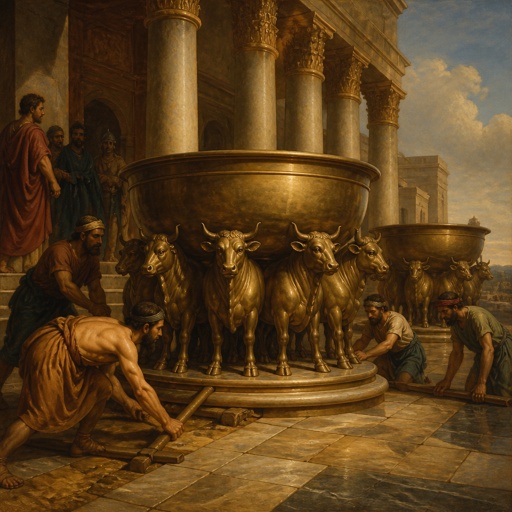
1 kings 7:8

1 Kings 14:7 - "Go, tell Jeroboam, Thus saith the LORD God of Israel, Forasmuch as I exalted thee from among the people, and made thee prince over my people Israel,"

1 Kings 14:26
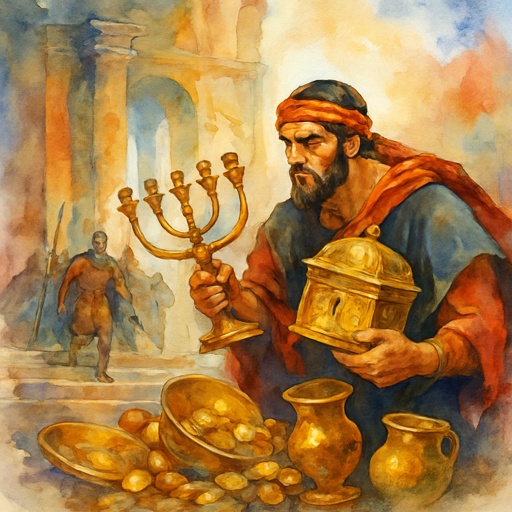
1 Kings 14:26

1 Kings 7:27-38

1 Kings 14:1-20

1 Kings 7:27-38

1 Kings 12:14

1 Kings 12:14

1 Kings 14:1 - "At that time Abijah the son of Jeroboam fell sick."

1 kings 8:7

1 Kings 9:14 - "And Hiram sent to the king sixscore talents of gold."

1 kings 8:7

1 Kings 8:7

1 Kings 14:29 - "¶ Now the rest of the acts of Rehoboam, and all that he did, are they not written in the book of the chronicles of the kings of Judah?"

1 Kings 16:14 - "Now the rest of the acts of Elah, and all that he did, are they not written in the book of the chronicles of the kings of Israel?"

1 Kings 6:14 - "So Solomon built the house, and finished it."

1 Kings 4:14 - "Ahinadab the son of Iddo had Mahanaim:"

1 Kings 21:14 - "Then they sent to Jezebel, saying, Naboth is stoned, and is dead."

1 Kings 14:30 - "And there was war between Rehoboam and Jeroboam all their days."

2 Kings 14:7 - "He slew of Edom in the valley of salt ten thousand, and took Selah by war, and called the name of it Joktheel unto this day."

1 Samuel 14:7

1 Chronicles 14:7 - "And Elishama, and Beeliada, and Eliphalet."

"They took therefore two chariot horses; and the king sent after the host of the Syrians, saying, Go and see." - 2 Kings 7:14

1 Kings 14:19 - "And the rest of the acts of Jeroboam, how he warred, and how he reigned, behold, they are written in the book of the chronicles of the kings of Israel."

1 Kings 7:43 - "And the ten bases, and ten lavers on the bases;"

1 Kings 7:13 - "¶ And king Solomon sent and fetched Hiram out of Tyre."