The Silent Judgment: A Call to Courage in Uncertain Times
“For, as the LORD liveth, which saveth Israel, though it be in Jonathan my son, he shall surely die. But there was not a man among all the people that answered him.” — 1 Samuel 14:39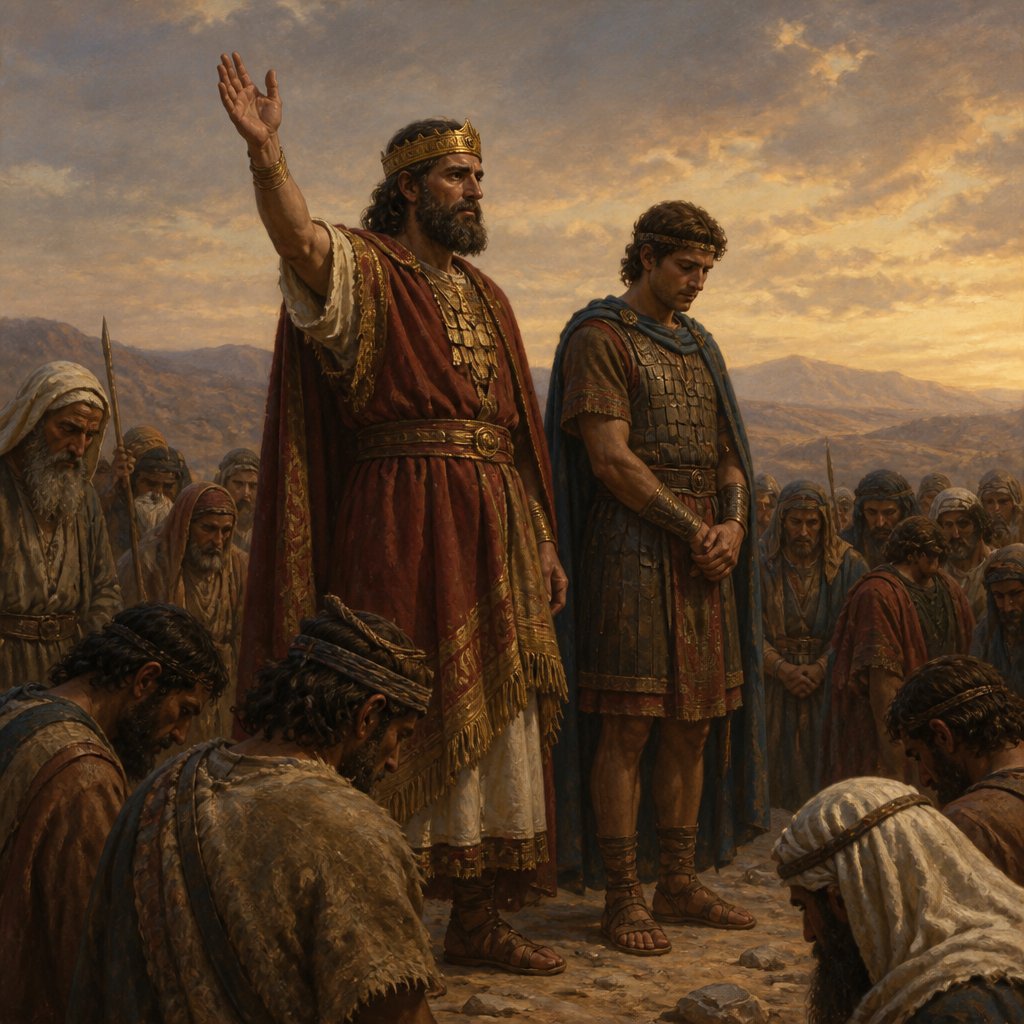
In the heart of the Old Testament book of 1 Samuel, we encounter a powerful narrative filled with themes of loyalty, leadership, and moral decisions. The verse, "For, as the LORD liveth, which saveth Israel, though it be in Jonathan my son, he shall surely die. But there was not a man among all the people that answered him" (1 Samuel 14:39, KJV), opens a wide avenue for contemplation about faithfulness to God amid fear and uncertain loyalties.
This particular moment unfolds after a tumultuous day of battle where Jonathan, the son of King Saul, acts in faith and bravery by leading an attack against the Philistines. Unbeknownst to his father, he had taken a daring step that resulted in a significant victory for Israel. Yet, in a desperate attempt to bind the army to an oath, Saul unwittingly endangered his own son. When Saul realizes that Jonathan had eaten honey, violating the oath of fasting he had imposed, he declares that Jonathan must die, citing the severity of his command and the holiness of his leadership.
In understanding Saul’s pronouncement, we are confronted with the stark collision of allegiance to human authority versus the divine picture of mercy and righteousness. The weight of Saul’s words hovers heavily over the narrative, as he swears by the living God, thus placing himself in a position of perceived righteousness. However, his steadfastness in the face of an unjust command reveals a deep flaw in his leadership. Where is the discernment? Where is the compassion that ought to flow from a king who leads a nation?
Truly, we find ourselves grappling with the implications of this moment. What does it mean to stand for what is right when it may cost us dearly? To answer the king's decree—with life and death implications—seems insurmountable for those in Saul's presence. As it stands, not a single man among the people dares to speak up. The silence speaks volumes, echoing a communal anxiety that grips the hearts of Saul’s men.
In considering the people’s hesitation, we might ask ourselves if we ever find ourselves in similar situations, portending to be silent when we should speak. In our contemporary context, voices often become whispers in the face of authority, societal norms, or contentious issues. Fear of reprisal keeps many from standing up for truth or justice. Here we see how easily silence can be mistaken for acquiescence to tyranny, overshadowing righteousness and moral courage.
What would have happened if one man had stood up, as Jonathan did? If a soldier responded to the command with conviction, would the narrative have shifted? The challenge is clear: where are the voices willing to advocate for those unjustly treated? Being silent when witnessing wrongs can sometimes equate to endorsing the wrong. In a world full of injustices, we are called not to be mere spectators but to be advocates for love and truth, even when the cost seems too high.
We also find a beautiful contrast within this chaos: Jonathan himself, brave and unwavering in his actions, exemplifies the qualities we should aspire to in our faith. His heart is aligned with God’s purpose even amidst danger, offering a reminder that our loyalty to God must often supersede our fear of man. Jonathan is an example of the boldness that comes from a deep faith and conviction that God saves.
As we reflect on 1 Samuel 14:39, let us ponder our own lives as we wrestle with fear, authority, and righteousness. In this tumultuous world, let us be emboldened not only to speak out against injustice but also to root ourselves firmly in faith, drawing courage from the Lord who saves. Ultimately, true leadership and bravery stem from a heart attuned to God’s will, willing to confront the difficult in the pursuit of divine justice and mercy.
Get our apps


Artwork for 1 Samuel 14:39
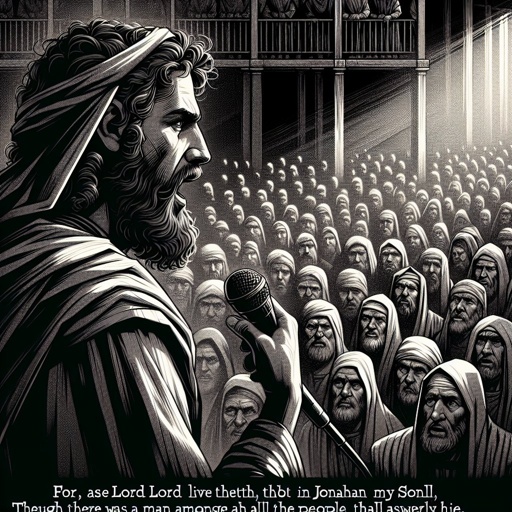
1 Samuel 14:39 - "For, as the LORD liveth, which saveth Israel, though it be in Jonathan my son, he shall surely die. But there was not a man among all the people that answered him."
"For, as the LORD liveth, which saveth Israel, though it be in Jonathan my son, he shall surely die. But there was not a man among all the people that answered him." - 1 Samuel 14:39

1 Corinthians 14:39-40

1 Samuel 20:39 - "But the lad knew not any thing: only Jonathan and David knew the matter."

1 Corinthians 14:39 - "Wherefore, brethren, covet to prophesy, and forbid not to speak with tongues."

Scene from book of numbers 14:39-45

1 Samuel 14:6

1 Samuel 14:7

1 Samuel 14:27
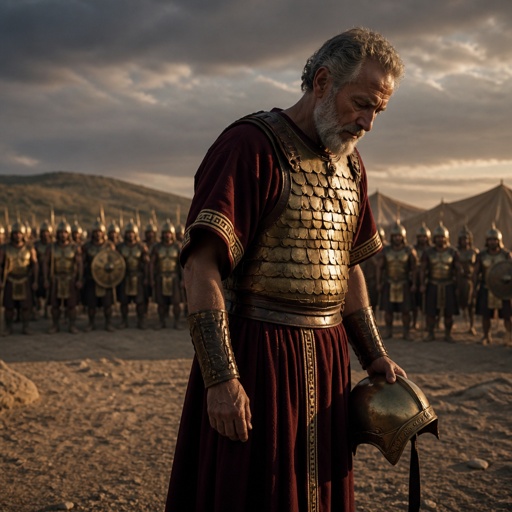
1 Samuel 13:14

2 Samuel 6:14

1 Samuel 11:14 - "Then said Samuel to the people, Come, and let us go to Gilgal, and renew the kingdom there."

2 Samuel 23:39 - "Uriah the Hittite: thirty and seven in all."

"Wherefore, brethren, covet to prophesy, and forbid not to speak with tongues." - 1 Corinthians 14:39
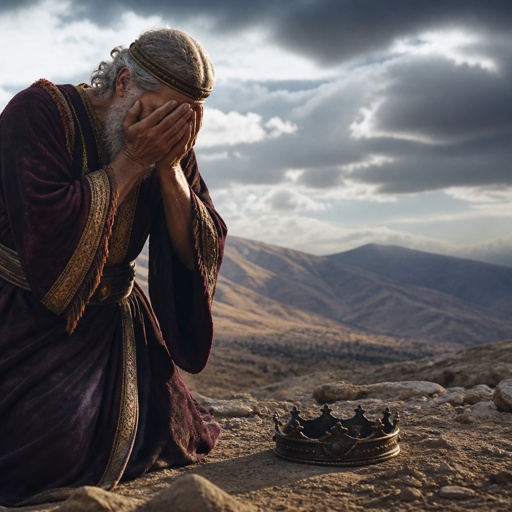
1 Samuel 13:13-14

1 Samuel 17:14 - "And David was the youngest: and the three eldest followed Saul."
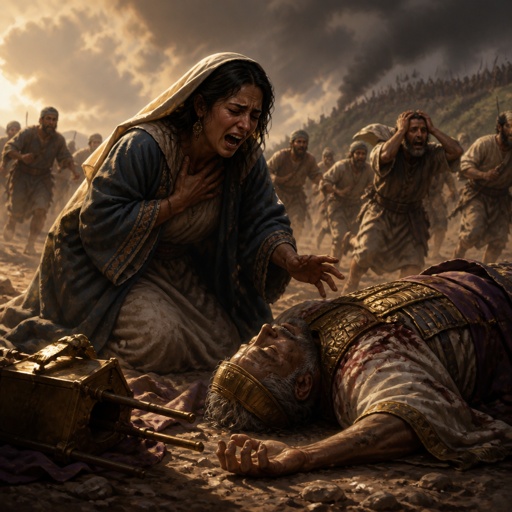
1 Samuel 4:14-16

1 Samuel 15:14 - "And Samuel said, What meaneth then this bleating of the sheep in mine ears, and the lowing of the oxen which I hear?"
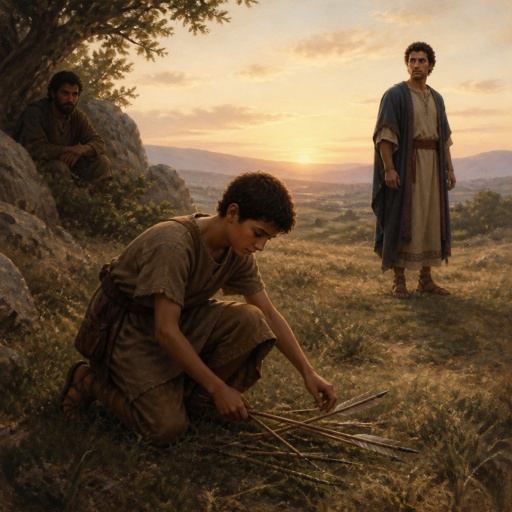
"But the lad knew not any thing: only Jonathan and David knew the matter." - 1 Samuel 20:39

1 Samuel 14:51 - "And Kish was the father of Saul; and Ner the father of Abner was the son of Abiel."

1 Samuel 14:25 - "And all they of the land came to a wood; and there was honey upon the ground."

1 Samuel 9:14 - "And they went up into the city: and when they were come into the city, behold, Samuel came out against them, for to go up to the high place."

1 Samuel 19:14 - "And when Saul sent messengers to take David, she said, He is sick."

1 Samuel 14:46 - "Then Saul went up from following the Philistines: and the Philistines went to their own place."

Mark 14:39 - "And again he went away, and prayed, and spake the same words."

1 Samuel 14:35 - "And Saul built an altar unto the LORD: the same was the first altar that he built unto the LORD."

1 Samuel 18:14 - "And David behaved himself wisely in all his ways; and the LORD was with him."

2 Samuel 14:1 - "Now Joab the son of Zeruiah perceived that the king's heart was toward Absalom."

1 Samuel 16:14 - "¶ But the Spirit of the LORD departed from Saul, and an evil spirit from the LORD troubled him."

1 Samuel 14:42 - "And Saul said, Cast lots between me and Jonathan my son. And Jonathan was taken."