The Deception of Partial Obedience
"And Saul said unto Samuel, Yea, I have obeyed the voice of the LORD, and have gone the way which the LORD sent me, and have brought Agag the king of Amalek, and have utterly destroyed the Amalekites." - 1 Samuel 15:20
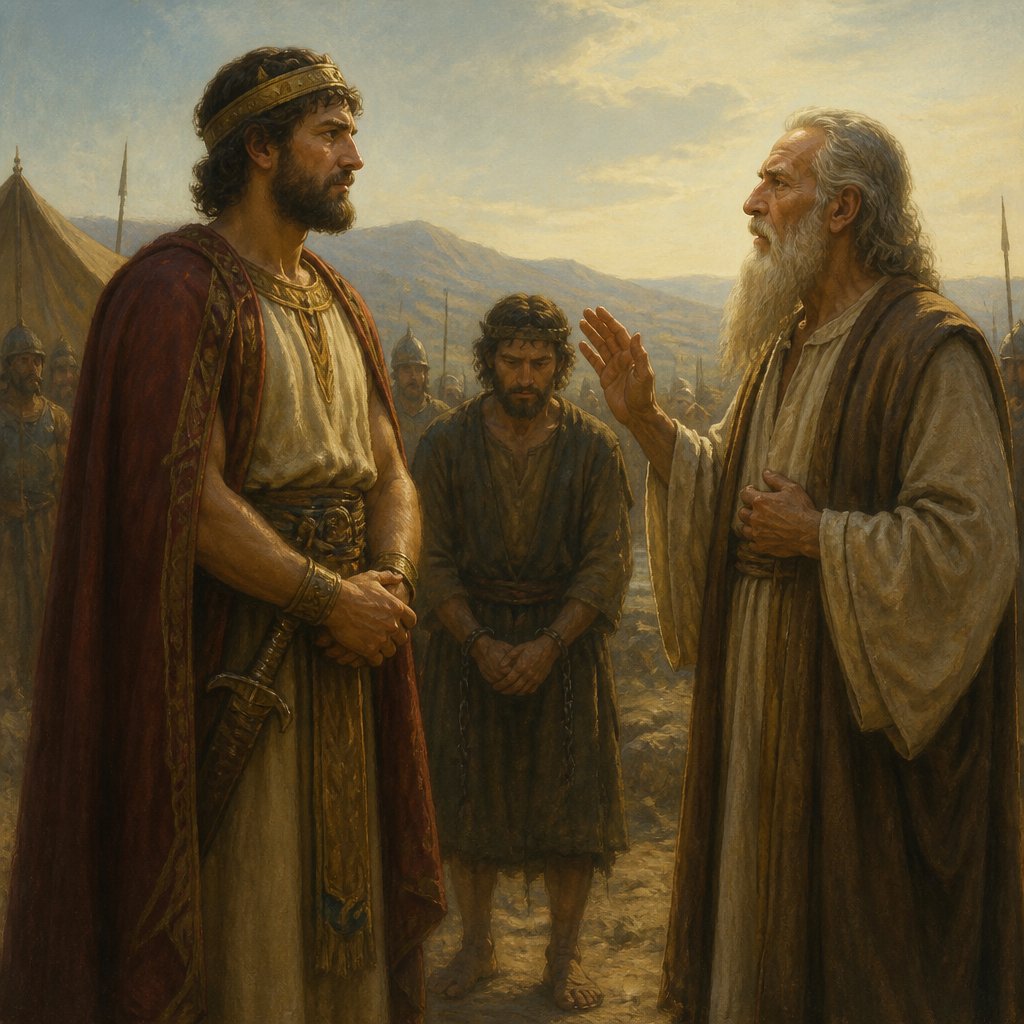
In 1 Samuel 15:20 we confront a pivotal moment in the life of Saul, the first king of Israel: "And Saul said unto Samuel, Yea, I have obeyed the voice of the LORD, and have gone the way which the LORD sent me, and have brought Agag the king of Amalek, and have utterly destroyed the Amalekites." This declaration by Saul is not only a profound testament to his self-deception but also bridges a significant understanding about the nature of obedience in the life of a believer.
To grasp the depth of this verse, we must first reflect on the context. God commanded Saul through the prophet Samuel to completely destroy the Amalekites as an act of divine judgment against their sin (1 Samuel 15:2-3). It was clear—none were to be spared. Yet as we see in his conversation with Samuel, Saul believes he is successfully obeying God, despite having disobeyed His command by sparing Agag and keeping the best of the livestock.
The act of claiming obedience while taking liberty with God’s commands is a shared human experience, one that echoes in the heart of many believers today. Within this passage, Saul's response reveals a critical truth about the nature of incomplete obedience. He claims adherence to God’s directive, yet the very fact that he brought Agag back reveals that he did not fully follow through with what was required.
Saul’s justification of his actions reflects a dangerous mentality that often creeps into our own lives. Partial obedience can lead to profound consequences; it can inhibit our spiritual growth, spoil our relationship with God, and ultimately lead to regret. This calls us to evaluate how we respond to God's leading in our lives. Are we truly striving for complete obedience, or are we settling for what is comfortable?
This raises an important question: do we find ourselves doing the same? Are there areas in our lives where we justify our actions in the face of God’s clear commands? We must routinely check our hearts and motives. Saul believed he had done enough; he was willing to point to his partial success as a badge of honor, yet the reality was starkly different.
Samuel’s subsequent response to Saul is compelling: “Hath the LORD as great delight in burnt offerings and sacrifices, as in obeying the voice of the LORD? Behold, to obey is better than sacrifice…” (1 Samuel 15:22). Here we see that God values our obedience over our religious activities. It is not enough to merely perform religious duties; God desires our hearts to be wholly devoted, aligned with His will. The act of obedience must stem from a love and reverence for God, recognizing that His commands are for our good.
Moreover, we must consider the implications of Saul’s partial obedience on his leadership. Saul’s failure to carry out God’s command completely led to eventual turmoil for Israel. When we as leaders—be they in our family, work, or church—fail to practice complete obedience to God, we can lead others astray, modeling an incomplete faith.
So how can we translate this lesson into our daily lives? First, let us cultivate a heart posture that seeks God authentically. Daily prayer, communication with Him through His Word, and being receptive to the Holy Spirit's guidance can clear the path toward true obedience. Second, repent from the ways we may have been complacent or selective in our following of God. Finally, let us encourage others to pursue complete faithfulness to God’s Word, reminding them of the joy and peace found in total obedience.
Ultimately, Saul’s story serves as a cautionary tale about the perils of partial obedience. God’s plans are best fulfilled when we choose to surrender fully to Him, fostering a heart that says yes to His will—even when it’s difficult and calls us to go beyond our comfort zones. May we strive for a legacy defined not by our excuses, but by our obedience to the Lord.
Want to reflect more on 1 Samuel 15:20?
Continue your spiritual journey with Bible Chat — an AI-powered tool for exploring God's Word through conversation. Ask questions, discover connections, and deepen your understanding.
Get Our Apps


1 Samuel 15:20 Artwork

1 Samuel 15:20 - "And Saul said unto Samuel, Yea, I have obeyed the voice of the LORD, and have gone the way which the LORD sent me, and have brought Agag the king of Amalek, and have utterly destroyed the Amalekites."
"And Saul said unto Samuel, Yea, I have obeyed the voice of the LORD, and have gone the way which the LORD sent me, and have brought Agag the king of Amalek, and have utterly destroyed the Amalekites." - 1 Samuel 15:20

1 Samuel 28:15-20
1 Samuel 20:15 - "But also thou shalt not cut off thy kindness from my house for ever: no, not when the LORD hath cut off the enemies of David every one from the face of the earth."

1 Samuel 15:10 - "¶ Then came the word of the LORD unto Samuel, saying,"

1 Samuel 7:15 - "And Samuel judged Israel all the days of his life."

1 Samuel 15:31 - "So Samuel turned again after Saul; and Saul worshipped the LORD."

1.samuel 15:30

1 Samuel 15:22

1 Samuel 15:22

Colossians 1:15-20

Colossians 1:15-20

1 Samuel 15:34 - "¶ Then Samuel went to Ramah; and Saul went up to his house to Gibeah of Saul."

1 Samuel 1:15-17

1 Samuel 20:20 - "And I will shoot three arrows on the side thereof, as though I shot at a mark."

1.samuel 15:30

1 Samuel 3:15 - "¶ And Samuel lay until the morning, and opened the doors of the house of the LORD. And Samuel feared to shew Eli the vision."

1 Samuel 28:15

1 Samuel 10:20 - "And when Samuel had caused all the tribes of Israel to come near, the tribe of Benjamin was taken."

1 Samuel 3:20 - "And all Israel from Dan even to Beer-sheba knew that Samuel was established to be a prophet of the LORD."

1 Samuel 20:27-30

1 Samuel 9:15 - "¶ Now the LORD had told Samuel in his ear a day before Saul came, saying,"

1 Samuel 20:27-29

Matthew 15 : 1-20

1 Samuel 21:10-15

1 Samuel 28:15-19

1 Samuel 15:27 - "And as Samuel turned about to go away, he laid hold upon the skirt of his mantle, and it rent."

1 Samuel 15:13 - "And Samuel came to Saul: and Saul said unto him, Blessed be thou of the LORD: I have performed the commandment of the LORD."

1 Samuel 10:15 - "And Saul's uncle said, Tell me, I pray thee, what Samuel said unto you."

1 Samuel 15:14 - "And Samuel said, What meaneth then this bleating of the sheep in mine ears, and the lowing of the oxen which I hear?"