Destinies Intertwined: The Danger of Envy and Pride
“For as long as the son of Jesse liveth upon the ground, thou shalt not be established, nor thy kingdom. Wherefore now send and fetch him unto me, for he shall surely die.” — 1 Samuel 20:31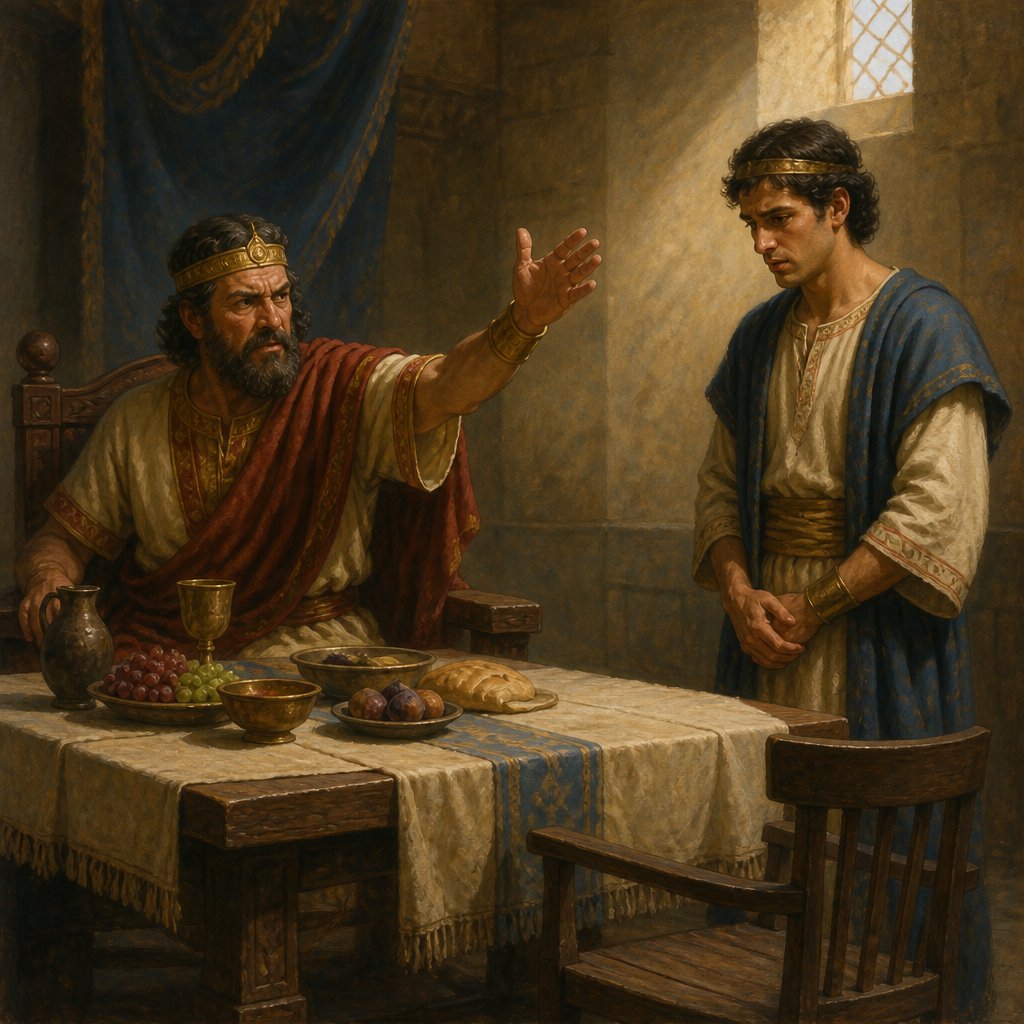
In 1 Samuel 20:31, the desperate words of King Saul reveal the depth of his fear and jealousy: "For as long as the son of Jesse liveth upon the ground, thou shalt not be established, nor thy kingdom. Wherefore now send and fetch him unto me, for he shall surely die." This verse encapsulates the turmoil of Saul’s heart and the precariousness of human power when it is driven by jealousy and insecurity.
At this moment, Saul is not merely concerned about his own reign; he is acutely aware of the rising influence of David, the son of Jesse. David, a young shepherd, had been anointed by God to be the next king of Israel, and Saul perceives David as a direct threat to his own throne. This recognition of David’s destiny ignites a destructive force within Saul, leading him to entertain thoughts of murder rather than embracing the possibility of a peaceful succession.
This scenario presents a profound lesson for us. Saul’s trajectory illustrates how unchecked emotions, such as pride and envy, can result in catastrophic decisions. Instead of nurturing David’s talents and embracing God’s plan, Saul chooses the path of destruction. How often do we encounter situations in our lives where we react out of fear of losing our position or our influence?
When we compare ourselves to others, we can easily slip into the sin of envy, allowing resentment to overshadow God’s purposes for our own lives. Like Saul, we can find ourselves attempting to eliminate the perceived competition rather than allowing God to work through His appointed vessels. This is a warning to guard our hearts against the corrosive nature of comparison and pride.
Moreover, Saul’s actions expose the folly in attempting to manipulate destiny. God’s promises and plans cannot be thwarted by human jealousy or violence. David was meant to be king, ordained by God Himself. Therefore, no amount of kingly authority or cunning conspiracy could extinguish that truth. Saul’s attempt to kill David only served to affirm David’s anointing and accelerate the divine timeline.
From a spiritual perspective, it is crucial to remember that positions of authority find their legitimacy not in dominance but in God’s gracious calling. When we accept our roles as servants in God’s kingdom, we acknowledge that His plans transcend our understanding. It is a call to humility and a reminder that we are stewards of His grace—not rivals in a battle for prominence. Jesus emphasized this when He stated, “But he that is greatest among you shall be your servant” (Matthew 23:11). In this, we find our true identity, not in our titles, but in our servitude.
Furthermore, the narrative around Saul and David compels us to reflect on how we respond to those who may appear to overshadow us. Do we seek their demise, or do we encourage them? Are we willing to celebrate their gifts, even if it means stepping back from the limelight?
As followers of Christ, we are called to rejoice in others' successes, knowing that our identity, value, and purpose come from Him alone. We must navigate the perils of envy with a heart of worship, lifting each other up and committing to the advancement of God’s kingdom.
Let us pray for the heart of David, who, despite having every reason to feel threatened by Saul, continued to honor God and respect Saul’s position until the very end. May we strive to be champions of encouragement rather than agents of envy, choosing love and humility over comparison and pride.
Ultimately, our destinies are intertwined with one another in God’s divine tapestry. The life of Saul serves not only as a cautionary tale but as a powerful reminder of the importance of aligning our hearts with God’s will for our lives—and for those around us.
Get our apps


Artwork for 1 Samuel 20:31

1 Samuel 20:31 - "For as long as the son of Jesse liveth upon the ground, thou shalt not be established, nor thy kingdom. Wherefore now send and fetch him unto me, for he shall surely die."
"For as long as the son of Jesse liveth upon the ground, thou shalt not be established, nor thy kingdom. Wherefore now send and fetch him unto me, for he shall surely die." - 1 Samuel 20:31
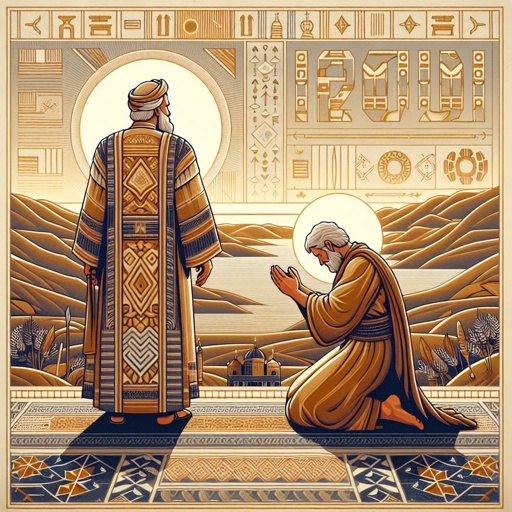
1 Samuel 15:31 - "So Samuel turned again after Saul; and Saul worshipped the LORD."

1 Samuel 31:11 - "¶ And when the inhabitants of Jabesh-gilead heard of that which the Philistines had done to Saul;"

1 Samuel 20:27-29

1 Samuel 20:20 - "And I will shoot three arrows on the side thereof, as though I shot at a mark."

1 Samuel 14:31 - "And they smote the Philistines that day from Michmash to Aijalon: and the people were very faint."

1 Samuel 31:13 - "And they took their bones, and buried them under a tree at Jabesh, and fasted seven days."

1 Samuel 28:15-20

1 Samuel 31:3 - "And the battle went sore against Saul, and the archers hit him; and he was sore wounded of the archers."
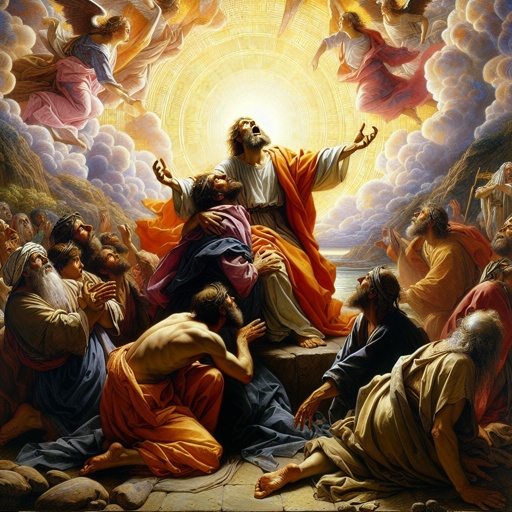
1 Samuel 20:27-30

1 Samuel 31:10 - "And they put his armour in the house of Ashtaroth: and they fastened his body to the wall of Beth-shan."

1 Samuel 10:20 - "And when Samuel had caused all the tribes of Israel to come near, the tribe of Benjamin was taken."

"So Samuel turned again after Saul; and Saul worshipped the LORD." - 1 Samuel 15:31

1 Samuel 3:20 - "And all Israel from Dan even to Beer-sheba knew that Samuel was established to be a prophet of the LORD."

1 Samuel 31:6 - "So Saul died, and his three sons, and his armourbearer, and all his men, that same day together."

1 Samuel 31:1 - "Now the Philistines fought against Israel: and the men of Israel fled from before the Philistines, and fell down slain in mount Gilboa."

1 Samuel 31:5 - "And when his armourbearer saw that Saul was dead, he fell likewise upon his sword, and died with him."

1 Samuel 17:31 - "And when the words were heard which David spake, they rehearsed them before Saul: and he sent for him."

1 Samuel 30:31 - "And to them which were in Hebron, and to all the places where David himself and his men were wont to haunt."

1 Samuel 3:1

1 Samuel 3:1

1 Samuel 31:8 - "And it came to pass on the morrow, when the Philistines came to strip the slain, that they found Saul and his three sons fallen in mount Gilboa."

1 Samuel 31:2 - "And the Philistines followed hard upon Saul and upon his sons; and the Philistines slew Jonathan, and Abinadab, and Malchi-shua, Saul's sons."

1 Samuel 18:20 - "And Michal Saul's daughter loved David: and they told Saul, and the thing pleased him."

1 Samuel 20:39 - "But the lad knew not any thing: only Jonathan and David knew the matter."

1 Samuel 3:1-10

1 Samuel 1:20 - "Wherefore it came to pass, when the time was come about after Hannah had conceived, that she bare a son, and called his name Samuel, saying, Because I have asked him of the LORD."

1 Samuel 31:4 Saul took his own sword and fell on it. create the image in color

1 Samuel 20:28 - "And Jonathan answered Saul, David earnestly asked leave of me to go to Beth-lehem:"